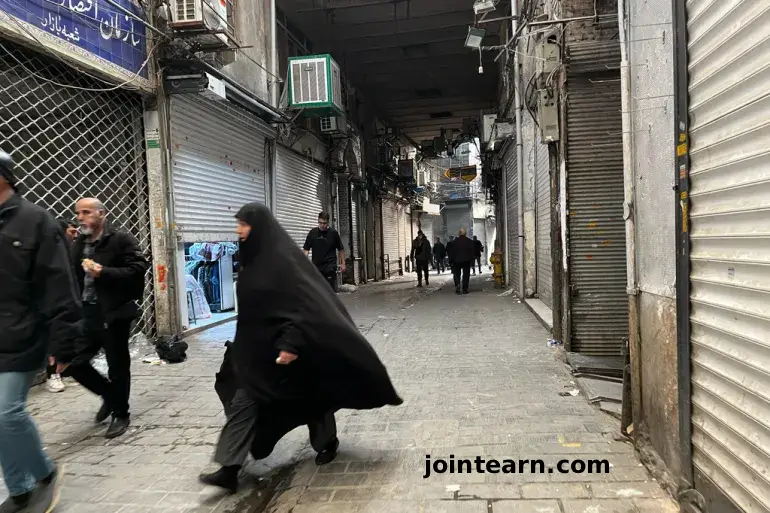
Protests have intensified across Iran as citizens demonstrate against a spiralling economic crisis, while the country’s top judicial authority has accused those who incite unrest of acting in concert with the United States and Israel. The demonstrations, now in their second week, reflect growing frustration over skyrocketing inflation, currency collapse, and longstanding dissatisfaction with government policies.
Protests Sweep Across Major Iranian Cities
From Tehran to Shiraz, Borujerd, Arsanjan, and Gilan-e Gharb, citizens have taken to the streets in mass marches, many lighting fires and erecting barriers. Footage from southern Shiraz showed security forces forcefully dismantling barricades with vehicles, underscoring the tense atmosphere.
Shop closures, particularly in Tehran’s Grand Bazaar, have become a focal point for public anger. Signs reading “We revolt due to hunger” have emerged, symbolizing the economic hardship faced by ordinary Iranians.
Top Judge Issues Strong Warning
Iranian Chief Justice Gholam-Hossein Mohseni-Ejei issued a stern warning to those participating in protests, stating:
“If anyone comes into the streets for riots or to create insecurity, or supports them, then no excuse remains for them. The matter has become very clear and transparent. They are now operating in line with the enemies of the Islamic Republic of Iran.”
Mohseni-Ejei’s comments followed statements by US President Donald Trump, who threatened that if Iran “violently kills peaceful protesters… the United States of America will come to their rescue.”
Heightened Tensions With Israel and the US
The latest wave of unrest comes seven months after Israeli and US strikes on Iranian nuclear facilities in a 12-day conflict. Israeli Prime Minister Benjamin Netanyahu voiced support for the protests, claiming that Iranians are “taking their fate into their own hands.”
In response, Iran’s army chief Major-General Amir Hatami warned of decisive military action against external threats, asserting:
“I can say with confidence that today the readiness of Iran’s armed forces is far greater than before the war. If the enemy commits an error, it will face a more decisive response.”
Hatami, who assumed command after the deaths of several top military leaders during the Israeli strikes, emphasized Iran’s preparedness to act preemptively if provoked.
Economic Hardship Fuels Nationwide Anger
The protests were initially triggered by the collapse of the Iranian rial, which has sharply reduced purchasing power amid deepening economic woes driven by mismanagement and punishing Western sanctions. Shopkeepers in Tehran’s Grand Bazaar began shuttering businesses in protest, igniting broader demonstrations across the country.
Activists report that at least 36 people have been killed and over 2,000 arrested, though official figures remain unavailable. The Iranian government attempted to quell unrest by offering a meagre monthly subsidy of approximately $7 to help families cover essential items like rice, meat, and pasta. Critics describe the aid as insufficient to address the systemic economic crisis.
Political Response and Regime Stance
Supreme Leader Ayatollah Ali Khamenei has publicly reaffirmed his commitment not to “yield to the enemy,” framing the protests within the context of foreign interference, especially in light of US military operations abroad, including the recent abduction of Venezuelan President Nicolas Maduro, a long-time ally of Tehran.
Analysts from the Soufan Center note that the protests reflect not only immediate economic grievances but also deep-seated frustration with government repression and policies that have contributed to Iran’s global isolation.
The Path Ahead
As protests persist, the Iranian government faces a dual challenge: managing domestic unrest while contending with increasing external pressure from the United States and Israel. Security forces remain deployed across major cities, and judicial threats signal zero tolerance for demonstrators accused of cooperating with foreign adversaries.
The situation remains fluid, with the potential for escalation if economic conditions fail to improve or if international tensions intensify. Observers warn that ongoing protests could have long-term implications for Iranian domestic politics, the rising cost of living, and regional stability in the Middle East.


Leave a Reply