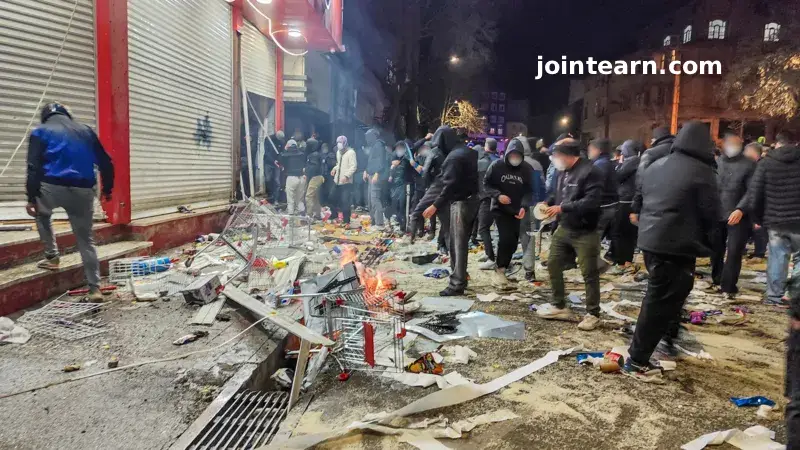
Massive anti-government protests have swept through Tehran and other Iranian cities, marking one of the largest demonstrations against the clerical establishment in years. Verified videos show crowds marching peacefully in Tehran, Mashhad, and other major cities on Thursday evening, despite increasing tensions and a nationwide internet blackout reported by monitoring groups.
The unrest, which began on 28 December 2025, is rooted in widespread anger over Iran’s collapsing currency, soaring inflation, and long-standing political grievances. According to human rights groups, protests have now spread to over 100 cities and towns across all 31 provinces.
Protests in Tehran, Mashhad, and Across Iran
Footage verified by BBC Persian shows large crowds in Tehran chanting slogans such as “This is the final battle! Pahlavi will return” and “Dishonourable! Don’t be afraid, we are all together.” Similar scenes were recorded in Mashhad, where men removed surveillance cameras from overpasses as part of their protest.
Protesters in other cities have voiced opposition to Supreme Leader Ayatollah Ali Khamenei, chanting “Death to the dictator” in Isfahan, “Long live the shah” in Babol, and similar messages in Tabriz. Clashes with security forces were reported in Dezful and other western cities.
The protests were called for by Reza Pahlavi, the exiled son of Iran’s former shah, who urged citizens to take to the streets as a united front. Pahlavi praised demonstrators on social media, calling them “courageous compatriots” and asked world leaders, including US President Donald Trump, to hold the Iranian regime accountable.
Violence, Arrests, and Internet Blackout
Human rights organizations report significant casualties and arrests:
- HRANA: At least 34 protesters killed (including five children) and 2,270 arrested; eight security personnel also killed.
- Iran Human Rights (IHR): At least 45 protesters killed, including eight children.
- BBC Persian: Confirmed deaths of 22 protesters.
- Iranian authorities: Reported six security personnel killed.
The unrest has included violent clashes, burning debris, and confrontations with security forces, particularly in Kermanshah, Ilam, and Lorestan provinces. Kurdish and Lor minority populations have been disproportionately affected, according to local human rights groups.
Meanwhile, NetBlocks confirmed a nationwide internet blackout, limiting communication and access to information during the protests. Authorities had previously disrupted connectivity in several cities to curb the spread of information.
Economic and Political Drivers
The protests have been fueled by severe economic pressures:
- The Iranian rial has plummeted to record lows against the US dollar.
- Inflation has soared to approximately 40%.
- International sanctions over Iran’s nuclear program have compounded economic hardship.
University students and ordinary citizens have joined the demonstrations, chanting slogans critical of the clerical establishment and expressing despair over lost opportunities. Residents report feelings of helplessness and frustration, stating that life under the regime has become “unbearable” and that their dreams have been “stolen.”
International Reactions
US officials have issued strong warnings to Iran. President Trump threatened military intervention if protesters are harmed:
“I have let them know that if they start killing people… we are going to hit them very hard,” he said.
US Treasury Secretary Scott Bessent described Iran’s economy as “on the ropes” and urged restraint, emphasizing that harming protesters could escalate tensions further.
Domestically, Iranian officials have given mixed statements. President Masoud Pezeshkian called for “utmost restraint” by security forces, while Khamenei instructed authorities to speak with protesters but warned that rioters should be subdued.
Historical Context
These protests are the most widespread since the 2022 uprising following the death of Mahsa Amini in custody, which resulted in over 550 deaths and thousands of arrests. Other significant historical uprisings include the 2009 Green Movement, sparked by a disputed presidential election, where dozens were killed and thousands detained.
What’s Next
Reza Pahlavi has called for continued protests, scheduled for Friday evening local time (16:30 GMT). Observers note that the protests could continue to escalate, particularly if economic conditions do not improve and if security forces respond with further force.
The situation remains fluid, with footage and reports emerging daily from multiple cities, highlighting both the scale of the unrest and the Iranian population’s persistent demand for political and economic reform.


Leave a Reply