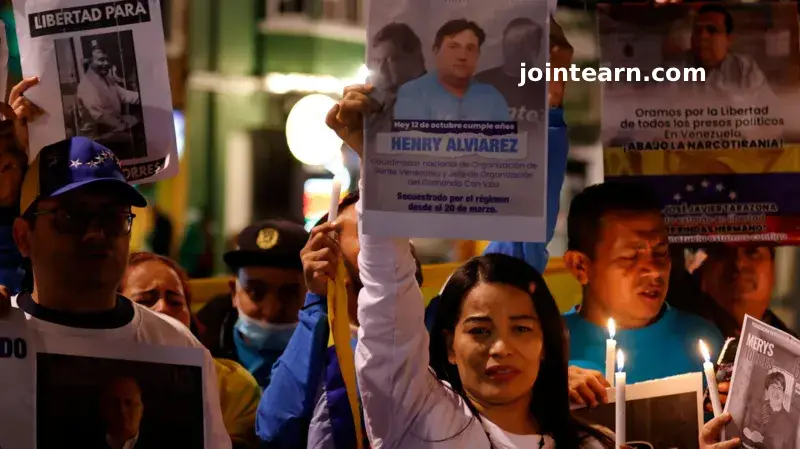
The Venezuelan government has begun releasing detainees widely considered political prisoners by human rights groups, in what officials described as a goodwill gesture. The announcement follows the recent US operation in Caracas, which saw Venezuelan President Nicolás Maduro captured on drug trafficking charges.
Spain’s foreign ministry confirmed that five of its nationals were among those released. This group includes prominent Venezuelan-Spanish rights activist Rocío San Miguel, whose family confirmed her freedom to US media.
Context: Political Prisoners in Venezuela
The release comes amid heightened international attention following the US raid on Maduro, which has intensified scrutiny of Venezuela’s political and human rights situation. Human rights organizations have long documented that hundreds of Venezuelan citizens, including opposition leaders, activists, and journalists, remain detained under questionable circumstances.
Rocío San Miguel, a well-known critic of Maduro, was arrested in 2024 on charges of treason, conspiracy, and terrorism. At the time, her location was unknown, prompting concerns of “enforced disappearance” raised by the UN Human Rights Office.
Jorge Rodríguez, head of Venezuela’s National Assembly and brother of interim leader Delcy Rodríguez, announced on state television that a “significant number” of prisoners would be released immediately. He framed the decision as a step toward national unity and peaceful coexistence, though the exact number of freed detainees has not been disclosed.
El Helicoide Prison: Symbol of Repression
Among the locations impacted by the release is El Helicoide, a notorious Caracas prison that has held approximately 50 to 80 prisoners. The facility gained international attention for alleged torture, beatings, and electrocution of political opponents.
Following Maduro’s capture, US President Donald Trump announced plans to close El Helicoide, citing its role as a symbol of political repression. Human rights groups, however, caution that the closure of one prison does not address the broader network of detention centers across Venezuela where political detainees remain.
International Reactions and Human Rights Concerns
The release of political prisoners has been cautiously welcomed by Venezuelan human rights organizations, which have long criticized the government for using detentions to silence dissent. Many of these organizations include members or founders who have been imprisoned in recent years.
Opposition leaders, including Nobel Peace Prize nominee Maria Corina Machado, have repeatedly called for the release of allies held in detention. Machado has stated her intention to travel to the United States in the coming days, potentially as part of ongoing discussions following the US intervention.
Despite the gestures, the Venezuelan government continues to deny that political prisoners are being held, maintaining that detainees were arrested for legitimate criminal activities rather than political reasons.
US Involvement and Geopolitical Context
The release of prisoners coincides with the US’s broader actions in Venezuela, including Maduro’s capture in a covert military operation and Trump’s announcements regarding the closure of high-profile detention facilities.
The intervention reflects US priorities in Latin America, particularly concerns about drug trafficking and regional stability. The move also signals pressure on Venezuela’s interim government to cooperate with US authorities while projecting an image of national reconciliation.
Analysts caution that while the release of political prisoners is a positive step, human rights concerns in Venezuela remain extensive, and broader reforms are needed to ensure freedom of speech, fair trials, and political participation.


Leave a Reply