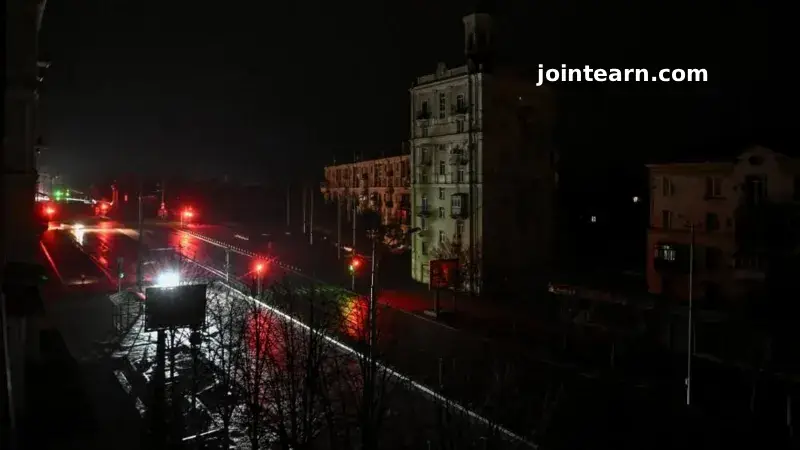
Over one million people in south-eastern Ukraine spent hours without heating and water as a result of Russian air and drone strikes targeting energy infrastructure, officials said. The attacks caused widespread disruption across the Dnipropetrovsk and Zaporizhzhia regions, intensifying the already severe challenges of winter in the country.
Russia Targets Energy Infrastructure Amid Harsh Winter
Ukraine has reported a significant increase in attacks on power plants, electricity grids, and water facilities, aimed at paralyzing vital services during extreme cold.
President Volodymyr Zelensky described the strikes as “mockery” and warned of the potential for even larger attacks, emphasizing that Russia is attempting to exploit the harsh winter conditions, including heavy snow and frost.
Hospitals, water treatment plants, and other critical services were forced to operate on backup systems, while residents were urged to limit electricity usage to prevent further strain on the power grid.
Impact on Ukraine’s Energy Providers
DTEK, Ukraine’s largest private energy provider, reported that the intensity of the attacks has left the company in permanent crisis mode. The CEO, Maxim Timchenko, said the strikes are so frequent that the company “just doesn’t have time to recover,” with power cuts affecting 5.6 million Ukrainians.
“These waves of drones, cruise, and ballistic missiles are targeting the energy grid without any military purpose,” Timchenko added.
President Zelensky also highlighted that attacks on civilian infrastructure are designed to weaken Ukrainian resilience rather than achieve any tactical military advantage.
International Diplomacy and Peace Talks
Despite the ongoing attacks, Zelensky remains engaged in diplomatic efforts to end the war, meeting with the “Coalition of the Willing” and representatives from the United States, including Trump peace envoys Steve Witkoff and Jared Kushner.
In Paris, the UK and France signed a declaration of intent to deploy troops in Ukraine if a peace deal is reached. Moscow has warned that any foreign troops entering Ukraine would become a “legitimate target” for Russian forces.
Zelensky expressed concern that European allies have not provided clear guarantees of protection in the event of renewed Russian aggression, even as he remains hopeful that the conflict could end in the first half of 2026.
Sticking Points in Negotiations
Negotiations led by European partners and the US are reportedly focused on the last 10% of the peace deal, including territorial arrangements in eastern Ukraine. Ukraine has refused to cede additional territory to Russia, while Russian President Vladimir Putin continues to demand full control of the Donbas region, where Russian forces have made slow progress in recent months.
Zelensky stressed that the European Union should play a central role in any settlement, reflecting Ukraine’s reliance on international support for security and reconstruction.


Leave a Reply