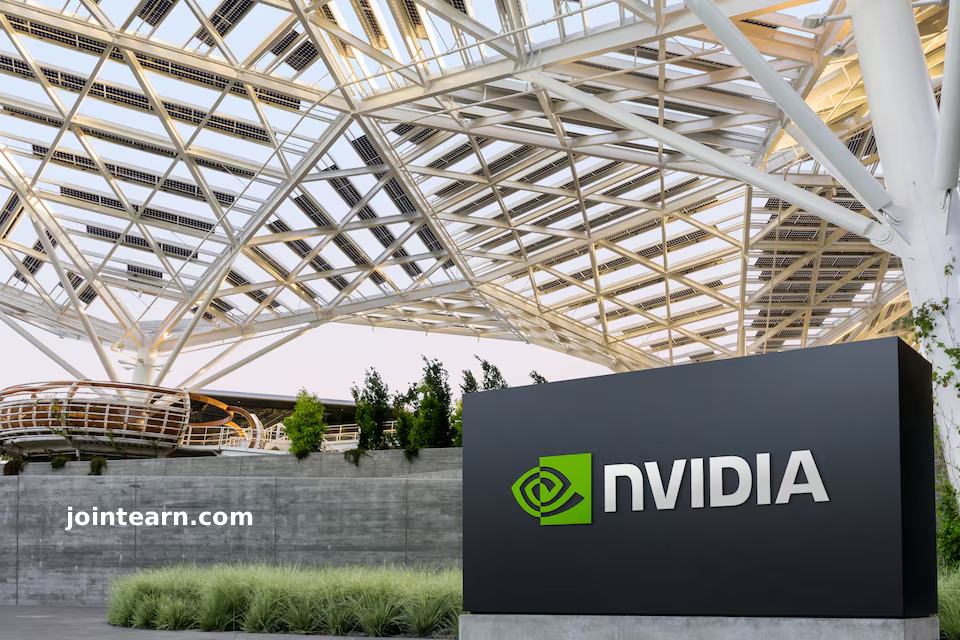
AI and Partnerships Spark Renewed Momentum in Self-Driving Cars
The self-driving car industry, long plagued by high costs, regulatory hurdles, and technical delays, is seeing a resurgence as chipmakers like Nvidia and major automakers form partnerships to accelerate deployment.
At this year’s CES 2026 in Las Vegas, Nvidia unveiled its next-generation Alpamayo AI platform, aimed at powering robotaxi fleets and advanced driver-assistance systems (ADAS). The platform is open-source, making it a key alternative for Tesla rivals seeking to develop autonomous technologies without building proprietary systems from scratch.
Key Industry Partnerships
Recent collaborations highlight the diversity of approaches in autonomous driving:
- Lucid, Nuro, and Uber: Form a robotaxi alliance using Nvidia’s AI chips
- Mercedes-Benz: Announces a Level 2+ ADAS system for U.S. streets, enabling semi-autonomous driving under driver supervision
- AWS & Aumovio: Partner to support commercial rollout of self-driving vehicles
- Kodiak AI & Bosch: Team up to scale production of autonomous trucking hardware and sensors
These partnerships aim to reduce costs, improve scalability, and accelerate deployment, leveraging AI to handle the massive data and validation requirements of autonomous vehicles.
The Role of AI in Reducing Development Costs
AI and generative AI tools are transforming vehicle development, allowing engineers to test and validate systems with fewer resources and lower costs.
“AI is a big accelerant for the industry because it allows significant development and validation with significantly fewer resources,” said Ozgur Tohumcu, general manager of Amazon Web Services’ automotive unit.
This approach is helping Western automakers catch up with China, where Level 3 autonomous vehicles—allowing hands-off driving—are already gaining government approval.
Realistic Expectations: Level 2 vs. Full Autonomy
While enthusiasm for fully autonomous Level 5 vehicles persists, industry veterans caution against overestimating timelines.
- Jochen Hanebeck, CEO of Infineon, emphasized that revenue-generating driver assistance systems (Level 2) are the immediate priority, rather than full self-driving, which remains costly and complex.
- Early robotaxi deployments are expanding, but data, fleet size, and logistics costs remain significant barriers.
“I don’t see a tsunami flowing toward Level 5 anytime soon,” Hanebeck noted.
Nvidia’s Open-Source Advantage
Nvidia’s Alpamayo platform offers legacy automakers a flexible alternative to Tesla’s proprietary system, enabling multiple companies to collaborate and innovate without starting from scratch. Analysts compare this model to Apple vs. Android in smartphones, with Nvidia acting as the open ecosystem that fosters competition.
Ali Kani, Nvidia’s automotive GM, expressed optimism:
“There are foundational pieces of technology that make us feel like we’re there.”


Leave a Reply