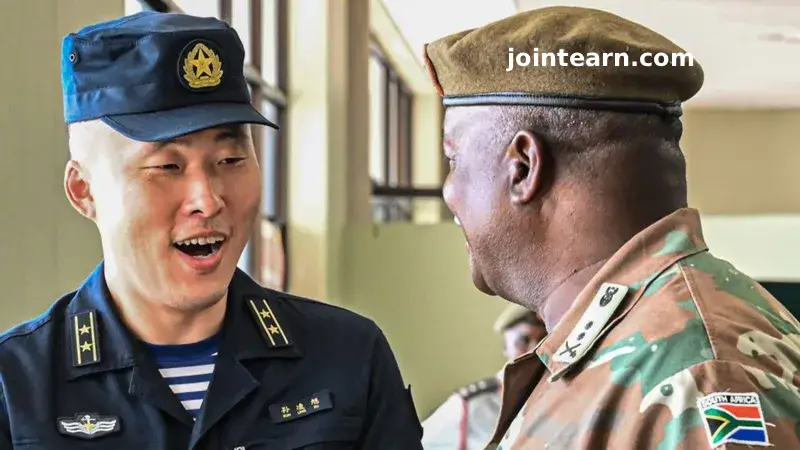
South Africa’s hosting of joint naval exercises with China, Russia, and Iran is raising eyebrows in Washington and could further strain the country’s already tense relationship with the United States. The week-long military drills, known as “Will for Peace”, are part of a BRICS+ initiative aimed at enhancing maritime cooperation among major emerging economies.
The exercises began on Friday at Simon’s Town naval base near Cape Town, with vessels from participating nations sailing into South Africa’s main naval harbor. While the South African government frames the exercises as a training and maritime safety initiative, critics warn of political repercussions given the participants’ global profiles.
BRICS+ Expansion and Strategic Implications
The BRICS alliance, originally formed in 2006 with Brazil, Russia, India, and China, added South Africa in 2010, creating the acronym BRICS. In recent years, the group expanded to include Egypt, Ethiopia, Indonesia, Iran, and the United Arab Emirates, forming BRICS+, a bloc aiming to challenge Western economic and political influence.
The “Will for Peace” naval drills include interoperability exercises, joint maritime safety operations, and protection of shipping lanes, according to South Africa’s Defence Department. However, no official breakdown of participating countries was given, highlighting the sensitivity of the event.
Domestic Criticism and Political Tensions
Some political analysts and opposition parties have raised concerns about the political optics of hosting exercises with Russia and Iran, both of which face international sanctions and are involved in active conflicts.
Chris Hattingh, the Democratic Alliance’s defence spokesperson, criticized the exercises:
“Hosting and training with such forces cannot be described as neutral or non-aligned. It is a political choice, whether the government admits it or not.”
Others, including defence analyst Dean Wingrin, suggest practical reasons for South Africa’s participation. Years of budget cuts and underfunding have left the South African Navy with limited operational capacity, making any opportunity to exercise with well-equipped navies critical for maintaining skills and readiness.
Deputy Defence Minister Bantu Holomisa echoed this view, calling the exercises an honour and morale booster for South African forces.
Strained Relations with the United States
South Africa’s relationship with the U.S. has deteriorated over the past years, particularly during Donald Trump’s presidency. Trump accused South African authorities of failing to protect white minorities and offered refuge to Afrikaners, while also imposing tariffs and reducing aid to the country.
Tensions were exacerbated by Pretoria’s role in taking a case against Israel to the International Court of Justice (ICJ) over alleged genocide in Gaza. Trump publicly rejected the allegations and criticized South Africa’s leadership, including President Cyril Ramaphosa, during high-profile meetings and social media posts.
Economically, analysts warn that South Africa cannot afford further alienation from the U.S., a major trading partner and source of investment and jobs. William Gumede, a professor at the University of the Witwatersrand, notes:
“US companies in South Africa alone produce more than 500,000 jobs, while Chinese companies employ far fewer. Pragmatic relations with the U.S. are critical for the economy.”
Strategic and Practical Considerations
Despite political concerns, some experts argue that the naval drills serve practical purposes, such as combating piracy, securing trade routes, and building maritime capabilities. Sandile Swana, a political analyst, said:
“The objective is to make the seas safe for international trade. By any standards, that should be welcome. Trump’s threats are extreme but often inconsistent.”
Nevertheless, the timing and participants of the exercise are likely to raise questions in Washington, especially in light of broader geopolitical tensions involving the U.S., China, Russia, and Iran.
Balancing Domestic Politics and Foreign Policy
South Africa’s ruling party, the African National Congress (ANC), has traditionally aligned ideologically with China and respects Russia’s historical support during the anti-apartheid struggle. However, after losing its parliamentary majority in 2024, the ANC now governs in coalition with parties including the Democratic Alliance (DA), making foreign policy coordination more complex.
Analysts argue that South Africa’s current stance may alienate the U.S., potentially jeopardizing trade negotiations and economic stability. Gumede warns:
“If we don’t adopt a more pragmatic foreign policy toward the U.S., South Africa risks being caught in geopolitical conflicts and could become the biggest loser in global power contests.”
Conclusion
The BRICS+ “Will for Peace” naval exercises highlight South Africa’s delicate geopolitical balancing act. While the drills offer practical benefits for the South African Defence Force, they also carry political and economic risks due to participation by countries at odds with the U.S.
South Africa faces the challenge of maintaining strategic independence, protecting economic interests, and managing relationships with both Western and emerging global powers, all while keeping domestic political coalitions intact. The outcome of this naval exercise may signal how Pretoria navigates these competing pressures in the months ahead.


Leave a Reply