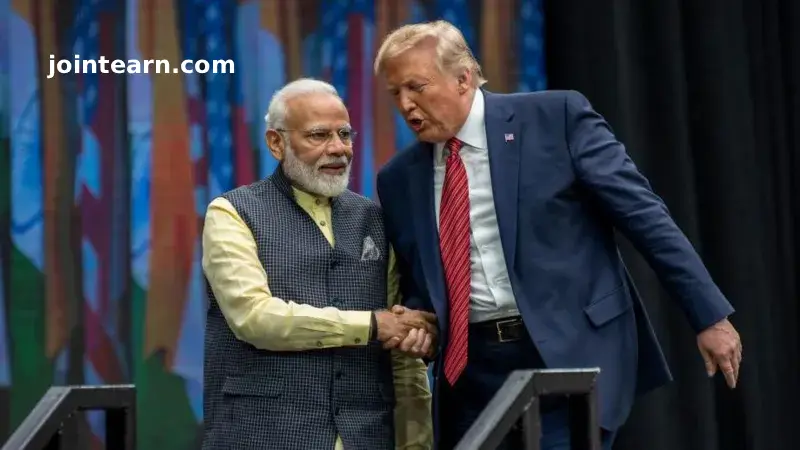
India has rejected claims by US Commerce Secretary Howard Lutnick that the stalled trade deal between the United States and India was due to Prime Minister Narendra Modi not calling President Donald Trump. The remarks, made during a recent podcast, suggested that the bilateral deal was nearly finalized but faltered because of Modi’s reluctance to set up a phone call with Trump.
India’s government called this characterization “not accurate,” emphasizing that both countries have been engaged in ongoing negotiations for a mutually beneficial bilateral trade agreement since February 2025.
Background on the Trade Dispute
Tensions between Washington and Delhi escalated after the U.S. imposed 50% tariffs on Indian goods in August 2025, partially in response to India’s continued purchases of Russian oil. These tariffs have contributed to a cooling of what was once a warm relationship between the two leaders.
While both sides have returned to the negotiating table, no formal deal has been concluded, and several informal deadlines have passed. Agriculture remains a major sticking point, with the U.S. pushing for greater access to India’s farm sector, while Delhi maintains strict protection for its domestic farmers.
Lutnick’s Comments and India’s Response
During the All-In Podcast, Lutnick claimed that the trade deal was nearly complete and that India’s delay in arranging a phone call between Modi and Trump caused the deal to fall through. He also described Trump’s negotiation style as a “staircase,” where the first agreement yields the best terms.
“It was all set up. I said [to the Indian side] you got to have Modi call the president. They were uncomfortable doing it, so Modi didn’t call,” Lutnick said.
India’s foreign ministry spokesperson, Randhir Jaiswal, countered these assertions, stating that:
“India and the US were committed to negotiating a bilateral trade agreement as far back as 13 February last year. Both sides have held multiple rounds of negotiations and on several occasions were close to a deal. Modi and Trump spoke on the phone eight times last year covering different aspects of our wide-ranging partnership.”
The Indian government emphasized that the deal’s progress cannot be reduced to a single phone call or political gesture.
Energy and Tariffs Dispute
The U.S.-India trade tensions have been further fueled by India’s purchase of Russian oil, which increased after the outbreak of the Ukraine war. Washington threatened higher tariffs in response, while Delhi defended its energy strategy, citing the energy needs of its 1.4 billion population.
Since the U.S. tariffs were implemented, Indian oil refiners have reportedly reduced their purchases from Russia, but India’s goods exports to the U.S. still rose more than 22% in November 2025 compared to the previous year, showing resilience despite trade friction.
Diplomatic Strains and Broader Context
The trade dispute comes amid broader strains in US-India relations. While Modi was one of the first world leaders to meet Trump at the White House following his inauguration, the relationship has soured over issues including:
- U.S. claims about Trump brokering a ceasefire with Pakistan, which Delhi denied.
- Delhi’s refusal to accept third-party mediation on Kashmir.
- Ongoing disagreements over tariffs, energy policy, and market access.
U.S. lawmakers, including Senator Lindsey Graham, have supported legislation imposing harsher secondary sanctions on countries trading with Russia, raising the stakes for India.
Current Status of Negotiations
Despite the rhetoric and tariffs, both countries remain committed to continuing negotiations for a balanced trade agreement. India has reiterated that it is “closely following developments” regarding new U.S. bills that could affect trade and sanctions, while maintaining that any decisions will prioritize India’s domestic economic and energy needs.
Experts note that the situation illustrates the complex interplay of trade, diplomacy, and domestic policy in US-India relations. The final deal, if reached, will need to balance U.S. demands for market access with India’s protection of domestic sectors and strategic independence.


Leave a Reply