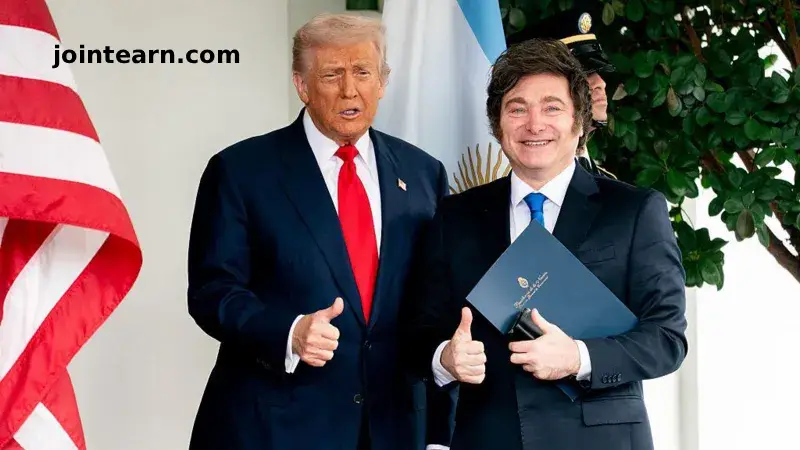
The United States government has hailed its financial intervention in Argentina’s currency as a resounding success, describing it as a “homerun deal” that stabilized the peso and delivered profits to American taxpayers. The announcement highlights a rare case of US involvement in foreign currency markets paying off amid global financial volatility.
Treasury Secretary Bessent Confirms Successful Repayment
US Treasury Secretary Scott Bessent confirmed that American support for the Argentine peso had been fully repaid. The funds, previously held in the US exchange stabilization fund, no longer include any Argentine pesos.
“Stabilising a strong American ally – and making tens of millions in profit for Americans – is an America First homerun deal,” Bessent said in a social media statement.
The intervention, initially controversial, was designed to prevent further declines in the peso and support the political prospects of Argentine President Javier Milei’s party in the lead-up to the national midterm elections.
Background: Peso Crisis and US Intervention
In September 2025, the Argentine peso experienced sharp declines amid market fears and political uncertainty. Citizens and investors, wary of past economic shocks following elections, began dumping the currency.
The US government acted to purchase pesos and extend a swap line to Argentina, allowing the South American country to exchange pesos for dollars. This maneuver helped halt the peso’s decline and ultimately contributed to Milei’s party winning a landslide victory in the midterm elections.
Financial Details of the Deal
According to Argentine government reports:
- The US ultimately purchased $2.5 billion in pesos for dollars from a potential $20 billion swap line.
- An additional $872 million in support was provided involving IMF-held reserves.
- The deal was officially settled by Argentina’s central bank in December 2025.
Despite criticisms from Democrats over the potential risk to US taxpayer money, the repayment has been regarded as a clear financial win. Brad Setser, senior fellow at the Council on Foreign Relations, said that while tens of millions in profit is modest relative to total sums involved, getting the money back is the “straightforward definition of success.”
Analysts Urge Caution Despite Short-Term Gains
Experts caution that Argentina’s economic challenges remain significant, even with the peso stabilized. Setser noted that Argentina has relied heavily on the US intervention, spending substantial reserves to prop up the currency last year.
“It’s been a short term success – Bessent got his money back. But I remain worried that Argentines are relying too heavily on the expectation that Secretary Bessent will ride to the rescue … and therefore aren’t showing enough urgency in rebuilding their own reserves,” he said.
Economists warn that long-term economic reforms will be critical for Argentina to maintain currency stability and avoid future financial crises, despite the temporary relief provided by US support.
Political Implications
The peso intervention also underscores the close relationship between the US and Argentina under President Milei, as well as the strategic use of economic tools in foreign policy. Analysts suggest the success of this deal may encourage similar interventions in the future where US strategic allies face financial turmoil, though such moves carry inherent risks.
The US Treasury’s handling of the peso crisis demonstrates a high-profile example of foreign currency stabilization, political influence, and international economic strategy converging in a single operation.


Leave a Reply