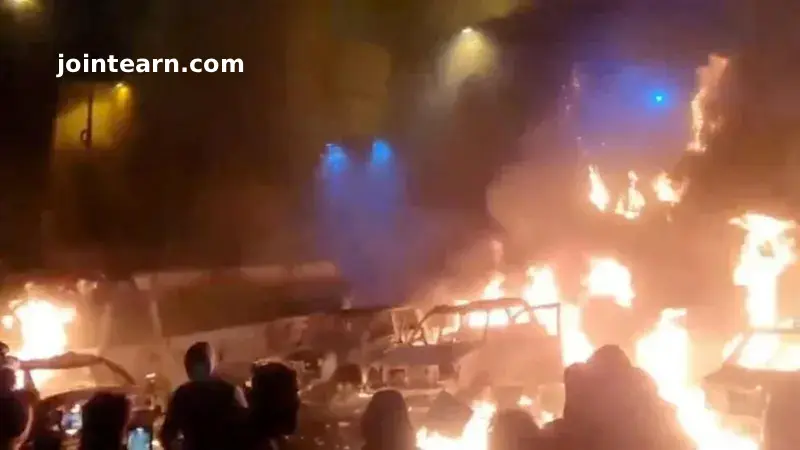
Iranian hospitals are facing a growing humanitarian crisis as anti-government protests enter their second week. Medical staff report being overwhelmed by the sheer number of injuries, with some facilities operating in crisis mode and struggling to cope with critical cases. Meanwhile, US President Donald Trump has issued repeated warnings to Tehran, heightening tensions and placing international scrutiny on the Iranian government’s handling of the unrest.
Medical Facilities Struggle Under Surge of Injuries
In Tehran, Farabi Hospital, the city’s main eye specialist center, has reportedly gone into crisis mode, suspending non-urgent procedures and calling in additional staff to manage the influx of emergency cases. Doctors report treating a large number of patients with gunshot injuries to the eyes and head, reflecting the violence faced by protesters.
Similar reports have emerged from the southwestern city of Shiraz, where a hospital medic told the BBC that the facility lacked enough surgeons to cope with the injured being brought in. Both hospitals described the situation as overwhelming, highlighting the scale of medical emergencies generated by the nationwide unrest.
Casualties and Arrests Mount Across Iran
Since the protests began on 28 December, Iranian human rights groups have reported at least 50 protesters and 15 security personnel killed. The US-based Human Rights Activist News Agency (HRANA) also reported over 2,311 arrests.
The Norway-based Iran Human Rights NGO (IHRNGO) confirmed that at least 51 protesters, including nine children, have died. BBC Persian verified the identities of 22 victims by speaking with families directly.
International Leaders Call for Peaceful Protest Protections
The growing violence has prompted global condemnation. UN Secretary-General spokesperson Stéphane Dujarric emphasized the right to peaceful demonstration, stating that governments have a responsibility to protect this right.
European leaders, including French President Emmanuel Macron, UK Prime Minister Keir Starmer, and German Chancellor Friedrich Merz, released a joint statement urging Iranian authorities to allow freedom of expression and peaceful assembly without fear of reprisals.
Iranian Government Defiance and US Pressure
Iran’s Supreme Leader Ayatollah Ali Khamenei has maintained a hardline stance, asserting that the Islamic Republic “will not back down” and remains committed to defending the state against what he calls “destructive elements.” In televised remarks and speeches to supporters, he framed the protests as a threat to national stability, echoing earlier warnings issued by Iran’s Supreme National Security Council (SNSC) and the Islamic Revolutionary Guard Corps (IRGC).
In response, the US has escalated pressure. President Donald Trump warned that the Iranian regime would “get hit very hard” if peaceful protesters are harmed, specifying that US involvement does not imply ground forces deployment. Secretary of State Marco Rubio also reaffirmed US support for protesters, highlighting the global spotlight on Iran’s domestic situation.
Iran Blames the US for Protests
Iran’s government has sought to frame the unrest as foreign-instigated, accusing the US and Israel of inciting violence. A letter to the UN Security Council by Iran’s foreign minister, Abbas Araghchi, described the demonstrations as “violent subversive acts and widespread vandalism” encouraged by external actors.
The US State Department dismissed these claims, calling them a “delusional attempt to deflect from Iran’s domestic challenges”.
Outlook: Strategic Restraint vs. Crackdown
Reports indicate a dual approach by Iranian authorities:
- Tehran: Security forces appear restrained in high-profile areas to avoid mass casualties that could provoke international condemnation.
- Provinces: Outside the capital, crackdowns have been swift and lethal, consistent with historical tactics by the IRGC and Basij militia to suppress widespread dissent.
Authorities have issued repeated warnings to protesters, labeling them “armed vandals” and “disruptors of peace and security.” The IRGC’s intelligence arm stated it will continue operations “until the complete defeat of the enemy’s plan.”
Medical and human rights experts warn that hospitals will remain overwhelmed as long as protests continue and security responses escalate, making Iran’s ongoing unrest a serious humanitarian and political crisis.


Leave a Reply