Nigeria’s power sector is witnessing a wave of acquisitions that could reshape the industry and underscore the impact of ongoing reforms. With private capital seen as essential to bridging the country’s electricity gap, recent transactions signal renewed confidence and the growing attractiveness of the sector.
According to the United Nations Development Programme (UNDP), financing is central to unlocking the full potential of the government’s electricity reforms over the past two and a half years. Key reforms include the Electricity Act 2023 and the National Integrated Electricity Policy (NIEP) 2025, which have already lifted power supply from 4,000 MW to 6,000 MW. However, achieving universal access will require Nigeria to generate 40,000 MW, necessitating significant private sector investment.
At the Mission 300 Summit, President Bola Tinubu emphasized the importance of public-private partnerships, estimating a $23.2 billion investment is needed for last-mile electrification.
Major Acquisitions Signal Confidence
Transgrid Enerco Limited recently acquired a 60% stake in Eko Electricity Distribution Company (EKEDC), marking the first market-driven acquisition of a Nigerian distribution company since privatisation. EKEDC serves strategic areas in Lagos and Ogun States, reflecting the growing role of private capital in expanding electricity access.
The headline deal, however, involved Geregu Power Plc, a publicly listed power generation company contributing over 10% of Nigeria’s national grid. In December 2025, MA’AM Energy Limited acquired a 95% equity interest in Amperion Power Distribution Company, the majority shareholder of Geregu Power, in a transaction valued at $750 million (≈N1.1 trillion). The deal, backed by Nigerian banks and advised by Blackbirch Capital, resulted in a change of beneficial ownership for 77% of Geregu’s issued share capital.
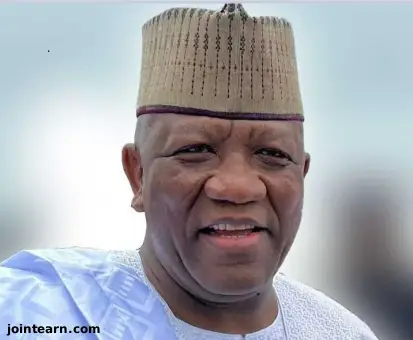
The acquisition brought in a new board blending governance, finance, and technical expertise, chaired by Senator Abdul-Aziz Yari, alongside experienced finance and power sector professionals. Outgoing executives were retained to ensure a smooth transition.
Market Implications and Expectations
Industry experts say the Geregu acquisition may mark a turning point for Nigeria’s power sector. Kehinde Hassan of GTI Capital noted the deal sets a new benchmark for GenCo valuations, potentially spurring further mergers, private equity investment, and sector recapitalisation.
Investors and analysts are closely watching MA’AM Energy’s strategic direction, including operational efficiency, dividend policies, and expansion projects such as Geregu II and III. The company’s financials for Q3 2025 showed total revenue of N131.47 billion, with a post-tax profit of N25.1 billion, while projections for Q1 2026 forecast N57.12 billion in revenue and N12.03 billion in post-tax profit.
Stakeholder Confidence
Shareholder groups have welcomed the investment as a significant boost for Nigeria’s electricity sector and capital market. While minority shareholders remain cautious, the overarching sentiment is that large-scale domestic investment in a strategic sector reinforces confidence, drives value creation, and signals Nigeria’s readiness for deeper private-sector participation.
As Nigeria’s power sector consolidates, acquisitions like Geregu Power are setting a new standard for investment, governance, and strategic growth—positioning the industry as a key driver of national economic development.


Leave a Reply