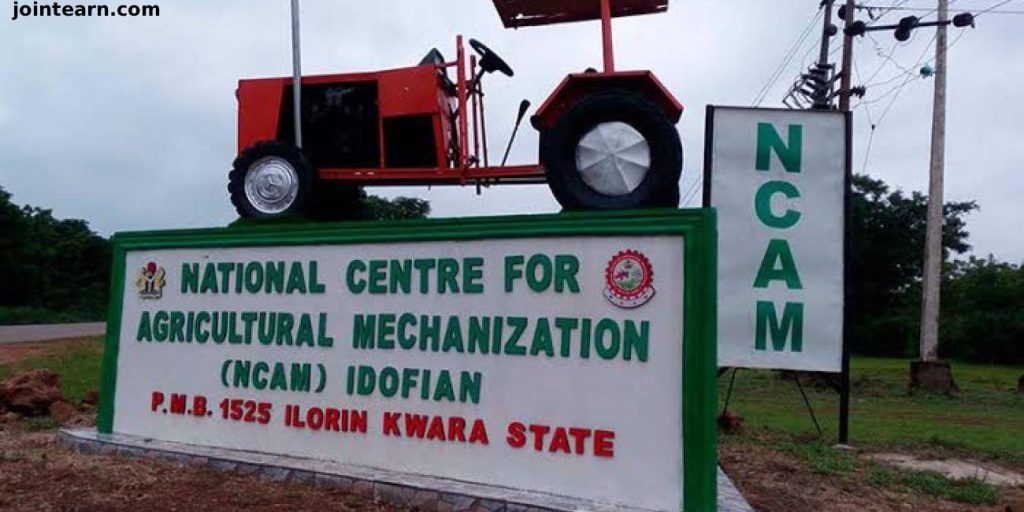
Nigeria’s National Centre for Agricultural Mechanisation (NCAM), based in Ilorin, Kwara State, has allocated N700 million in the 2026 budget for the distribution of rice grains in one community, a move that has raised concerns about the scale and targeting of the project.
A review of the 2026 federal budget by SaharaReporters shows that the allocation falls under NCAM’s capital expenditure for the year. According to the budget details, the rice distribution project is planned exclusively for Adewole community.
Further checks reveal that Adewole is located in Ilorin West Local Government Area of Kwara State, the same local government where the National Centre for Agricultural Mechanisation is domiciled.
The size of the allocation—earmarked for a single community—has drawn scrutiny, particularly given NCAM’s core mandate. The agency is primarily tasked with promoting the development, testing, and dissemination of agricultural machinery and technologies across Nigeria, rather than direct food distribution.
A broader review of the 2026 budget indicates that other agricultural institutions have also earmarked large sums for grain-related interventions, though typically across wider regions.
For example, the National Cereals Research Institute has budgeted N4.1 billion for the supply of grains to rural farmers in selected communities in Nigeria’s South-South region. The same institute also plans to spend N4.9 billion on grain purchases for rural farmers nationwide, as well as N350 million on capacity-building programmes for grain producers and other stakeholders in South-Western Nigeria.
Similar budgetary patterns have appeared in previous years. In 2025, SaharaReporters reported that the National Institute for Culture Orientation (NICO) planned to spend N200 million on rice distribution in the Southern Ijaw Federal Constituency of Bayelsa State.
That budget item, listed under code ERGP20257419, specified that the rice was intended for constituents in Southern Ijaw. Other provisions in the same budget included N100 million for grain distribution in Mabuhu, Kaduna State, and another N100 million for fishing nets, accessories, and fishermen empowerment in Southern Ijaw.
However, a review of NICO’s statutory functions shows that rice distribution does not fall within its legal mandate. The institute is established to promote cultural orientation, national values, and awareness of Nigeria’s history and heritage.
Despite this, the 2025 budget indicated that NICO also planned to execute projects such as road construction, installation of solar street lights, and classroom rehabilitation—activities that similarly fall outside its defined responsibilities.


Leave a Reply