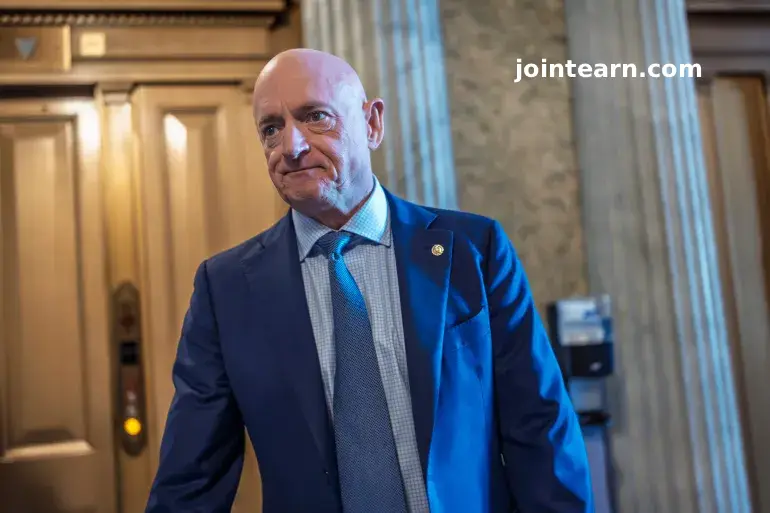
Washington, D.C. – U.S. Senator Mark Kelly has filed a lawsuit against the Department of Defense (DoD) and its Secretary, Pete Hegseth, accusing the Trump administration of violating his First Amendment rights through a campaign of “punitive retribution.” The complaint, filed on Monday, January 13, 2026, also names the Department of the Navy and its Secretary, John Phelan, as defendants.
Kelly’s lawsuit centers on the government’s response to a video he and five other Democratic lawmakers released in November 2025, reminding military personnel of their legal obligation to refuse illegal orders.
Background: The Controversial Video
The video featured six veteran lawmakers—all with service in the U.S. military or intelligence community—emphasizing that members of the armed forces have a duty under U.S. law to reject commands that violate the Constitution or federal law.
While Democrats framed the video as a reaffirmation of established policy, President Donald Trump and his allies labeled it “seditious,” calling for disciplinary action against the lawmakers involved.
Focus on Senator Kelly
Senator Kelly, a retired Navy captain and former astronaut, emerged as a prominent target of the administration. His distinguished career includes:
- Serving as a Navy pilot during the Gulf War
- Becoming a NASA astronaut alongside his twin, Scott Kelly
- Representing Arizona in the U.S. Senate
Kelly’s participation in the November video prompted the Department of Defense to open an investigation, warning that he could face court-martial proceedings, even as a retired officer.
Department of Defense Action
In January 2026, Secretary Pete Hegseth publicly announced that he had submitted a formal letter of censure against Kelly. The letter accused the senator of:
- “Conduct unbecoming of an office”
- Undermining military chain of command
- Releasing statements deemed “reckless and seditious”
Hegseth suggested that the censure could lead to:
- Demotion from Kelly’s retired Navy rank
- Reduction of retirement pay
On social media, Hegseth asserted that Kelly remained accountable to military justice and emphasized that the Department of Defense and American public expected enforcement.
Kelly’s Response and Legal Arguments
Senator Kelly condemned the actions as a politically motivated attack on free speech, warning that they send a “chilling message” to veterans. He stated on social media:
“Pete Hegseth is coming after what I earned through my twenty-five years of military service, in violation of my rights as an American, as a retired veteran, and as a United States Senator.”
On the Senate floor, Kelly emphasized that military rank is earned through service and sacrifice, not at the whim of political leaders. The lawsuit seeks to:
- Halt ongoing proceedings against Kelly
- Declare the letter of censure unlawful
- Protect legislative independence by preventing intimidation of a sitting member of Congress
Constitutional and Due Process Claims
The complaint asserts that the Trump administration’s actions:
- Violate Kelly’s First Amendment rights, by punishing him for political speech
- Undermine legislative independence, by targeting a senator for exercising political expression
- Breach due process, by pre-determining punishment before any formal review of facts
The lawsuit highlights social media posts from President Trump threatening severe consequences, including language describing Kelly’s actions as “seditious behavior, punishable by death.” Kelly’s attorneys argue that the administration’s approach lacks any fair procedural assessment.
Significance and Implications
Legal analysts say Kelly’s case is unprecedented, noting that:
- Never before has the executive branch attempted military sanctions against a sitting senator for political speech
- The case could set a national precedent on the balance between military authority, free speech, and legislative protections
- The lawsuit may influence future actions against retired military officers and other veterans who engage in political advocacy
Conclusion
Senator Mark Kelly’s lawsuit represents a landmark challenge to the Trump administration’s handling of political speech, military authority, and veterans’ rights. The outcome may have far-reaching consequences for civil-military relations, legislative independence, and the protection of First Amendment freedoms for current and retired service members.


Leave a Reply