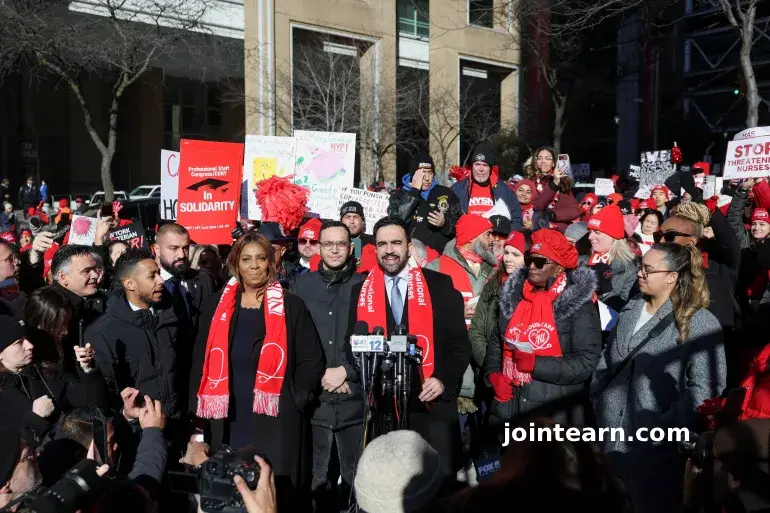
New York City, NY – In the largest nurses’ strike in the history of New York City, nearly 15,000 nurses walked off the job on Monday, January 12, 2026, across three major hospital systems—Mount Sinai, Montefiore, and NewYork-Presbyterian—after months of stalled contract negotiations. The strike highlights growing concerns over hospital staffing shortages, healthcare benefits, and workplace safety, particularly during a severe flu season.
Hospitals and Union Demands
The nurses, organized under the New York State Nursing Association (NYSNA), are demanding:
- Safe staffing ratios, particularly in critical care units
- Improved healthcare benefits
- Stronger protections against workplace violence
According to NYSNA, hospital management at New York’s wealthiest hospital systems has refused to make meaningful progress on these key issues.
“Management at the richest hospitals in New York City are threatening to discontinue or radically cut nurses’ health benefits,” the union said.
Financial records indicate that these hospitals are highly profitable:
- NewYork-Presbyterian: $547 million net income (2024)
- Mount Sinai: $114 million net income (2024)
- Montefiore: $288.62 million net income (2024)
Union representatives allege that hospital administrations are attempting to roll back safe staffing standards established by New York State law in 2021, which mandates minimum nurse-to-patient ratios and staffing committees in every hospital unit.
Historical Context: COVID-19 and Prior Strikes
The COVID-19 pandemic significantly strained New York’s healthcare system, leaving nurses overextended and underprotected. In 2023, nurses conducted a three-day strike, successfully forcing hospital systems to enforce safe staffing standards across all units through arbitration.
This current strike builds on those past struggles, with nurses asserting that hospitals are now attempting to roll back protections and failing to address rising workplace violence, including active shooter incidents at Mount Sinai in November 2025 and a fatal shooting at NewYork-Presbyterian in Brooklyn last week.
Political Support and Public Attention
The strike has drawn significant political support. New York City Mayor Zohran Mamdani, elected in 2025 on a pro-labour platform, joined nurses on the picket lines. He emphasized:
“No New Yorker should have to fear losing access to health care — and no nurse should be asked to accept less pay, fewer benefits or less dignity for doing lifesaving work.”
State Assembly Member Alex Bores and community activist Lindsey Boylan also joined picketers, highlighting the unified energy and determination among nurses to fight for improved conditions.
Hospital Responses
NewYork-Presbyterian stated that it remains open to negotiations and has proposed significant wage increases, including $4,500 lump-sum payments that could be applied to wages, benefits, or staffing. Mount Sinai and Montefiore have not publicly commented.
The union contends that these offers fall short of addressing core safety and staffing issues. NYSNA is also demanding measures such as metal detectors at hospital entrances to protect staff amid rising violence.
Impact on Healthcare Services
The strike comes during a particularly severe flu season, which has significantly increased hospital admissions. According to New York City Department of Health data, nearly 9% of emergency room visits were for flu during the week of December 20, 2025. The most recent week of available data shows a slight decline to 5% of ER visits.
Health policy expert Bruce Y. Lee from CUNY Graduate School of Public Health said:
“Staffing needs are higher during severe flu seasons, making this a particularly difficult time to not have all healthcare professionals available.”
The timing gives striking nurses additional leverage in their negotiations, as the public recognizes the vital role they play in the city’s healthcare system.
Political Implications
The strike represents a major political test for New York officials:
- Governor Kathy Hochul, up for re-election, faces pressure to support nurses while ensuring patient care continuity.
- Mayor Zohran Mamdani, early in his administration, is being tested on his pro-labour stance in the city’s largest healthcare system.
Boylan noted the remarkable turnout and morale of nurses:
“The energy was incredible. Everyone was marching and chanting. It was clear the nurses were unified and prepared to go the distance.”
The strike has received broad attention, highlighting both longstanding systemic issues in hospitals and the ongoing challenge of balancing healthcare staffing with patient care demands.
Conclusion
The New York City nurses’ strike underscores critical issues facing the nation’s healthcare system: staffing shortages, inadequate benefits, workplace safety, and the political dynamics of labor negotiations. With nearly 15,000 nurses participating, the strike marks a historic moment in New York’s healthcare labor movement, drawing attention from policymakers, healthcare administrators, and the public alike.


Leave a Reply