Washington, D.C. – United States President Donald Trump announced on Monday, January 12, 2026, that any country engaging in trade with Iran will face a 25 percent tariff on all business conducted with the United States. The unprecedented move adds to escalating tensions between the US and Iran, coming amid widespread antigovernment protests across Iran and renewed US threats of military action.
Trump’s Announcement and Global Trade Implications
Trump made the announcement in a post on his social media platform, Truth Social, declaring the policy “final and conclusive,” but providing few details on enforcement or timelines.
“Effective immediately, any Country doing business with the Islamic Republic of Iran will pay a Tariff of 25% on any and all business being done with the United States of America,” Trump wrote.
The statement did not specify which nations might be targeted, but major trading partners of Iran—including Russia, China, Brazil, Turkey, Iraq, and the United Arab Emirates (UAE)—could be significantly impacted. According to Trading Economics, these countries maintain extensive commercial ties with Iran, ranging from energy imports to industrial goods.
China, for instance, has strong economic relations with Iran, and Foreign Ministry spokeswoman Mao Ning said:
“We have always believed that there are no winners in a tariff war, and China will resolutely safeguard its legitimate rights and interests.”
Heightened US-Iran Tensions
Trump’s tariff announcement comes after weeks of rising tension with Tehran, including threats of military action should Iran fail to comply with US demands regarding its nuclear and military programs.
In December 2025, Trump told reporters:
“Now, I hear that Iran is trying to build up again, and if they are, we’re going to have to knock them down. We’ll knock them down. We’ll knock the hell out of them. But, hopefully, that’s not happening.”
White House Press Secretary Karoline Leavitt later emphasized that air strikes remain on the table, while Trump has also signaled an interest in diplomacy if possible.
The US president has previously criticized Iran for its violent crackdown on antigovernment protests, warning that continued killings of demonstrators could provoke direct US military intervention. In a January 2, 2026 post, Trump wrote:
“If Iran shoots and violently kills peaceful protesters, which is their custom, the United States of America will come to their rescue. We are locked and loaded and ready to go.”
Context: Protests and Humanitarian Crisis in Iran
Iran has been gripped by widespread antigovernment protests and riots, fueled by economic hardships, political repression, and the legacy of long-standing human rights abuses. International human rights organizations report that hundreds of protesters have been killed, while Iranian state media claims more than 100 security personnel have died. The ongoing internet blackout in Iran has made independent verification difficult.
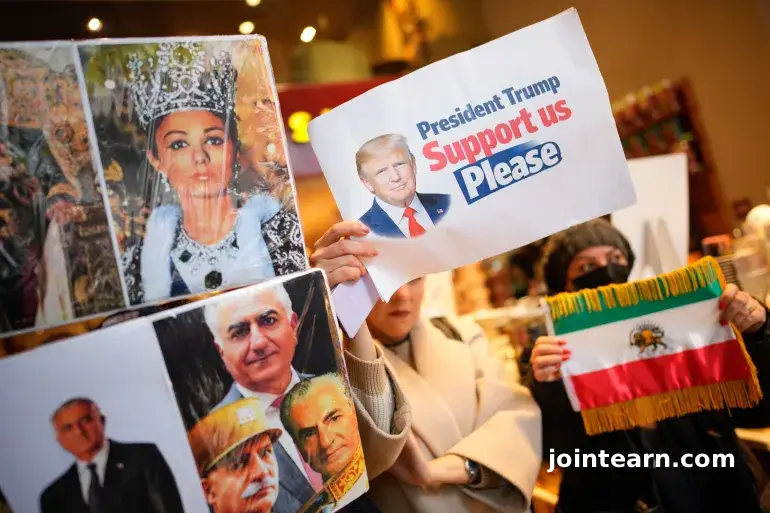
Demonstrations have spread beyond Iran’s borders, with Iranian expatriates in Istanbul, Turkey, holding rallies in support of the protesters. Many carried photos of Reza Pahlavi, the son of the late Shah Mohammad Reza Pahlavi, reflecting nostalgia for Iran’s pre-revolutionary monarchy and opposition to the current regime.
Strategic and Legal Implications
Trump’s tariff threat is part of a broader strategy to pressure Iran economically and militarily. Analysts note that imposing tariffs on major global trading partners of Iran could disrupt international supply chains, increase global inflation, and further strain US relations with allies and competitors alike.
In June 2025, the US conducted air strikes on three Iranian nuclear facilities, reportedly as part of a 12-day war initiated by Israel. Legal experts have questioned the legality of these strikes under international law, raising concerns about potential escalation into broader conflict.
The tariffs could also impact global trade with countries heavily reliant on US markets, particularly China and Brazil, as these nations would face substantial financial penalties for continuing commerce with Iran.
Iran-US Relations and Potential Consequences
The tariff and military threats come at a time when Iran is already experiencing internal instability, with the government facing domestic protests, economic challenges, and criticism from the international community.
Observers warn that Trump’s combined approach of economic pressure and military threats could exacerbate tensions in the Middle East, potentially leading to further regional conflict or retaliatory actions from Iran or its allies.
As of now, the Trump administration has not clarified enforcement measures, timelines for the tariff, or the specific nations that would be directly affected. However, the move signals a continuation of hardline US foreign policy toward Iran, echoing previous sanctions and military threats.


Leave a Reply