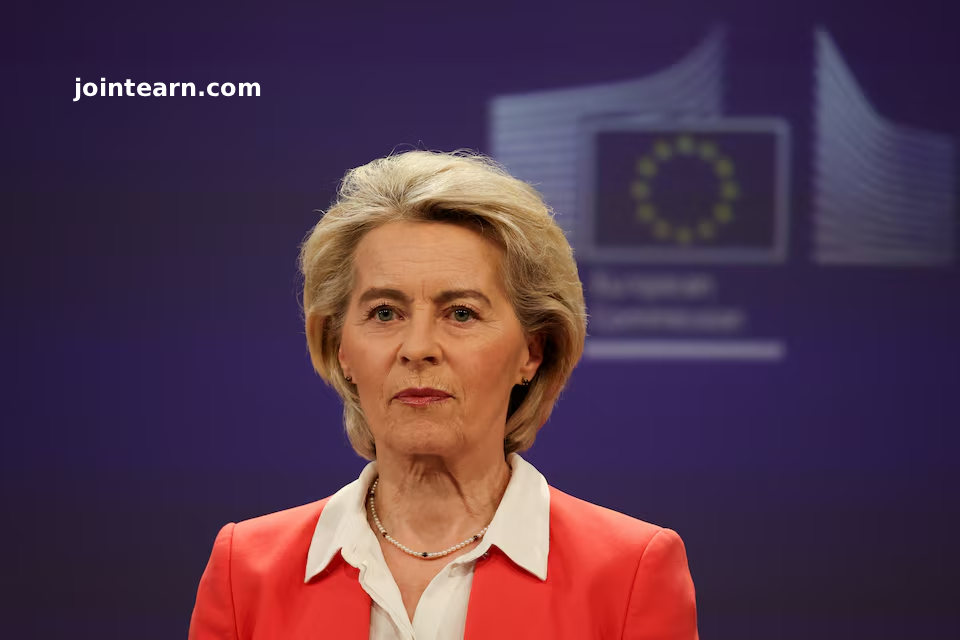
BRUSSELS – The European Union announced on Wednesday a major financial aid package for Ukraine, splitting the approved €90 billion ($104.89 billion) support into €30 billion for the country’s general budget and €60 billion earmarked for military supplies, according to European Commission President Ursula von der Leyen.
“We are taking a significant step in our ongoing support to build a stronger and more stable Ukraine,” von der Leyen said during a press conference in Brussels. The announcement underscores the EU’s dual approach of strengthening Ukraine’s economic stability while bolstering its defense capabilities amid ongoing security challenges.
Breakdown of EU Aid to Ukraine
The EU’s aid package is structured to address both civilian and military needs in Ukraine:
- €30 billion for the general budget: This portion aims to help Ukraine manage government expenditures, maintain essential services, and support economic resilience amid ongoing challenges.
- €60 billion for military support: These funds are primarily designated for purchasing military equipment, including defensive and offensive systems, from EU member states and European Free Trade Association (EFTA) countries. The allocation highlights the EU’s commitment to strengthening Ukraine’s defense capacity while supporting regional security.
EU’s Strategic Support for Ukraine
Von der Leyen emphasized that the aid package represents “the next step” in the EU’s long-term support for Ukraine. The funding comes in addition to previous assistance packages and demonstrates the bloc’s commitment to sustaining Ukraine during a period of ongoing geopolitical tension and conflict.
“The allocation of military support from the EU and EFTA ensures that Ukraine has access to high-quality equipment while also supporting European defense industries,” she said, highlighting the dual benefit of strengthening Ukraine and fostering regional economic activity.
Implications for Ukraine’s Stability
The €30 billion earmarked for Ukraine’s budget support is intended to stabilize public finances, pay public sector salaries, maintain social programs, and facilitate post-conflict reconstruction efforts. Analysts note that such financial assistance is crucial for mitigating inflationary pressures and maintaining social cohesion, particularly in regions directly affected by conflict.
Meanwhile, the €60 billion for military procurement will enhance Ukraine’s capability to defend its sovereignty, deter aggression, and ensure a more balanced security environment in the region. European officials view this approach as vital for both Ukraine’s self-defense and broader European security.
EU Coordination with EFTA Countries
A significant component of the military aid involves coordinated procurement from EU and EFTA member states, including Norway, Switzerland, and Iceland. This collaboration ensures that Ukraine receives standardized and interoperable military equipment, facilitating faster deployment and operational efficiency on the battlefield.
Looking Ahead
The European Commission stressed that the aid package is part of an ongoing commitment to Ukraine, reflecting a long-term strategy of financial stability, military resilience, and reconstruction support. Von der Leyen reiterated the EU’s pledge to closely monitor the implementation of the funds to maximize their impact and ensure transparency in Ukraine’s financial and defense sectors.


Leave a Reply