The Trump administration has announced it will terminate Temporary Protected Status (TPS) and work authorizations for Somali nationals in the United States, a move expected to affect around 1,100 people and likely face legal challenges.
The decision comes amid heightened scrutiny of the Somali community in Minnesota, the largest Somali population in the United States, and follows a series of controversial immigration policies targeting specific immigrant groups.
Homeland Security Confirms End of Somali TPS
Homeland Security Secretary Kristi Noem stated on January 13, 2026, that the United States would end Temporary Protected Status (TPS) for Somalis, a program designed to shield migrants from deportation when conditions in their home countries are unsafe.
“Country conditions in Somalia have improved to the point that it no longer meets the law’s requirement for Temporary Protected Status,” Noem said. “Further, allowing Somali nationals to remain temporarily in the United States is contrary to our national interests. We are putting Americans first.”
TPS not only prevents deportation but also allows migrants to obtain temporary work authorization, which enables them to legally work in the United States. The end of TPS will revoke these protections for Somali nationals who have relied on the program for years.
Trump Administration’s Focus on Somali Community
The Somali community in the United States has become a recurring target of President Trump’s immigration policies. Minnesota, home to roughly 80,000 Somali Americans, has been the focal point of recent immigration crackdowns.
Trump has made controversial statements about Somali immigrants, describing them as “garbage” and linking them to criminal activity. In addition, the administration has alleged widespread public benefits fraud within the Minnesota Somali community.
“We’re going to revoke the citizenship of any naturalised immigrant from Somalia or anywhere else who is convicted of defrauding our citizens,” Trump said, continuing his administration’s attacks on Somali residents.
Escalation of Immigration Enforcement in Minnesota
The announcement comes alongside a surge in immigration enforcement operations in Minnesota. Federal agents have reportedly:
- Conducted aggressive raids, breaking car windows and detaining individuals.
- Asked residents for proof of citizenship in public spaces.
- Used frequent force against protesters opposing immigration operations.
Civil liberties groups and local officials have condemned these measures as heavy-handed. Tensions escalated last week after a federal immigration agent shot and killed Renee Good, a US citizen and mother of three who was acting as a legal monitor during immigration enforcement actions.
Additionally, Minnesota has had access to federal childcare assistance cut off as part of the administration’s efforts to target Somali communities.
Legal Challenges Expected
The termination of TPS for Somalis is expected to face legal challenges. Lawyers and advocacy groups argue that conditions in Somalia remain unstable and dangerous, particularly in regions affected by armed conflict, famine, and political instability.
Historically, TPS is only revoked when conditions in the home country are deemed safe enough for return. Somali advocacy groups have highlighted the risk of deportation to an environment where personal safety, employment, and access to basic necessities are uncertain.
Community Response
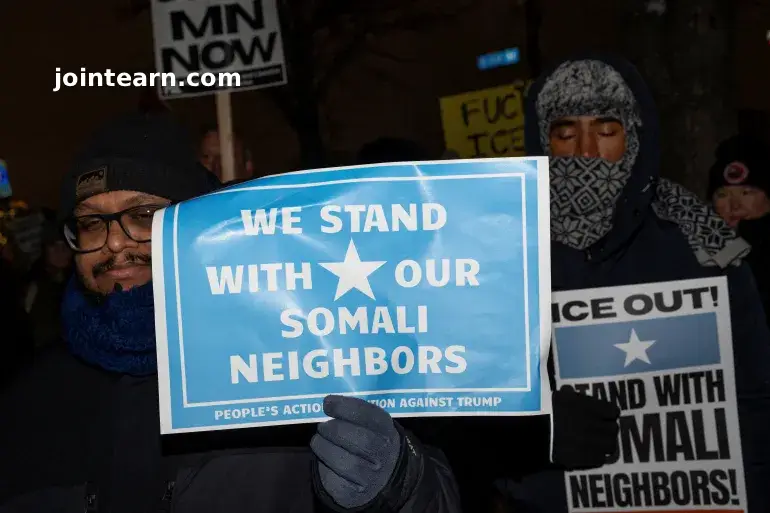
The Somali-American community and civil rights organizations have voiced strong opposition to the Trump administration’s actions. Demonstrations have taken place across Minnesota, with protestors carrying placards reading:
“We stand with our Somali neighbors.”
Community leaders warn that the policy could disrupt families, cause economic instability for Somali workers, and exacerbate tensions in cities where Somali immigrants are integral to local economies.
Broader Implications
The decision highlights the administration’s broader approach to immigration enforcement, including targeting specific nationalities and restricting access to federal benefits. Legal analysts predict that the TPS termination and citizenship revocation threats could set new precedents for how temporary protections are applied in the United States.


Leave a Reply