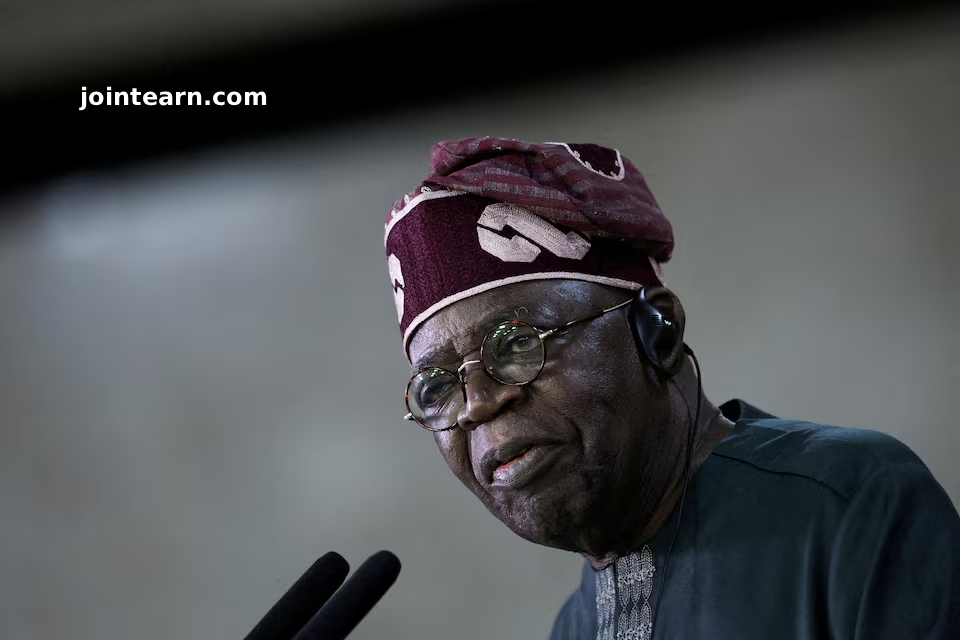
Nigeria is betting on green finance to drive its energy transition, unveiling plans for a $2 billion National Climate Change Fund to support projects that reduce emissions and boost climate resilience. President Bola Tinubu made the announcement during the Abu Dhabi Sustainability Week summit, highlighting the country’s growing commitment to sustainable energy and renewable investments.
$2 Billion Climate Fund to Support Emissions Reduction and Resilience
President Tinubu outlined Nigeria’s Climate Investment Platform, which aims to mobilize $500 million for climate-resilient infrastructure projects. In parallel, the National Climate Change Fund targets $2 billion in capitalisation, focusing on initiatives that accelerate emissions reduction, promote climate-smart infrastructure, and enhance resilience in vulnerable communities.
These measures reflect Nigeria’s broader Energy Transition Plan, which seeks to achieve net-zero emissions by 2060 while ensuring universal energy access for its growing population.
Nigeria-UAE CEPA Boosts Renewable Energy and Trade
In a major international development, Nigeria and the United Arab Emirates (UAE) signed a Comprehensive Economic Partnership Agreement (CEPA) designed to enhance trade and investment across key sectors, including:
- Renewable energy and clean technologies
- Aviation and logistics
- Agriculture and digital trade
- Climate-smart infrastructure
The CEPA is expected to open doors for private investors, promote sustainable industrialisation, and reinforce Nigeria’s position as a hub for green energy projects in Africa.
Oversubscribed Green Bonds Signal Strong Investor Interest
Investor appetite for Nigeria’s green finance initiatives is growing rapidly. In 2025, a 50 billion naira ($38 million) sovereign green bond attracted 91 billion naira in subscriptions, while Lagos State’s green bond was oversubscribed by nearly 98%.
President Tinubu cited these results as evidence that both domestic and international investors are eager to support Nigeria’s renewable energy investment opportunities.
Unlocking $25–$30 Billion in Climate Finance
To further scale its energy transition, Nigeria is seeking to mobilize $25–$30 billion annually in climate finance. A new Climate and Green Industrialisation Investment Playbook will guide private investors through the country’s manufacturing policies, regulatory landscape, and green energy incentives.
This builds on previous initiatives such as the $500 million Distributed Renewable Energy Fund, launched by the Nigeria Sovereign Investment Authority in March 2025, which catalyzed local financing for distributed renewable energy projects.
Technology Partnerships and Green Industrialisation
Nigeria is prioritising technology partnerships to modernize its energy grid and improve efficiency through artificial intelligence. Pilot projects in electric mobility and green industrialisation are also underway, positioning the country to lead on sustainable innovation in West Africa.
President Tinubu emphasized the importance of blended finance models, which combine public, philanthropic, and private investment. He argued that blended finance is more effective for emerging economies than traditional sovereign guarantees, which often limit access to funding and impose unfair burdens.
Progress in Non-Oil Sectors
Beyond green energy, Nigeria’s reforms are attracting broader investment. Non-oil exports have grown by 21%, and investment commitments across key sectors now exceed $50 billion, signaling that the country is ready for business while simultaneously pursuing sustainable development goals.
Conclusion
Nigeria’s ambitious $2 billion climate fund and strategic partnerships with countries like the UAE demonstrate a clear commitment to green finance and renewable energy investment. By leveraging private capital, technology, and innovative financial mechanisms, Nigeria is positioning itself to achieve net-zero emissions by 2060 while promoting sustainable growth, resilience, and energy access for its citizens.


Leave a Reply