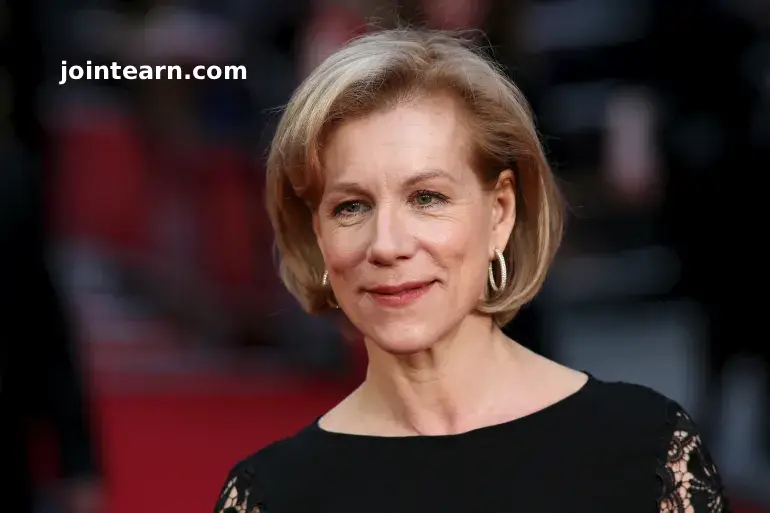
London, United Kingdom – Veteran British actress Juliet Stevenson, widely regarded as a national treasure, has emerged as a leading voice for Palestinian rights, using her platform to advocate for justice in Gaza and the occupied West Bank. Over the past two years, Stevenson has marched at rallies, written columns, produced films, signed protest letters, and spoken publicly about the ongoing humanitarian crisis.
In an exclusive interview with Al Jazeera, Stevenson discusses her activism, the importance of raising awareness among British mothers, and her frustration at the muted response from the arts and cultural sectors.
Advocacy Through Mumsnet Campaign
Last week, Stevenson joined over 100 prominent cultural figures, including Judi Dench, Meera Syal, and Sienna Miller, in writing to Justine Roberts, founder of Mumsnet. The group called on the platform to encourage the UK government to pressure Israel to allow aid into Gaza, particularly maternity care and essential hygiene supplies for women and girls.
“This campaign is about mothers for mothers,” Stevenson said. “The situation endured by mothers in Gaza is unimaginably brutal and horrific. We want to galvanize the mums of Great Britain to speak up for the mums of Gaza through their communities, one of which – and probably the most powerful – is Mumsnet.”
Mumsnet, which reaches roughly nine million monthly users, has agreed to meet with the group, signaling a potential platform for raising awareness and lobbying the government.
The Human Toll in Gaza
Stevenson, a mother herself, described the situation in Gaza as “unspeakable,” noting the devastating impact on children and parents alike.
“There are more child amputees now in Gaza than in any other time or place in history. Many children have lost all their family. Pregnant mothers are starving, giving birth to premature babies who struggle to survive. Most of Gaza’s healthcare system has been destroyed, and where hospitals are functioning, resources for maternal and neonatal care are minimal.”
She emphasized that the crisis in Gaza transcends political divisions, appealing to the shared humanity of parents everywhere.
Roots of Activism
Stevenson’s advocacy is informed by both personal and historical perspectives. Her husband is Jewish, and his mother was a Holocaust refugee from Vienna, instilling in Stevenson a profound understanding of injustice and the consequences of unchecked violence.
“I fully understand what the Holocaust left in its wake and the need for Jewish people to feel safe,” she said. “But what the Israeli government is doing now, what has been perpetrated against the Palestinian people since 1948, was never a just or wise solution. The UK is deeply implicated in those historical events.”
Stevenson has read extensively from both Palestinian and Israeli writers, striving for a balanced understanding that considers the safety and security of all civilians.
Career Risks and Personal Commitment
Despite the potential risks to her career, Stevenson remains resolute in her activism.
“If people don’t want to work with me because of my beliefs, then I don’t think I want to work with them. My career is not more important than the lives of Palestinian children. When I come to the end of my life, I want to know I did the right thing at the right time.”
She added that activism has reshaped her professional and personal life, surrounding herself with a community of like-minded individuals committed to justice and humanitarian work.
Silence in the Arts Industry
Stevenson expressed disappointment at the lack of engagement from her peers in the arts.
“I’m painfully disappointed by the silence in my industry, by the silence everywhere. At this point in the genocide, silence is not a passive act. It’s active – it’s a decision to collude.”
She drew parallels with historical events, noting that society often judges past silence harshly, yet fails to hold institutions accountable in the present. Stevenson called on arts and cultural institutions to use their platforms to highlight the humanitarian crisis in Palestine.
The Importance of Speaking Out
While acknowledging the efforts of other activists in her industry, Stevenson emphasized the need for sustained public engagement:
“It’s vitally important to keep Palestine conscious in people’s minds – to sustain its presence in the media and energize the movement for peace and justice. Despair is a luxury we cannot afford.”
Stevenson’s family, including her husband Hugh Brody and their children, actively support her advocacy, reinforcing her commitment. She also stressed that criticism of Israeli policy is distinct from anti-Semitism, cautioning against conflating the two:
“If you say that criticism of Israel is anti-Semitic, then all Jews are somehow implicated in what Israel is doing. That is palpably untrue and dangerous.”
Conclusion
Juliet Stevenson continues to leverage her fame to advocate for Palestinian rights, speaking out on humanitarian issues despite personal and professional risks. Her work highlights the ongoing crisis in Gaza, the challenges of raising awareness in the UK, and the ethical responsibility of artists to engage with global injustices.


Leave a Reply