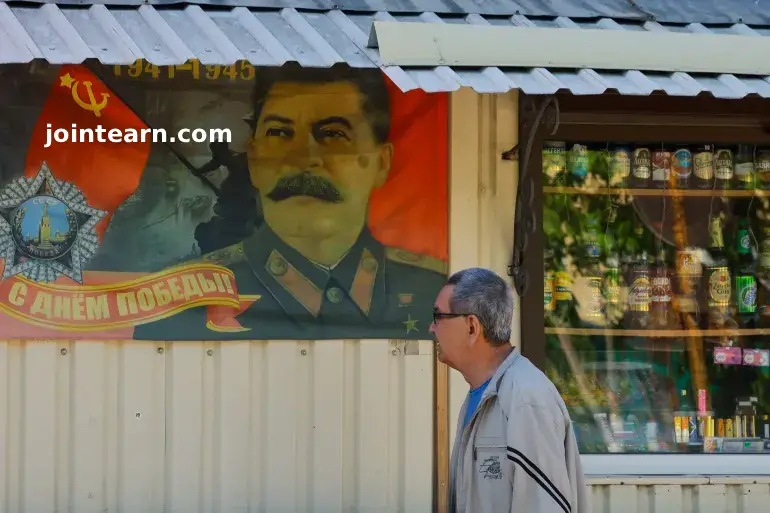
As the war in Ukraine continues into its fourth year, Russia is turning the occupied Donbas region into a vast militarized stronghold, according to Ukrainian officials, residents, and analysts. Moscow is not only reshaping the military landscape but also restructuring the local economy to support its long-term strategic ambitions, creating a mix of corruption, black-market activity, and forced “sponsorship” of reconstruction projects.
Militarizing Donbas: From Economy to War Machine
Analysts say Moscow’s goal is clear: transform Donbas into a militarized springboard outside Russian territory, one capable of intimidating Europe and supporting ongoing military operations.
“They militarize the economy, depopulate the region, and build a huge military base to frighten Europe,” said Pavel Lisyanskiy, head of Kyiv’s Strategic Research and Security Institute.
The occupied region, which includes Donetsk and Luhansk, has been under Russian-backed separatist control since 2014. Despite Moscow’s 2022 annexation declaration, these territories retain the vestiges of independence, including a “head of state,” parliament, customs offices, and border checkpoints.
Russian authorities have reportedly installed loyal appointees to control the economy, while dissenting local officials face imprisonment or assassination, according to Volodymyr Fesenko, head of the Penta think tank in Kyiv.
Corruption, Construction, and Black-Market Boom
Since the start of occupation, Moscow has funneled billions of rubles into reconstruction projects, often in areas devastated by warfare, including Mariupol, Avdiivka, and Bakhmut. However, these construction efforts are plagued by systemic corruption, criminal scheming, and elite enrichment rather than genuine recovery.
Local courts have documented embezzlement and financial mismanagement. In November 2025, Donetsk’s deputy construction minister, Yulia Mervaezova, was charged with embezzling 9 billion rubles (~$115 million). Analysts warn the figure is likely to rise as more cases emerge.
Meanwhile, the black market in Donetsk and Luhansk is booming. Restaurants, shops, underground brothels, and casinos thrive on the presence of tens of thousands of undersupplied Russian soldiers, who often spend part of their salaries on tactical gear, alcohol, and drugs like amphetamines and crystal meth. Reports also indicate the sale of stolen weapons, including pistols, assault rifles, grenades, and explosives, often orchestrated by Chechen militias.
“Sponsored” Reconstruction by Russian Regions
With Moscow unable or unwilling to foot all the bills, Russian regions have been forced to sponsor reconstruction. The “sponsor” system assigns regions or cities in Russia to rebuild specific towns in Donbas:
- Moscow sponsors Donetsk and Luhansk
- St. Petersburg supervises Mariupol
- Sakhalin Island oversees Shakhtarsk
These regions dispatch thousands of workers, teachers, and health professionals to occupied cities while ignoring their own local needs. For example, Arkhangelsk funded the rebuilding of Melitopol even as local residents endured unsafe housing conditions on thawing permafrost.
Environmental and Economic Consequences
Donbas is rich in coal, iron ore, lithium, nickel, titanium, rare earths, and neon gas, essential for steel production and semiconductor manufacturing. However, analysts warn that the mining operations are reckless, leading to disappearing water bodies, contaminated rivers, and long-term environmental damage.
“The consequences are irreversible, not even a hundred years will be enough to recover,” said Lisyanskiy, who previously worked as a mine engineer in the region.
Social and Human Impact
Beyond environmental and economic harm, life for residents is precarious. Water shortages are critical, forcing locals to rely on rainwater and melted snow. Black-market schemes, such as the alleged exploitation of soldiers and widows in Donetsk, highlight the moral and social decay accompanying the militarization of the region.
Donbas as a Strategic Tool
Moscow’s approach is twofold: militarize the region while exploiting its economic and human resources. Analysts say that the annexation and reconstruction efforts serve both propaganda and military purposes, creating a heavily fortified zone on Ukraine’s soil while diverting funds and labor from Russia’s own regions.
“It’s political theatre and elite enrichment over genuine recovery,” said the Jamestown Foundation in December 2025.
The combination of militarization, corruption, environmental destruction, and social exploitation has made Donbas a high-stakes focal point of the ongoing Ukraine war, with regional and European security implications.


Leave a Reply