Red Bull have openly acknowledged that the start of their bold new Formula 1 engine partnership with Ford is unlikely to be smooth, admitting it would be “naive” to expect immediate dominance when the 2026 season begins.
Despite recent success in the hybrid era, the Milton Keynes-based team are preparing for what they describe as a “crazy challenge” as they build a power unit from scratch for the first time in their history — taking on long-established engine manufacturers in the sport.
However, Red Bull remain confident that short-term pain will lead to long-term success.
Red Bull and Ford: A New Era Begins in Formula 1
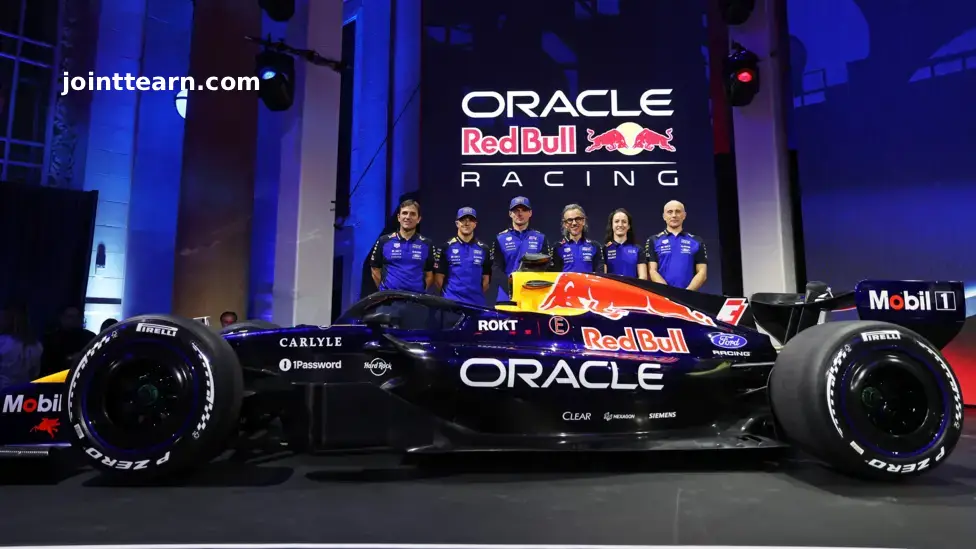
Red Bull officially launched their partnership with Ford at an event in Detroit, unveiling a show car and their new 2026 livery at Michigan Central Station.
Team principal Laurent Mekies was candid about the scale of the task ahead.
“Starting from scratch, going into the first year and thinking you’ll be straight away at the level of competitors who have been doing this for 90 years would be naive,” Mekies said.
“We know it’s going to come with struggles, headaches, sleepless nights.”
Despite those concerns, Mekies struck an optimistic tone.
“We will go through the struggle. We will eventually come out on top. Bear with us in the first few months.”
Ford executive chairman Bill Ford, meanwhile, was more bullish.
“Together, we’re going to be unstoppable,” he said.
New Drivers, Familiar Leader: Verstappen Remains Red Bull’s Focus
Four-time world champion Max Verstappen continues as Red Bull’s lead driver for 2026, following a season in which he finished just two points behind Lando Norris in the 2024 drivers’ championship.
Red Bull ended that season third in the constructors’ standings, a result that highlighted how close the competitive margins have become at the front of Formula 1.
Verstappen will be joined by Isack Hadjar, the highly rated French driver promoted from Red Bull’s second team, Racing Bulls.
Hadjar’s move creates space at Racing Bulls for 18-year-old British rookie Arvid Lindblad, while Liam Lawson remains with the team.
Inside Red Bull Powertrains: Building an Engine From the Ground Up
Over the past five years, Red Bull have invested heavily in establishing Red Bull Powertrains (RBPT), creating a brand-new engine facility at their Milton Keynes headquarters and recruiting more than 700 staff.
They now face direct competition from established manufacturers such as Mercedes, Ferrari and Honda, while Audi and General Motors will also enter F1 as new power-unit suppliers in 2026.
‘We Started Behind, But We’re Catching Up’
RBPT technical director Ben Hodgkinson, formerly of Mercedes’ F1 engine programme, highlighted both the challenges and advantages of starting from scratch.
“We had to build factories while people were already developing engines,” Hodgkinson said.
“So yes, we started behind.”
However, he expressed strong confidence in the long-term outlook.
“The people we’ve recruited and the facilities we’ve built are incredible. Are we ahead by race one? I don’t know. But I believe we can get there.”
How Ford Is Strengthening Red Bull’s Engine Programme
Although Ford joined the project after RBPT had already been established, Hodgkinson described the relationship as a true partnership, not a branding exercise.
Ford’s contribution includes:
- Advanced manufacturing expertise, particularly in complex 3D components
- State-of-the-art production capabilities
- Supply-chain leverage, especially for electrical and hybrid systems
“Some parts are so complicated you simply can’t machine them traditionally,” Hodgkinson explained.
“Ford’s expertise allows us to make them extremely quickly.”
He also stressed how valuable Ford’s global buying power has been.
“If Red Bull knock on a supplier’s door asking for 50 parts, they’re not interested.
If Ford knock on the door, people answer.”
New F1 Rules for 2026: Why This Transition Is So Difficult
The challenge for Red Bull and Ford is amplified by the scale of Formula 1’s 2026 regulation overhaul, which introduces major changes to both engines and chassis.
Key changes include:
- A 50-50 split between internal combustion and electrical power
- Mandatory use of fully sustainable fuels
- Revised power-unit architecture
- Continued use of 1.6-litre V6 turbo engines, but with new design constraints
The show car revealed in Detroit is not the final Red Bull 2026 challenger, which will be unveiled next month. It serves only as an indication of how cars might look under the new regulations.
New Look for Red Bull and Racing Bulls
Red Bull also revealed a refreshed gloss livery, ending a decade-long run with matte paint finishes. The team say the design is inspired by their original Formula 1 look.
Racing Bulls unveiled their own 2026 colour scheme at the same event.
Engine Rule Controversy: Compression Ratio Debate
Red Bull have also found themselves at the centre of a technical debate involving rival manufacturers.
Concerns have been raised that Mercedes and Red Bull may have exploited thermal expansion to gain an advantage under rules limiting the engine compression ratio to 16:1.
The ratio is measured at ambient temperature, and rivals fear materials expanding at operating temperatures could increase performance — potentially worth up to 0.3 seconds per lap.
Hodgkinson dismissed the claims.
“Any engineer who doesn’t understand thermal expansion doesn’t belong in this sport,” he said.
“The regulations are extremely clear. The compression ratio is measured in a very specific way at ambient temperature.”
The FIA has scheduled a meeting with engine manufacturers on 22 January to discuss the issue.
Red Bull’s 2026 Outlook: Short-Term Pain, Long-Term Ambition
Red Bull are under no illusions about the difficulty of becoming a competitive engine manufacturer overnight. But their leadership believes the combination of elite personnel, world-class facilities, and Ford’s industrial muscle will ultimately pay off.
As Mekies made clear, the expectation is not instant domination — but eventual success.
For Red Bull, the message ahead of the 2026 season is simple: expect a fight, expect setbacks — but don’t expect them to stay behind for long.


Leave a Reply