Kyiv – January 16, 2026 – Ukraine is facing a deepening energy emergency after sustained Russian air attacks severely damaged the country’s electricity and heating infrastructure, leaving millions of people without power during sub-freezing winter temperatures.
Ukrainian Energy Minister Denys Shmyhal, who assumed office earlier this week, warned parliament on Friday that the situation has reached a critical point, saying every major power facility in the country has come under attack.
“There is not a single power plant left in Ukraine that the enemy has not attacked,” Shmyhal said.
Major Cities Hit Hard as Grid Buckles
According to the energy ministry, the most severe disruptions are being felt in Kyiv, as well as in the regions of Dnipropetrovsk, Kharkiv, and Odesa. Towns closer to the front line in eastern Ukraine have been left especially vulnerable, with thousands of homes without electricity or heating for days as temperatures drop well below zero.
“In some cities and regions, winter preparations have failed,” Shmyhal told lawmakers.
“Over the past two days in office, I have seen that many things are clearly stalling.”
The ministry estimates that Ukraine currently has fuel reserves sufficient for only 20 days, raising fears of prolonged blackouts if attacks continue.
Russia Intensifies Winter Energy Campaign
Since launching its full-scale invasion of Ukraine in February 2022, Russia has repeatedly targeted Ukraine’s energy infrastructure during the winter months. Analysts say the strategy is aimed at weakening civilian morale, disrupting industry, and forcing Kyiv into concessions over territory and security demands.
Earlier this week, a senior United Nations official confirmed the devastating humanitarian consequences of the campaign.
“Russian attacks on Ukraine’s energy infrastructure this winter have deprived millions of Ukrainians of electricity, heating and water for prolonged periods,” said Rosemary DiCarlo, UN Undersecretary-General for Political and Peacebuilding Affairs.
“The impact is felt hardest by the most vulnerable — the elderly, children, and people with limited mobility.”
Kyiv and Kharkiv Without Heat for Days
Kyiv Mayor Vitali Klitschko said that around 300 apartment buildings in the capital were still without heat on Thursday, after a January 9 missile and drone attack disabled heating systems across nearly half of the city’s high-rise buildings.
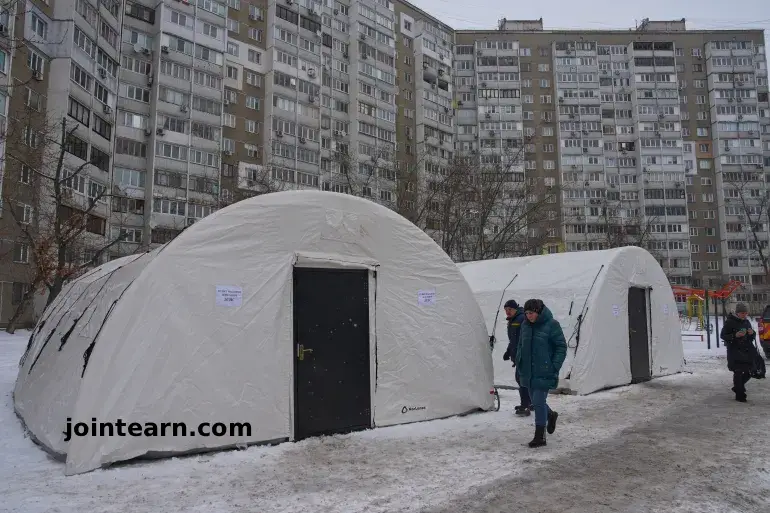
Emergency warming tents have since been set up across Kyiv, allowing residents to shelter from the cold and access limited power and hot drinks.
In Kharkiv, Ukraine’s second-largest city and located just 25km (15 miles) from the Russian border, Mayor Ihor Terekhov said Russian forces destroyed a large energy facility on Thursday.
While officials did not specify the type of facility hit, emergency crews have been working around the clock to restore basic services. President Volodymyr Zelenskyy said the attack left 400,000 people without electricity.
Emergency Electricity Imports Ordered
In response to the crisis, Energy Minister Shmyhal announced emergency electricity imports to stabilise the grid. He said Ukraine must urgently install up to 2.7 gigawatts (GW) of new generation capacity by the end of 2026 to meet domestic demand.
“State companies, primarily Ukrainian Railways and Naftogaz, must urgently ensure the procurement of imported electric energy during the 2025–26 heating season,” Shmyhal said.
“Imports should amount to at least 50 percent of total consumption.”
The ministry declined to disclose exact figures on current electricity generation or imports, citing wartime security concerns.
Government Measures to Ease Civilian Impact
Prime Minister Yulia Svyrydenko has introduced emergency measures to ease pressure on civilians, including:
- Reducing overnight curfews to allow access to heating and power hubs
- Extending school holidays in Kyiv until February 1
- Expanding community warming centres across affected cities
Meanwhile, Foreign Minister Andrii Sybiha said Ukraine has launched an international appeal for funding to support emergency energy repairs and imports, similar to previous donor meetings for military aid.
He confirmed that Norway has pledged an initial $200 million grant toward stabilising Ukraine’s energy sector.
Ukraine–US Talks Continue
As the energy crisis unfolds, President Zelenskyy said on Friday that a Ukrainian delegation is travelling to the United States for renewed talks with American officials.
“We hope this will lead to greater clarity regarding the documents already prepared with the American side and regarding Russia’s response to diplomatic efforts,” Zelenskyy said.
US President Donald Trump has pushed for an end to the war, but multiple rounds of negotiations have so far failed.
Moscow continues to demand territorial concessions, limits on Ukraine’s military, and a halt to Kyiv’s ambitions to join NATO — conditions Ukraine has rejected.
Zelenskyy reiterated that responsibility for stalled peace talks lies with the Kremlin.
“There must be sufficient pressure on Moscow,” he said.
“I believe we are very close to ending the war if that pressure is applied.”
Key Takeaways
- Russian strikes have hit every major Ukrainian power plant
- Millions left without heat or electricity amid sub-zero temperatures
- Ukraine has only 20 days of fuel reserves remaining
- Emergency electricity imports ordered
- International funding appeal launched; Norway pledges $200m


Leave a Reply