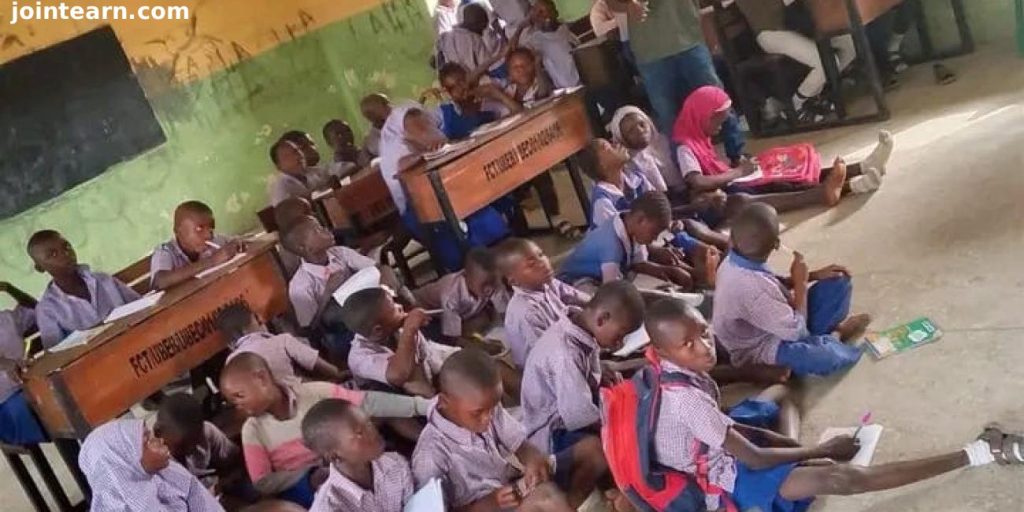
Pupils at LEA Primary School, Dupka, in Ibwa Ward, Gwagwalada Area Council, Federal Capital Territory (FCT), Abuja, are reportedly learning in extremely poor conditions, with many forced to sit on bare floors due to the lack of desks and chairs. This situation persists despite funds from the Universal Basic Education Commission (UBEC) intended to improve classroom infrastructure.
According to a report by MonITng, the state of learning at the school starkly contradicts government claims that public schools in the FCT have been renovated and properly furnished. While authorities celebrate “progress on paper,” pupils face daily struggles that undermine their right to quality education.
The report highlighted several issues, including:
- Overcrowded classrooms that make teaching and learning difficult.
- Poor ventilation in many classrooms, making the environment unsafe, especially during hot weather.
- Severe shortage of instructional materials, forcing pupils to share limited resources or study without them entirely.
MonITng linked these conditions to mismanagement of public education funds, noting that billions of naira released by UBEC have not translated into improved classrooms, furniture, or learning tools in Gwagwalada. The organisation also alleged that area council resources are diverted to party loyalists instead of schools, leaving community pupils neglected.
The statement criticised the FCT Minister, Nyesom Wike, and Area Council leadership for failing to address the situation, insisting that “education cannot thrive where children learn on bare floors, in congested spaces, without basic facilities.”
MonITng emphasised that the plight of LEA Primary School, Dupka, reflects a wider gap between official pronouncements and the reality of public schools across the FCT. The group called for urgent intervention to ensure children receive the quality education they deserve.
“The pupils of LEA Primary School, Dupka, deserve better. Quality education must go beyond press statements and reflect in the lives of children in our communities,” the report concluded.


Leave a Reply