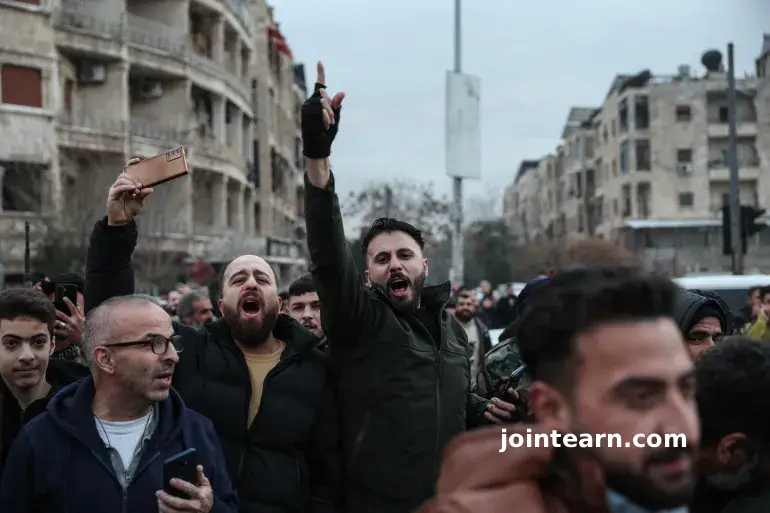
January 17, 2026 – Syria – In a historic move, Syrian President Ahmed al-Sharaa has issued a decree formally recognising the Kurdish language as a national language and restoring citizenship to all Kurdish Syrians. The decree marks the first formal recognition of Kurdish national rights since Syria’s independence in 1946, signaling a potential turning point in the country’s post-civil war reconciliation efforts.
The announcement comes in the aftermath of fierce clashes in Aleppo last week, which left at least 23 dead and forced tens of thousands to flee two Kurdish-run pockets of the city, according to Syria’s health ministry.
Key Provisions of the Decree
Al-Sharaa’s decree grants Kurds a broad set of cultural, civil, and legal rights, including:
- Recognition of Kurdish identity as an integral part of Syria’s national fabric.
- Kurdish as a national language alongside Arabic, with provisions allowing schools to teach the language.
- Restoration of citizenship to all Kurds affected by the 1962 Hasakah census, which previously rendered many stateless.
- Declaration of Newroz, the Kurdish spring and new year festival, as a paid national holiday.
- Ban on ethnic or linguistic discrimination, requiring state institutions to adopt inclusive national messaging.
- Legal penalties for individuals inciting ethnic strife.
These measures collectively aim to reinforce the integration of Kurds into Syria’s national institutions and address longstanding grievances that have fueled tensions in the northeast.
Reactions From Kurdish Authorities
While Kurdish officials welcomed the decree, the northern and northeastern Kurdish administration in Syria cautioned that the decree alone does not fully satisfy the aspirations of the Kurdish people.
“Rights are not protected by temporary decrees, but… through permanent constitutions that express the will of the people and all components of society,” the administration stated.
The remarks highlight the ongoing demand for constitutional guarantees to secure the rights of Kurds and other minority communities in Syria.
Aleppo Clashes and Military Developments
The decree followed recent clashes in Aleppo, which erupted as tensions escalated between the Syrian Democratic Forces (SDF) and the Syrian army. The violence ended after Kurdish fighters withdrew, allowing the Syrian army to establish full control over Deir Hafer and other previously SDF-held areas in Aleppo governorate.
Al Jazeera correspondent Zein Basravi reported from Zaalanah, east of Aleppo, that Syrian forces were entering Deir Hafer to conduct clearing operations, marking a short but decisive military operation:
“In many ways, this is really a best-case scenario – a short, sharp military operation overnight and then in daylight hours securing the agreement for withdrawal from the SDF.”
SDF leader Mazloum Abdi (Mazloum Kobani) confirmed on X that forces began redeploying east of the Euphrates based on mediations by friendly countries.
Power Struggle Between Syrian Government and SDF
The decree also underscores the broader power struggle in Syria, as the government under al-Sharaa seeks to extend its authority after the removal of former President Bashar al-Assad in December 2024.
The SDF controls large portions of Syria’s oil-rich north and northeast, areas captured during the civil war and the fight against ISIL. Integration efforts between the SDF, its political wing PYD, and the Kurdish People’s Protection Units (YPG) into state institutions had been planned for the end of 2025, but progress was slow, ultimately leading to the clashes in Aleppo.
The Kurdish population in Syria is estimated at 1–1.5 million, predominantly in the northeast, and Kurds also reside in Iraq, Iran, and Turkiye. Ankara considers the SDF, YPG, and PYD as terrorist organizations linked to the PKK, which has waged a decades-long insurgency in Turkey.
Implications for Syrian Kurds and National Reconciliation
The decree is symbolically significant, representing the first step toward recognizing Kurdish rights in Syria’s modern history. By officially acknowledging Kurdish identity and language, the government aims to:
- Promote ethnic and linguistic inclusivity.
- Reduce tensions in Kurdish-majority regions.
- Signal Syria’s intention to unify under a central authority post-civil war.
However, Kurdish leaders stress that lasting change requires constitutional reforms, not just executive decrees, to safeguard the rights of all Syrians, including ethnic and religious minorities.
Key Takeaways
- Syria formally recognizes Kurdish as a national language for the first time since independence.
- Citizenship is restored to all Kurds affected by the 1962 Hasakah census.
- Newroz is declared a national holiday, and ethnic discrimination is banned.
- Kurdish authorities welcome the decree but call for permanent constitutional guarantees.
- The Syrian army has established full control over Deir Hafer following SDF withdrawal.
- The move is part of Syria’s broader efforts to unify the country and integrate Kurdish regions post-Assad.


Leave a Reply