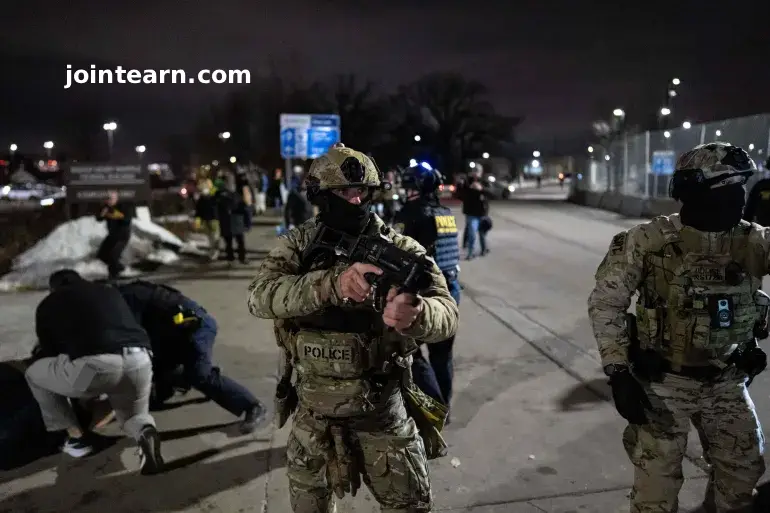
January 17, 2026 – Minneapolis, Minnesota – A federal judge in Minnesota has issued a landmark injunction restricting federal immigration agents’ actions against protesters and observers, following rising tensions over the deployment of ICE (Immigration and Customs Enforcement) officers in the state.
The ruling comes in the wake of a fatal shooting earlier this month, in which 37-year-old mother of three Renee Nicole Good was killed while taking part in neighborhood patrols organized by local activists monitoring ICE operations. The incident intensified public outcry and heightened scrutiny of federal enforcement tactics in Minneapolis.
Court Injunction Protects Peaceful Protesters
US District Judge Kate Menendez issued the injunction on Friday, explicitly barring federal agents from:
- Detaining or arresting individuals engaged in peaceful protests or orderly observation of ICE activities, unless there is reasonable suspicion of criminal activity.
- Retaliating against protesters or observers who are documenting or monitoring immigration enforcement operations.
- Using crowd-control munitions, including pepper spray, tear gas, or other chemical agents, against peaceful demonstrators or bystanders.
The court also gave the Department of Homeland Security (DHS) 72 hours to bring its Minneapolis operations into compliance, effectively limiting federal agents’ ability to act aggressively against nonviolent participants.
This decision marks a major victory for activists in Minneapolis, the state’s largest city, where ICE’s deployment has sparked widespread clashes.
Background: ICE Deployment in Minneapolis
Two weeks ago, the Trump administration announced the deployment of 2,000 immigration agents to Minneapolis, a number that has since grown to nearly 3,000 officers, dwarfing the ranks of local police. DHS has described this as the largest operation of its kind in US history, aimed at targeting undocumented immigrants in the area.
The deployment prompted ongoing clashes with protesters, some of whom were participating in community-led patrols and oversight activities. ICE officers have been accused of responding with excessive force, escalating tensions between federal authorities and local residents.
Fatal Shooting Sparks Outrage
The recent fatal shooting of Renee Nicole Good heightened national attention. Good, who was actively monitoring ICE activities, was shot while seated in her vehicle. Her death triggered calls from activists, local leaders, and civil rights organizations for greater oversight and restrictions on ICE enforcement tactics.
The federal court ruling now prohibits retaliation against individuals like Good who are engaged in peaceful civil monitoring, ensuring that similar tragedies may be prevented in future operations.
Trump Threatens to Invoke Insurrection Act
Amid the growing dispute over ICE’s actions in Minnesota, former President Donald Trump threatened to invoke the Insurrection Act, which would allow the deployment of the military to suppress civil unrest, bypassing the Posse Comitatus Act, a 19th-century law that limits military involvement in civilian law enforcement.
Trump stated:
“If I needed it, I would use it. I don’t think there is any reason right now to use it.”
The act permits the president to deploy soldiers on US soil to respond to armed rebellion or domestic violence, raising concerns among civil liberties advocates about militarized responses to civilian protests.
Broader Implications
The Minnesota injunction underscores growing tensions between federal and local authorities over immigration enforcement and civil rights protections. Key takeaways from the ruling include:
- Federal agents are now legally restricted in how they can respond to peaceful protest and observation.
- The ruling reinforces constitutional protections for free speech and assembly, even amid federal immigration operations.
- The DHS must adjust tactics to comply with judicial oversight, potentially reshaping ICE operations nationwide.
- The threat of the Insurrection Act illustrates ongoing federal-state conflicts over law enforcement jurisdiction and the militarization of civil policing.
The situation in Minnesota continues to unfold, with activists, federal agencies, and state authorities navigating a complex landscape of public safety, civil rights, and immigration enforcement.
Key Takeaways
- Federal judge restricts ICE actions against peaceful Minnesota protesters.
- Injunction bars detentions, retaliation, and use of crowd-control weapons without probable cause.
- DHS given 72 hours to comply.
- Shooting of Renee Nicole Good highlighted risks of aggressive enforcement tactics.
- Trump threatens potential deployment of military under Insurrection Act, raising legal and civil concerns.
- Decision signals judicial support for civil liberties in protests against federal immigration enforcement.


Leave a Reply