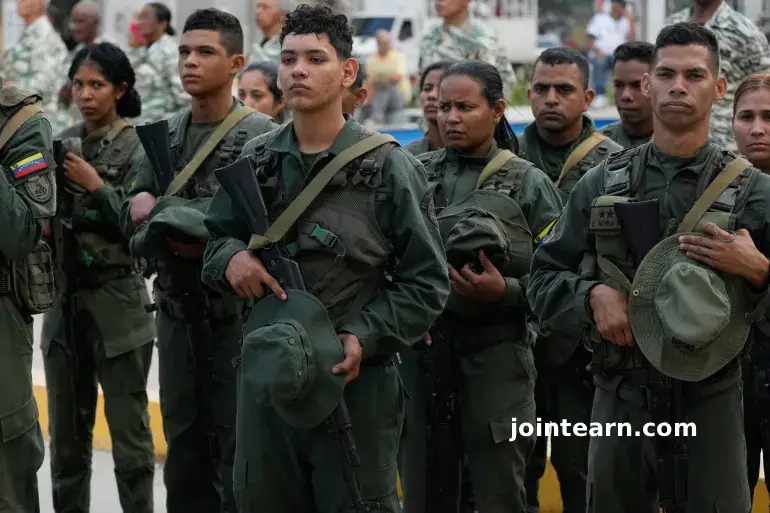
Venezuela’s Defense Ministry has confirmed that 47 Venezuelan soldiers, including nine women, were killed during a U.S. military operation in Caracas on January 3 that resulted in the abduction of President Nicolás Maduro and his wife, Cilia Flores. The total number of casualties in the raid has now been revised to 83, including 32 Cuban soldiers who were part of Maduro’s personal security team.
The deadly operation has intensified tensions in the region, sparked widespread mourning, and drawn international condemnation, particularly from Cuba and Venezuela.
Details of the U.S. Raid
The attack began with bombing Venezuelan military targets and culminated with U.S. troops landing via helicopters to abduct President Maduro and his wife from their residence in the capital.
Venezuela’s Interior Minister Diosdado Cabello stated that the full extent of civilian casualties is still being determined, as DNA testing is required to identify some victims who were blown to “little pieces” in the operation. More than 112 people were injured during the raid.
Honoring the Fallen Soldiers
Venezuelan Defense Minister Vladimir Padrino López praised the troops who died defending their country:
“What have the men and women of our Bolivarian National Armed Forces done in the face of military aggression? They have given their lives, they have honoured history and the homeland.”
Plans are underway to construct a memorial site in Caracas to honor the Venezuelan and Cuban soldiers killed in the attack.
Cuban Soldiers Among the Casualties
Cuba received the remains of its 32 soldiers killed during the operation on Thursday. Tens of thousands of Cubans held rallies outside the U.S. Embassy in Havana to protest the deaths. Many gathered at the Jose Marti Anti-Imperialist Plaza, waving Cuban flags and carrying photographs of the fallen officers.
Cuban President Miguel Diaz-Canel addressed the crowds, condemning Washington’s actions:
“No one here surrenders. The current emperor of the White House and his infamous secretary of state haven’t stopped threatening me. Cuba does not have to make any political concessions, and that will never be on the table.”
The demonstrations come amid warnings that U.S. interference in Venezuelan oil supplies could further destabilize Cuba, which is heavily dependent on Venezuelan oil. Experts caution that disruption in supplies could worsen the country’s economic crisis and energy shortages.
U.S. Involvement and Political Implications
Interim Venezuelan President Delcy Rodríguez met with CIA Director John Ratcliffe, whose agency played a key role in Maduro’s abduction. A U.S. official told The Associated Press that Ratcliffe discussed potential economic cooperation but emphasized that Venezuela must prevent the presence of U.S. adversaries, including drug traffickers, on its soil.
Meanwhile, U.S. President Donald Trump has demanded a deal with Cuba, claiming that the country will no longer benefit from Venezuelan oil reserves, which he asserts now belong to the United States.
Regional Reactions
The raid has heightened anti-U.S. sentiment across Latin America and the Caribbean, with leaders and citizens in Cuba and Venezuela decrying the attack as imperialistic aggression. Funerals and public mourning ceremonies have been held for the deceased soldiers, highlighting the deep human and political toll of the operation.


Leave a Reply