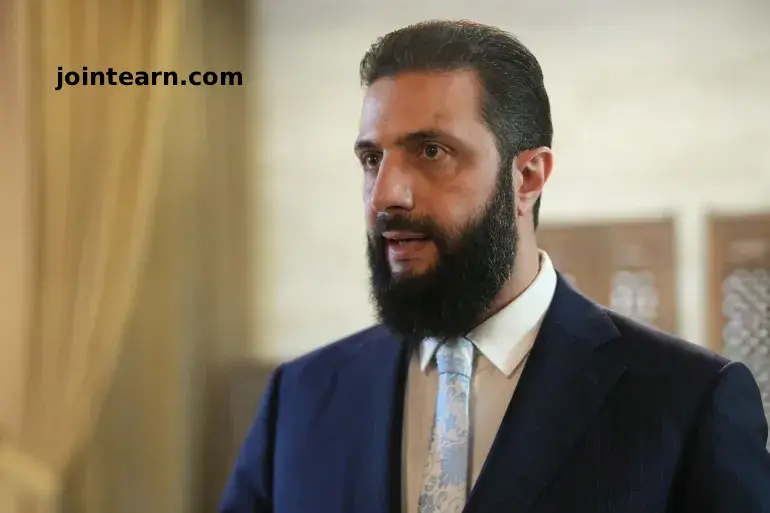
Syria’s President Ahmed al-Sharaa is expected to meet Mazloum Abdi, the leader of the Kurdish-led Syrian Democratic Forces (SDF), in a high-stakes bid to consolidate a fragile ceasefire reached after days of intense fighting across northern and northeastern Syria.
The talks follow a sweeping military campaign in which Syrian government forces, backed by allied tribal fighters, regained control over vast areas stretching from Aleppo to Raqqa, forcing the SDF to accept a truce and a far-reaching political and security agreement. However, despite the ceasefire announcement, renewed deadly clashes were reported on Monday, raising concerns about the durability of the deal.
Ceasefire Talks Follow Rapid Government Advances
The meeting, initially scheduled for Sunday but postponed due to bad weather, comes at a critical moment. The Syrian army’s rapid territorial gains in the northeast dramatically shifted the balance of power, compelling the SDF to agree to terms that bring its civilian and military institutions under central state authority.
While the ceasefire was formally declared and signed on camera by President al-Sharaa, tensions remain high. Kurdish-led forces reported ongoing skirmishes with Syrian government troops in several areas, highlighting the volatility of the post-agreement environment.
On Sunday, Abdi — also known as Mazloum Kobani — confirmed his acceptance of the ceasefire in a televised address, saying the confrontation had been “imposed” on the SDF and orchestrated by multiple actors. He said he would publicly outline the details of the agreement after returning from Damascus.
Public Celebrations Tempered by Deep Skepticism
In Damascus, the ceasefire announcement triggered scenes of celebration. According to Al Jazeera correspondent Ayman Oghanna, crowds poured into the streets late Sunday night, setting off fireworks, honking car horns, and dancing in a spontaneous outpouring of relief.
“There was a real sense of joy, but it was cautious,” Oghanna reported. “People are relieved the fighting has paused, but many remain sceptical after years of broken truces and nearly 14 years of devastating war.”
That scepticism reflects Syria’s painful history of failed ceasefires and unresolved conflicts. While many Syrians welcomed the agreement, doubts persist over whether it can hold amid entrenched rivalries, armed factions, and regional interference.
Accusations of Ceasefire Violations Emerge
Those fears were reinforced on Monday when the SDF accused Syrian government forces of violating the ceasefire. The group reported attacks on Shaddadi prison in Hasakah province and clashes near al-Aqtan prison outside Raqqa, both facilities holding thousands of alleged ISIL (ISIS) fighters and affiliates.
The SDF described the incidents as a “highly dangerous development” that could undermine security, destabilise the region, and potentially enable a resurgence of armed groups.
The Syrian army, however, rejected the accusation, saying three of its soldiers were killed in attacks carried out by Kurdish fighters. In a statement carried by state news agency SANA, the military accused certain factions of attempting to sabotage the ceasefire’s implementation.
War Fatigue and Economic Desperation Shape Public Mood
Despite the uncertainty, exhaustion dominates public sentiment across Syria. “Everyone we spoke to — including many Syrian Kurds — just wants this conflict to end,” Oghanna said. “People are tired of war and desperate for a diplomatic solution.”
Economic hardship is a major driver of this urgency. According to international estimates, around 90 percent of Syrians now live below the poverty line, with inflation, unemployment, and infrastructure collapse crippling daily life.
“People are worried about survival — about food, fuel, and income,” Oghanna added. “There is hope that calm could finally allow the country to focus on economic recovery.”
SDF Withdrawal and Fears of Civil War
Abdi said the SDF’s withdrawal from Deir Az Zor and Raqqa towards Hasakah was intended to prevent further bloodshed and avert the risk of civil war. While acknowledging significant losses, he stressed that the SDF would defend what it considers key gains.
Senior SDF commander Sipan Hamo told Reuters that the group does not seek separation from Syria and reiterated calls for international guarantees, particularly from the United States. He denied receiving backing from Iran or Russia but said he hoped Israel might intervene politically in favour of Syria’s Kurdish population.
Deal Brings SDF Under State Control
According to the Syrian presidency, the ceasefire agreement guarantees the integration of SDF fighters into state institutions, including the national army. It also allows for the redeployment of government authorities to Raqqa, Deir Az Zor, and Hasakah, restoring formal state control.
President al-Sharaa said the deal reflects the spirit of a previous March agreement and called on tribal forces to support its implementation. He stressed that restoring unity and sovereignty across Syrian territory remains a top priority.
From Battlefield Control to Civil Governance
Reporting from Aleppo, Al Jazeera’s Zein Basravi said attention is now shifting from military success to governance challenges.
“The Syrian government has effectively secured everything it wanted from this deal,” Basravi said. “Now the real test begins — protecting minority communities, preventing revenge attacks, and transitioning from military operations to civilian policing.”
He warned that failure to manage this transition carefully could reignite violence, particularly in areas long governed by Kurdish-led administrations.
Syria Regains Control of Strategic Resources
From Beirut, geopolitical analyst Joe Macaron said Syria’s regaining of control over oil and gas fields previously held by the SDF could significantly alter the political and economic landscape.
“This is a major source of revenue,” Macaron said, noting that while immediate gains are unlikely, securing and rehabilitating energy infrastructure could eventually fund reconstruction and mark “a new phase” for Syria.
However, he cautioned that integrating thousands of SDF fighters — including non-Syrian combatants — poses one of the greatest risks to the agreement. “This issue alone could determine whether the ceasefire succeeds or collapses,” he said.
International Reactions and Regional Stakes
On Sunday, al-Sharaa met US special envoy Tom Barrack in Damascus. Barrack later described the agreement as a turning point, saying it could open the door to renewed dialogue toward a unified Syria.
The United States, which maintains several hundred troops in northern Syria, remains focused on preventing an ISIL resurgence, especially after a deadly December attack in Palmyra killed US soldiers and a civilian contractor. Last week, Washington launched a new wave of airstrikes targeting ISIL positions.
Meanwhile, Turkish President Recep Tayyip Erdogan discussed the ceasefire with al-Sharaa in a phone call, reaffirming Ankara’s support for Damascus. Turkey has long opposed the SDF, viewing it as linked to the PKK, which it designates as a terrorist organisation.
A Fragile Path Forward
The ceasefire follows a brief but decisive Syrian military operation that reclaimed strategic territory after earlier agreements with the SDF collapsed. While the deal offers a potential path toward stability, analysts warn it remains vulnerable to spoilers, mistrust, and unresolved political questions.
As Syria stands at another crossroads, the meeting between President al-Sharaa and Mazloum Abdi may prove pivotal — either laying the groundwork for national reintegration or exposing the fault lines that could plunge the country back into conflict.


Leave a Reply