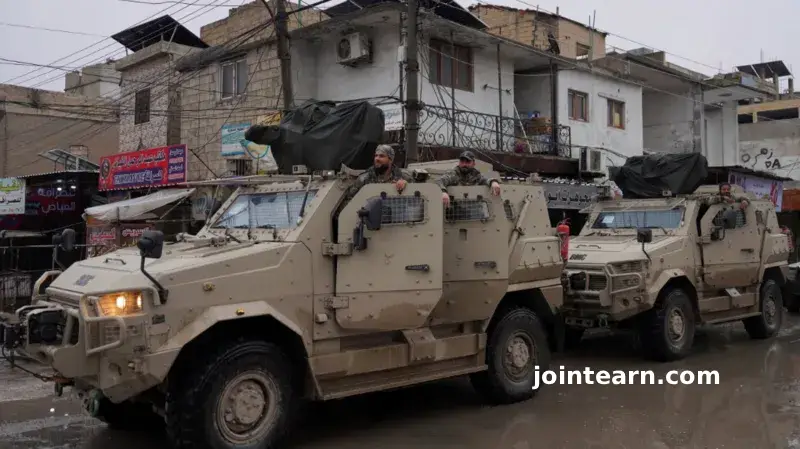
Syrian government forces have seized control of the country’s largest oil field, the Omar facility, as well as surrounding gas fields, following the withdrawal of Kurdish-led Syrian Democratic Forces (SDF) from north-eastern Syria. The move marks a major strategic and economic gain for President Ahmed al-Sharaa’s government, which is seeking to consolidate control over oil-rich territories previously dominated by Kurdish forces.
The capture follows a series of military advances in the region, including the strategic Tabqa dam on the Euphrates River and the town of Tabqa itself, both of which fell to Syrian troops over the weekend.
SDF Withdrawal and Strategic Context
The SDF announced a redeployment east of the Euphrates following discussions with US officials, amid ongoing clashes that erupted after a breakdown in the integration agreement between the Syrian government and Kurdish forces.
Since the ousting of Bashar al-Assad in late 2024, President al-Sharaa has worked to bring Kurdish military and civilian institutions into Syrian state structures, a process stalled since the initial March 2025 agreement with the SDF.
The SDF had controlled large swathes of Syria’s oil-rich north and northeast, much of it gained during the fight against the Islamic State (IS) over the past decade. The Omar oil field, in particular, had been a critical source of revenue for the SDF and a cornerstone of Kurdish regional autonomy.
Government Military Advance
Syrian troops began moving east over the weekend, entering Tabqa and securing the nearby Euphrates dam. On Sunday, authorities announced the capture of the Omar oil field on the eastern side of the river.
The Syrian Observatory for Human Rights (SOHR), a UK-based monitoring group, confirmed that the SDF had withdrawn from villages and towns in Deir Ezzor province, including the Omar and Tanak oil fields.
Meanwhile, the Syrian government accused the SDF of destroying two bridges on the Euphrates, including the newly constructed al-Rashid bridge in Raqqa, likely to slow the army’s advance.
Casualties and Clashes
Last week, fighting in northern Aleppo between the Syrian army and SDF resulted in at least 12 deaths. The clashes highlight the fragile security situation in northern Syria, despite US-led attempts to broker a ceasefire.
US officials have historically supported the SDF as a counterterrorism ally against IS, but they also maintain diplomatic ties with the Syrian government. This dual support has complicated efforts to mediate peace between Damascus and Kurdish forces.
Political and Cultural Concessions
As part of goodwill measures, President al-Sharaa announced that Kurdish would become a national language and the Kurdish New Year (Nowruz) would be an official holiday. These steps represent the first formal recognition of Kurdish national rights in Syria since 1946, when the country gained independence.
The measures are part of a broader strategy to integrate Kurdish forces and civilians into Syrian institutions, while maintaining centralized state authority over all strategic and resource-rich territories.
Economic Implications
Control over the Omar oil field significantly strengthens the Syrian government’s energy and revenue base, which has been weakened by years of civil war and Kurdish control of northern resources. The capture of the oil field and nearby gas fields allows Damascus to:
- Secure major energy infrastructure for national consumption and export.
- Limit Kurdish autonomy by reclaiming critical sources of revenue.
- Strengthen its negotiating position in ongoing US-mediated integration talks with the SDF.
Broader Context
The Syrian government’s advance comes almost a year after the SDF initially signed an integration agreement in March 2025, which has yet to be fully implemented. Both sides have blamed each other for delays, and the latest clashes underscore the fragility of the ceasefire and integration efforts.
The capture of key towns, the Euphrates dam, and the Omar oil field highlights the ongoing power struggle between Damascus and Kurdish forces, with strategic, economic, and symbolic implications for Syria’s post-Assad political order.
Key Takeaways
- Syrian army seized the Omar oil field, Syria’s largest, and surrounding gas fields after SDF withdrawal.
- Government forces also captured Tabqa town and the Tabqa dam on the Euphrates.
- The SDF redeployed east of the Euphrates following talks with US officials and ongoing clashes.
- President al-Sharaa granted Kurdish cultural recognition, including language and national holidays.
- The seizure strengthens the Syrian government’s control over strategic resources and weakens Kurdish autonomy.
- Fighting continues despite attempts at a US-brokered ceasefire, highlighting fragile security in northern Syria.


Leave a Reply