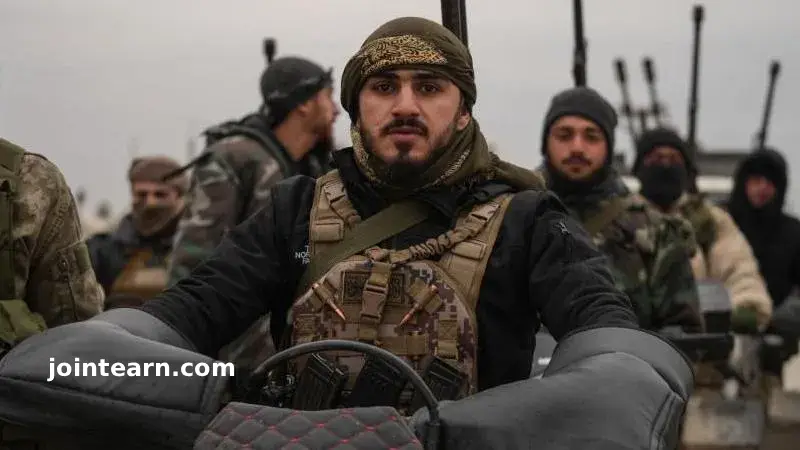
The Syrian army has moved into key areas east of Aleppo city, including the strategic town of Deir Hafer, following a redeployment of Kurdish-led Syrian Democratic Forces (SDF) east of the Euphrates River. The move comes after talks with US officials and a pledge from President Ahmed al-Sharaa to formally recognize Kurdish cultural rights.
This advance is part of a broader government strategy to reintegrate Kurdish military and civilian bodies into Syrian state institutions, a process that has been ongoing since the ousting of Bashar al-Assad in late 2024.
Kurdish SDF Withdrawal
On Friday, the SDF announced it would redeploy east of the Euphrates, citing coordination with international mediators. Kurdish leader Mazloum Abdi agreed to the pullback in response to calls from friendly countries and diplomatic intermediaries, including US special envoy Tom Barrack, who is scheduled to meet Abdi in Erbil, Iraqi Kurdistan.
The withdrawal follows deadly clashes last week between Syrian government forces and SDF fighters, during which both sides accused each other of violating ceasefire terms. Syrian authorities reported that two soldiers were killed during initial operations, while the SDF alleged that government troops entered the area prematurely.
Syrian Military Advance
The Syrian army stated via state-run news agency Sana that it had entered the western Euphrates area and established full military control of Deir Hafer. Authorities urged civilians to avoid the operational zone until it was cleared of mines and war remnants.
Military images show Syrian forces advancing with tanks, armored vehicles, and infantry, signaling a major push to secure the area and consolidate government authority east of Aleppo.
Syrian officials also noted that at least 4,000 civilians fled the region in recent days, highlighting the human impact of military operations and the importance of safe evacuation corridors.
Cultural and Political Concessions to Kurds
In a historic move, President Ahmed al-Sharaa issued a decree granting the Kurdish language official national status and recognizing the Kurdish New Year (Nowruz) as a public holiday. This is the first formal recognition of Kurdish national rights in Syria since independence in 1946.
The decree acknowledges Kurds as an “essential and integral part” of Syria, where they have faced decades of political and cultural marginalization under previous governments.
The Kurdish administration in northern and north-eastern Syria welcomed the decree as “a first step”, but emphasized the need for permanent constitutional recognition rather than temporary presidential decrees.
Strategic Importance
Kurdish forces have historically controlled Syria’s oil-rich north and northeast, much of it gained during the civil war and the fight against the Islamic State (IS) over the past decade. The government’s eastward push allows Damascus to:
- Secure key towns and infrastructure, including Deir Hafer and surrounding areas.
- Strengthen its position over oil and gas fields east of Aleppo.
- Reassert centralized control over previously autonomous Kurdish regions.
The advance also sets the stage for future integration of SDF military and civilian personnel into Syrian state institutions, a process initially agreed upon in March 2025, but delayed amid mutual distrust and sporadic clashes.
Civilian Perspective
Civilians in the region have expressed cautious optimism. While thousands have fled recent fighting, residents hope the deployment will restore stability, security, and access to essential services.
As one local resident noted:
“We want electricity, water, schools, and a safe life for our children. If the army can secure the area, perhaps we can finally turn the page on years of conflict.”
Key Takeaways
- Syrian army has advanced into areas east of Aleppo, including Deir Hafer, after Kurdish SDF forces withdrew.
- The SDF redeployment is part of a US-mediated process to avoid further confrontation and integrate Kurdish bodies into Syrian institutions.
- Deadly clashes occurred during the initial advance, with casualties reported on both sides.
- President al-Sharaa issued a historic decree recognizing Kurdish language and culture, including Nowruz as a public holiday.
- The move allows Damascus to regain control over key towns and oil-rich regions, consolidating authority in the northeast.
- Implementation of the 2015 SDF-government integration deal remains ongoing, with negotiations continuing under international supervision.


Leave a Reply