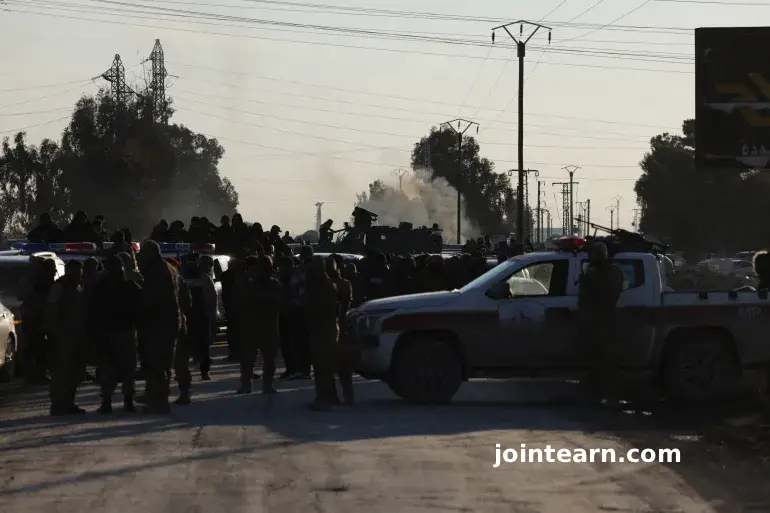
Tensions between the Syrian government and the Kurdish-led Syrian Democratic Forces (SDF) are escalating, threatening a recently declared ceasefire. Renewed fighting and disputes over control of ISIL (ISIS) detainees have undermined fragile negotiations, with both sides trading accusations and threatening further military action.
Ceasefire Under Strain
Days after the ceasefire was announced, clashes broke out as the SDF began withdrawing from areas west of the Euphrates River, including parts of Raqqa and Deir Az Zor. Talks in Damascus between Syrian President Ahmed al-Sharaa and SDF leader Mazloum Abdi (Mazloum Kobani) reached a deadlock, and Abdi returned to the northeast to consult with his forces.
SDF commander Fawza Youssef warned that the ceasefire could collapse entirely if attacks continue. “There is no political will on the part of the government to implement a ceasefire. If the violations and attacks continue, the SDF cannot be disarmed,” he told Al Jazeera.
Blame Over Escaped ISIL Prisoners
A major point of contention has been the escape of ISIL fighters from al-Shaddadi prison during the recent clashes. Syria’s Ministry of Interior reported that 130 of 200 escapees had been recaptured and accused the SDF of intentionally releasing prisoners as a form of “political and security blackmail.”
The SDF, however, denied this, claiming the prison break occurred after tribal fighters affiliated with the Syrian army attacked the facility, causing SDF forces to lose control. Both sides are using the issue to assert dominance and question the other’s commitment to the ceasefire.
Strategic Movements and Military Escalation
Al Jazeera correspondents reported Syrian army artillery shelling near al-Aqtan prison and the SDF’s 17th Division headquarters in Raqqa, signaling a potential escalation. Meanwhile, government forces reportedly reached the Panorama intersection at the southern entrance of Hasakah city, consolidating their presence in key strategic locations.
The Interior Ministry stated it is prepared to assume full management of ISIL prisons in Hasakah according to international standards, reinforcing Damascus’ claims to authority over SDF-held areas.
The SDF and ISIL Prisons
The SDF, backed by the United States, has controlled over a dozen prisons in northeastern Syria, holding roughly 9,000 ISIL members without trial. These facilities have been central to the ongoing dispute, as Damascus seeks to integrate the territory under Syrian government control while the SDF resists relinquishing authority.
The Syrian government has emphasized its goal of reunifying Syria after nearly 14 years of war, while the SDF highlights past allegations against al-Sharaa, including his previous affiliation with Hayat Tahrir al-Sham (HTS), formerly part of al-Qaeda.
Political Maneuvers and Failed Negotiations
On Monday, al-Sharaa offered Abdi the positions of deputy defence minister and governor of Hasakah, contingent on deploying Syrian internal security forces to the city and removing members of the Kurdistan Workers’ Party (PKK). Abdi requested five days to consult with his forces—a request rejected by the president, who gave the SDF leader a deadline to accept the offer or face renewed military action.
In parallel, al-Sharaa spoke by phone with US President Donald Trump, with both leaders stressing the importance of Syria’s territorial unity and the protection of the Kurdish population. Washington, which trained and supported the SDF against ISIL and maintains approximately 900 troops in SDF-controlled areas, remains a potential mediator, though SDF forces are concerned about the US tilting toward Damascus.
Accusations and Regional Implications
Both sides have accused each other of political manipulation and aggression, with the Syrian government rejecting claims that it seeks to exploit ISIL prisoners for political purposes. The SDF has labeled Damascus as “ISIS sympathizers” acting in coordination with Turkey, while also pledging to resist any attempt to seize Kurdish-controlled areas.
A recent video reportedly showing the execution of female Kurdish fighters prompted the SDF’s political wing, the Syrian Democratic Council (SDC), to warn that such acts threaten regional and international security. Observers note that both sides are resorting to familiar rhetoric and violence, undermining hopes that the ceasefire could lead to lasting peace.


Leave a Reply