Guatemala is reeling after a wave of coordinated attacks by gang members left ten police officers dead and prompted the government to declare a 30-day state of emergency. The violence erupted following prison riots across three facilities and escalated into retaliatory attacks on police in Guatemala City, highlighting the ongoing threat posed by organized criminal groups in Central America.
Prison Riots Trigger Deadly Violence
The unrest began on Saturday, 18 January 2026, when inmates from the notorious Barrio 18 gang took dozens of prison guards hostage at facilities across the country. The following day, police regained control of the prison holding the gang’s leader, Aldo “El Lobo” Duppie, but were met with coordinated attacks on law enforcement officers in and around the capital.
The Barrio 18 gang, known for its involvement in drug trafficking, extortion, and violent crime, acted alongside or in competition with rival gang Mara Salvatrucha (MS-13). Authorities said the gangs demanded special privileges for their leaders and members within the prison system.
By Monday, officials confirmed that the tenth police officer had died, marking one of the deadliest attacks on Guatemalan law enforcement in recent years.
State of Emergency Declared
In response to the escalating violence, President Bernardo Arevalo issued a 30-day state of emergency, published in the government gazette. The declaration grants police extraordinary powers, including:
- Arresting suspected gang members without a judicial order.
- Restricting movement of vehicles and individuals in targeted areas.
- Conducting searches and surveillance to prevent further attacks.
The state of emergency also temporarily limits the right to protest and freedom of assembly, empowering security forces to take swift action against organized criminal activity.
President Arevalo condemned the “coordinated actions” of gangsters against state authorities, emphasizing that the attacks on police and civilians were part of an ongoing campaign of violence designed to destabilize Guatemala.
Honoring Fallen Officers
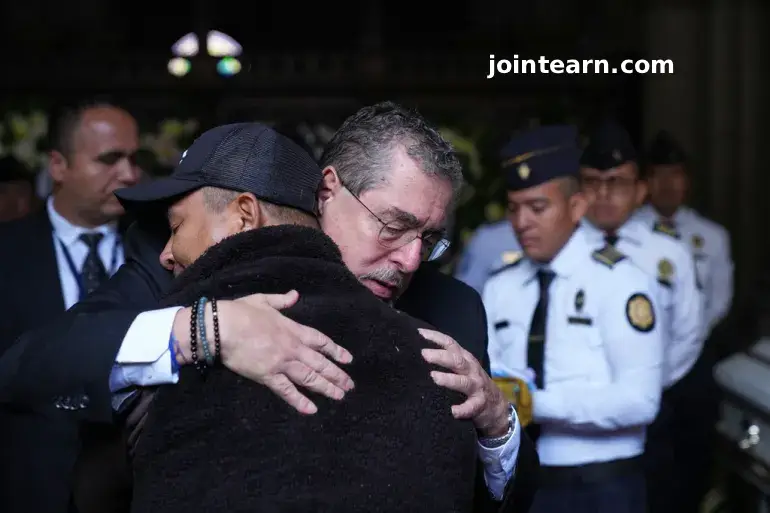
Police held a ceremony at the Interior Ministry to honor the officers killed in the line of duty. Amid an atmosphere of grief and outrage, President Arevalo personally comforted the families of the fallen, stating:
“Today it pains me to give each one of the families this flag, symbol of the nation that will not forget the sacrifice and commitment of their police fallen in the fulfilment of their duty.”
Security has been significantly tightened in Guatemala City, with increased patrols and checkpoints as authorities attempt to prevent further violence.
Background: Gang Violence in Guatemala
Guatemala has long struggled with powerful criminal gangs operating inside and outside prisons. Since mid-2025, gangs have staged multiple uprisings demanding better conditions for their leaders. Notably, in October 2025, 20 leaders of Barrio 18 escaped from prison, with only six recaptured and another killed.
Gang leader El Lobo, currently serving sentences totaling approximately 2,000 years, is married to the niece of Sandra Torres, President Arevalo’s main rival in the 2023 presidential election. Authorities fear that entrenched gang networks continue to wield influence over both incarcerated members and street operations.
Government Response and Public Safety
The state of emergency allows authorities to act decisively against criminal gangs and restore public security, while sending a message that attacks on police officers will not be tolerated. Analysts say that coordinated government action is crucial to prevent gang reprisals and maintain order in urban centers, especially in the capital.
Officials continue to track gang members and enforce stricter security measures in prisons and surrounding communities, with intelligence units focused on preventing further uprisings.


Leave a Reply