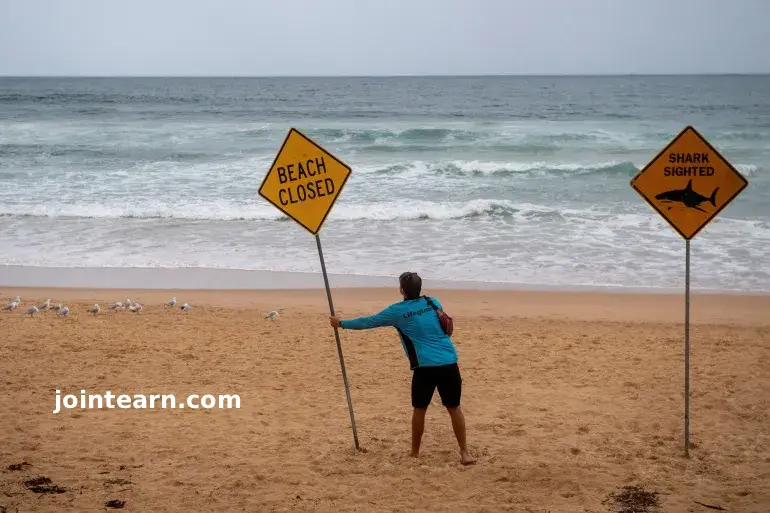
New South Wales, Australia – Authorities have closed dozens of beaches along Australia’s eastern coastline after a series of shark attacks left several people injured over the past few days. The incidents, which include attacks on surfers and swimmers from Sydney to Port Macquarie, have raised safety concerns for residents and tourists during Australia’s busy summer season.
Latest Shark Attacks in NSW
The most recent attack occurred on Tuesday, January 19, near Port Macquarie, approximately 400 km (248 miles) north of Sydney. A 39-year-old surfer was bitten by a shark at Point Plomer, according to reports by ABC News. Authorities confirmed that the victim escaped serious injury, but nearby beaches were immediately closed as a precaution.
Earlier incidents in Sydney included a 27-year-old man critically injured during a shark attack at Manly Beach on Monday night. On the same day, a young surfer at Dee Why Beach in northern Sydney narrowly avoided injury after a shark bit a large chunk out of his surfboard. Additionally, a 12-year-old swimmer was seriously injured on Sunday at a beach in eastern Sydney.
Safety Measures and Beach Closures
In response to the attacks, Sydney’s Northern Beaches Council temporarily closed its beaches for at least 48 hours, while NSW authorities used the Shark Smart App to monitor dozens of shark sightings along the coastline.
Steven Pearce, CEO of Surf Life Saving New South Wales, urged residents to avoid ocean beaches:
“If you’re thinking about going for a swim, think of going to a local pool because at this stage, we’re advising that beaches are unsafe.”
Beach closures have impacted summer holiday activities, particularly along heavily trafficked coastlines, as both locals and tourists seek safer swimming and surfing options.
Why Shark Attacks Are Increasing
Experts link the recent spike in attacks to heavy rains and environmental changes around Sydney and coastal NSW. According to Chris Pepin-Neff, an academic and shark behavior expert, storm runoff and brackish water conditions can create ideal hunting environments for sharks:
- Brackish water reduces visibility for swimmers, increasing the risk of accidental encounters.
- Rain runoff carries sewage and debris into coastal waters, attracting baitfish, which in turn draws sharks closer to popular beach areas.
Pepin-Neff advised in an op-ed for the Sydney Morning Herald:
“Stay out of Sydney Harbour and the beach after a rainstorm. Wait 72 hours after a storm to swim in the harbour, and be mindful of swimming or surfing at ocean beaches for 24 hours after a large downpour.”
Community and Tourism Response
With New South Wales beaches normally bustling during summer, authorities are emphasizing caution while maintaining vigilance along the coast. Surf life-saving organizations have stepped up patrols and public awareness campaigns to warn swimmers and surfers about shark risks.
Many local surfers have expressed concern about the unusual frequency of shark attacks in such a short period, calling for increased safety measures, including drone monitoring, aerial surveillance, and early warning systems at high-risk beaches.
Historical Context
Australia is known for its great white shark population, particularly along the east coast. While shark attacks remain rare, incidents typically spike during warmer months and after heavy rainfall, when environmental conditions push sharks closer to shore in search of prey.
Authorities urge the public to follow all safety guidance, avoid swimming during low visibility conditions, and report shark sightings immediately to local authorities.


Leave a Reply