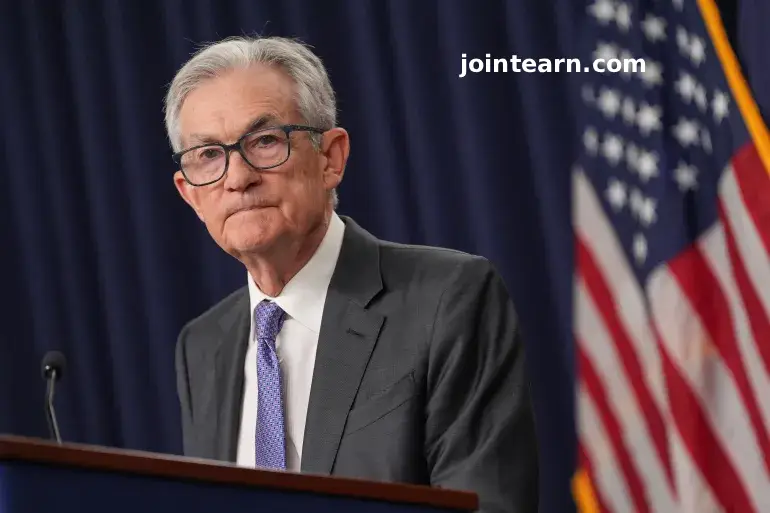
Washington, DC – United States Federal Reserve Chair Jerome Powell is set to attend a Supreme Court oral argument this week in a high-stakes case involving President Donald Trump’s attempt to fire Federal Reserve Governor Lisa Cook, marking an unusually public show of support from the central bank chief.
According to a person familiar with the matter, Powell plans to be present during the Supreme Court’s Wednesday session, where justices will hear arguments on whether the president has the authority to remove Cook from the Fed’s seven-member governing board. The source spoke on condition of anonymity because the plans have not been formally announced.
A Rare and Symbolic Appearance by the Fed Chair
Powell’s decision to attend the hearing represents a significant departure from his traditionally restrained approach, especially regarding political disputes involving the Federal Reserve. While Powell has previously defended the independence of the central bank in speeches and written statements, physically attending the Supreme Court session is widely seen as a symbolic gesture underscoring the seriousness of the case.
The move comes amid escalating tensions between Powell and the Trump administration, which has spent the past year publicly attacking the Fed chair for resisting pressure to aggressively cut interest rates.
Background: Trump’s Attempt to Remove Fed Governor Lisa Cook
The case centers on Trump’s late-August announcement that he intended to fire Lisa Cook, an unprecedented step that would mark the first time a sitting US president attempted to remove a Federal Reserve governor without cause.
The Trump administration has accused Cook of mortgage fraud, allegations she has categorically denied. To date, no criminal charges have been filed. Cook sued to block her removal, arguing that Fed governors are protected from political interference to preserve the independence of monetary policy.
On October 1, the Supreme Court issued a temporary order allowing Cook to remain in her position while justices consider the broader constitutional question of presidential authority over the Federal Reserve.
Powell’s Shift Toward Open Confrontation
Powell’s appearance at the court follows a notable change in tone from the Fed chair. Last week, Powell revealed that the Trump administration had issued subpoenas to the Federal Reserve, threatening what would be an unprecedented criminal indictment of a sitting Fed chair.
In a video statement released on January 11, Powell sharply criticized the subpoenas, calling them “pretexts” designed to pressure the Fed into slashing interest rates.
Powell, who was originally appointed by Trump in 2018, has overseen three interest rate cuts since late last year, bringing the Fed’s benchmark rate down to approximately 3.6 percent. Trump, however, has repeatedly argued that rates should be lowered to around 1 percent, a level that most economists warn could fuel inflation and destabilize financial markets.
Why the Cook Case Matters for Fed Independence
Legal experts say the outcome of the case could have far-reaching consequences for the independence of the US central bank.
If Trump succeeds in removing Cook, he would be able to appoint a replacement, potentially giving his allies a majority on the Fed’s board. That shift could allow the White House to exert greater influence over:
- Interest rate policy
- Bank regulation
- Financial stability oversight
Such a scenario has raised alarms among economists, investors, and former Fed officials, who argue that political control of monetary policy could undermine confidence in the US financial system.
Supreme Court at Center of Constitutional Test
The justices are expected to weigh whether longstanding legal protections for independent agencies apply to the Federal Reserve, which plays a central role in managing inflation, employment, and economic stability.
While previous rulings have limited the independence of some federal agencies, the Fed has traditionally been treated as distinct, given its role in safeguarding the economy from short-term political pressures.
Powell’s attendance at the hearing underscores how personally and institutionally significant the case has become for the central bank.
A Defining Moment for the Federal Reserve
Analysts say the confrontation between Trump and Powell represents one of the most serious challenges to the Federal Reserve’s autonomy in modern history.
By stepping into the Supreme Court chamber, Powell appears to be signaling that the dispute is no longer just political rhetoric, but a defining legal battle over the future balance of power between the presidency and the nation’s most powerful economic institution.


Leave a Reply