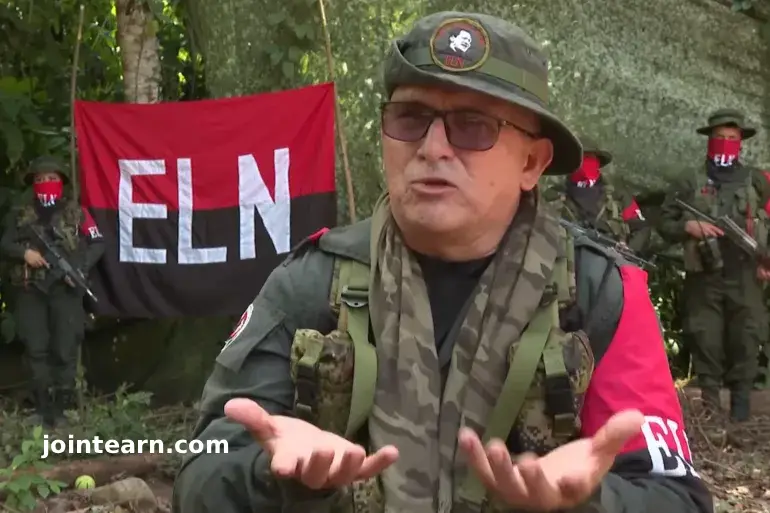
In Colombia’s conflict-ridden Catatumbo region, tensions are soaring as the country’s largest remaining guerrilla group, the National Liberation Army (ELN), faces mounting pressure not just from the Colombian government but also from the United States.
For decades, Catatumbo — a remote and impoverished region rich in coca plantations and oil reserves — has served as a battleground for armed groups vying for territorial control. Now, geopolitical players are significantly raising the stakes. The latest US actions, including drone strikes on alleged drug boats and increased military presence near Venezuela, have exacerbated fears of a widening conflict.
ELN’s Stronghold in Catatumbo: Inside a Rebel-Controlled Zone
Stretching along Colombia’s border with Venezuela, Catatumbo has long been a strategic gateway for drug smuggling, particularly cocaine, into Central America and beyond. When Al Jazeera’s reporting team entered the area, it was immediately clear that the ELN is the de facto authority. Armed patrols guarded remote roads adorned with red-and-black ELN flags, and mobile phone networks were down — locals say telecom firms refuse to operate without paying “taxes” to rebel groups, commonly known as “war taxes”.
This region remains lawless as the ELN battles both Colombia’s military and dissident factions of the Revolutionary Armed Forces of Colombia (FARC), despite the peace deal agreed upon in 2016.
“We are thousands,” asserted Commander Ricardo, one of the ELN’s regional leaders. “Not everyone wears a uniform. Some are urban guerrillas.”
Colombia’s government estimates the ELN’s size at around 3,000 fighters. But inside Catatumbo, the rebel command claims a much larger force.
Peace Talks Falter as US Pressure Mounts
Initial optimism for peace dimmed quickly. President Gustavo Petro, Colombia’s first leftist leader and a former guerrilla himself, promised a “total peace” plan. Yet after several rounds of talks in Mexico, negotiations were abruptly paused due to renewed ELN violence in Catatumbo.
Still, Petro is pushing to restart the process. The ELN remains cautiously hopeful, saying progress depends on whether prior accords remain intact.
“We believed that with Petro there was a chance,” Ricardo reflected. “What we’ve got instead is the peace of the grave.”
But while internal peace efforts have stalled, a new external threat looms: pressure from the United States.
US Military Strikes and the ‘Narco-Terrorist’ Label
The administration of US President Donald Trump has dramatically escalated drug enforcement operations in the region, bombing boats in the Caribbean and Pacific suspected of trafficking cocaine. One such strike reportedly targeted an ELN-linked vessel. Washington has labeled the group “narco-terrorists” and has not ruled out strikes within Colombian territory.
So far, US military operations have resulted in at least 62 deaths and destroyed 14 vessels, according to US officials. But ELN leaders dismiss the claims, calling the US-led campaign an imperialist move aimed at destabilizing leftist governments in the region — primarily Venezuela and Colombia under Petro.
“Why don’t they capture these boats and show the evidence?” asked Commander Ricardo. “Instead, they bomb them.”
He also issued a stark warning:
“If Trump attacks Venezuela, the ELN will respond. And not just us — Latin America will rise. Enough of the US violating self-determination.”
The ELN’s Stance: Between Ideology, Coca Taxes, and War
Founded in 1964 and inspired by the Cuban revolution, the ELN has long positioned itself as a Marxist insurgency fighting for the poor. But like other groups, they have funded operations through kidnappings, extortion, and taxing coca production.
“We don’t traffic drugs,” insisted Commander Silvana, who joined the ELN as a teenager. “We tax local economies in the territories we’ve controlled for over 60 years.”
Despite denials, the group’s deep roots in coca growing areas make it nearly impossible to separate ideology from illicit trade.
Colombia Caught in a Regional Crossfire
As Colombia edges closer to becoming the center of a regional showdown, international tensions are rising. Trump has openly accused Petro of being a drug trafficker — a claim Petro rejected, condemning Trump’s “rude and ignorant” remarks.
In response, Colombia’s Foreign Ministry denounced the comments as a threat to national sovereignty. With the US military buildup near Venezuela and Trump’s aggressive stance, Petro now finds himself navigating a precarious geopolitical landscape.
“We have loved US culture,” Petro wrote on X, “but we will not accept attacks on Colombia.”
The stakes are high. If the US attacks Venezuela or steps deeper into Colombia’s conflict, analysts warn that a local guerrilla war could quickly become a multi-front Latin American confrontation.


Leave a Reply