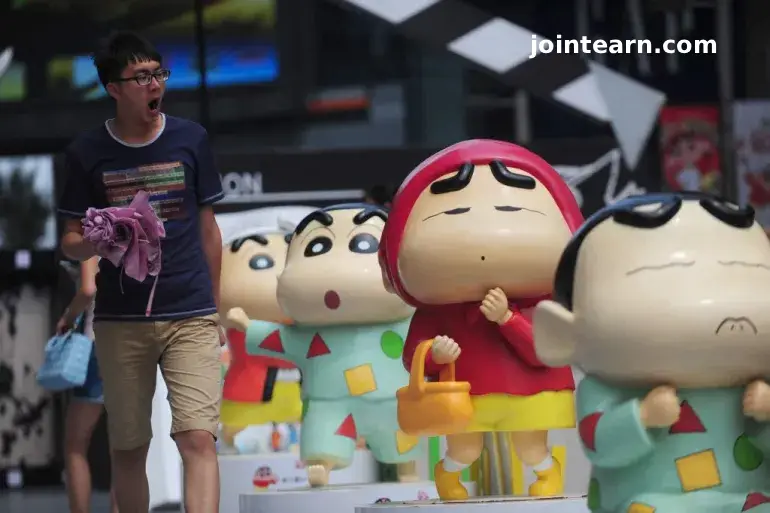
In a striking move that underscores growing diplomatic tensions in East Asia, China has suspended the release of two major Japanese anime films amid an intensifying row over Taiwan. According to Chinese state media, the decision was deemed “prudent” due to audience sentiment and market considerations.
The films affected by this suspension are “Crayon Shin-chan the Movie: Super Hot! The Spicy Kasukabe Dancers” and “Cells at Work!”, which had been scheduled for screenings across mainland China. However, Chinese film distributors announced that these releases will be postponed indefinitely, citing the broader political climate as a key factor.
Rising Tensions Between Beijing and Tokyo
Relations between Japan and China are at their lowest in years following remarks made by Japanese Prime Minister Sanae Takaichi, who suggested that Tokyo could consider military intervention if China attempted to take control of Taiwan. These statements have triggered a wave of responses from Beijing, with Chinese authorities emphasizing the potential impact on Chinese audiences’ perception of Japanese media.
CCTV, China’s state-run broadcaster, reported that the postponement was in line with market principles and a respect for audience preferences, reflecting sensitivity to the current political environment. The broadcaster noted that Takaichi’s “provocative remarks” could affect Chinese viewership of Japanese films, prompting distributors to act cautiously.
Economic and Symbolic Pressure
Experts argue that China’s decision follows a well-established strategy in economic and cultural diplomacy. Naoise McDonagh, a specialist in economic coercion at Edith Cowan University in Australia, told Al Jazeera that such actions are a common tactic in Chinese statecraft.
“China tends to target non-essential trade that will create financial and symbolic pressure on Japanese companies,” McDonagh explained. “These measures signal that parties who challenge China’s strategic interests could face both economic consequences and reputational risks.”
This strategy is often seen as a way for Beijing to influence decision-making abroad, particularly in matters related to its core territorial concerns, including Taiwan.
Recent Retaliatory Measures
The postponement of anime film releases is just the latest in a series of actions by Beijing in response to Takaichi’s comments. Recent moves have included:
- Travel advisories for Chinese citizens visiting Japan
- Military deployment near the disputed Senkaku Islands
Japan, in turn, has issued a travel advisory for its citizens in China, urging respect for local customs, caution in crowded areas, and careful engagement with Chinese citizens. Japanese Chief Cabinet Secretary Minoru Kihara emphasized that these advisories reflect social conditions in various countries, noting the heightened Tokyo-Beijing tensions.
Despite the strain, Japan has maintained an “open stance” on dialogue. Tokyo’s top official for Asia Pacific affairs, Masaaki Kanai, met with his Chinese counterpart, Liu Jinsong, in Beijing to discuss ways to ease bilateral tensions.
Taiwan at the Center of Regional Concerns
China considers Taiwan a part of its territory and has pledged reunification with the island, including the potential use of force if necessary. Japan views China’s stance with heightened concern due to Taiwan’s proximity to Japanese territory and its strategic location along major shipping lanes.
Most countries maintain economic and semi-official diplomatic relations with Taiwan while officially recognizing Beijing under the One-China policy, making Taiwan a flashpoint in regional security and diplomacy.
The suspension of Japanese anime films in China highlights how cultural and entertainment sectors are increasingly entangled in geopolitical disputes, reflecting the broader interplay between media, public sentiment, and international relations in East Asia.


Leave a Reply