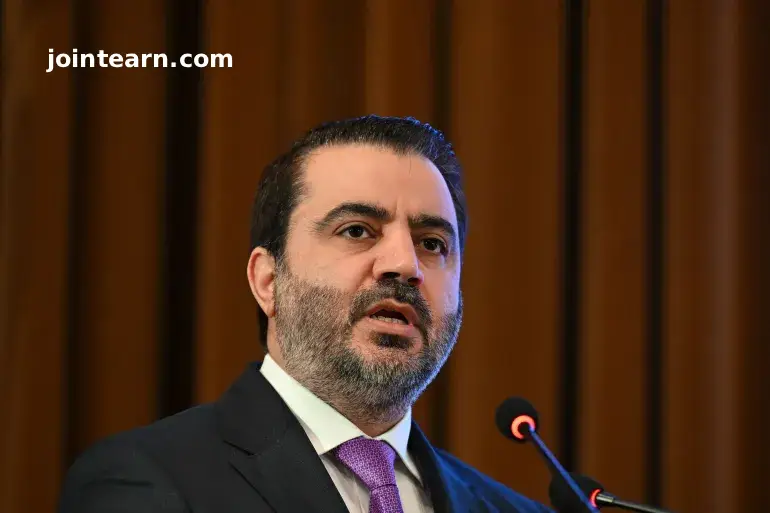
Damascus seeks stronger global alliances as Beijing and Syria pledge security cooperation, economic expansion, and renewed diplomatic ties.
Syrian Foreign Minister Asaad al-Shaibani has committed to expanding cooperation with China on counterterrorism and security issues during his first official visit to Beijing since the removal of former President Bashar al-Assad in late 2024. The visit marks a significant step in Damascus’s campaign to rebuild international relationships and strengthen its geopolitical alliances after years of war and political isolation.
Al-Shaibani met with Chinese Foreign Minister Wang Yi on Monday, where both sides reaffirmed their intention to work jointly on counterterrorism initiatives, intelligence coordination, and broader security matters. According to Syrian state media outlet SANA, al-Shaibani pledged that Syria would not permit its territory to be used for any activity that could threaten Chinese interests.
China, which had been one of al-Assad’s key supporters before his government collapsed, emphasized in a statement from its foreign ministry that it expects Syria to take “effective measures” that ensure a stable foundation for the future of China–Syria relations.
Uighur Fighters and Security Concerns
One of Beijing’s top concerns is the fate of Uighur fighters who traveled to Syria after the country’s war erupted in 2011. Many joined the Turkistan Islamic Party (TIP), an armed group based in Idlib province. While some reports claimed the Syrian government planned to transfer as many as 400 such fighters to China, the Syrian Ministry of Foreign Affairs rejected these claims as “baseless.”
“There is no truth to reports suggesting that Syria intends to hand over fighters to China,” a foreign ministry source told SANA, countering an AFP report that cited unnamed sources.
The issue remains sensitive for China, which has long accused some Uighur separatist groups of involvement in what it labels as terrorism. For Syria, the matter is tied closely to negotiations with major powers and to its renewed global outreach following Assad’s fall.
Damascus Reaffirms Support for ‘One China’ Policy
During the talks, al-Shaibani reiterated Syria’s commitment to the One China principle, formally recognizing Beijing as the sole legitimate government of all Chinese territory, including Taiwan. The statement further strengthens political ties between the two states at a time when China is expanding its influence across the Middle East through security, trade, and infrastructure partnerships.
Wang Yi also affirmed China’s position that the Golan Heights—a strategic region occupied and annexed by Israel—remains Syrian territory under international law. The remark carries mounting importance as Israel continues expanding into southern Syria, including areas within a United Nations-monitored buffer zone established in 1974.
Cooperation on Reconstruction, Economy, and Development
Beyond security matters, the two ministers discussed avenues for expanding cooperation in:
- Syria’s reconstruction efforts
- Infrastructure development under China’s regional engagement frameworks
- Economic growth and poverty alleviation
- Collaboration through the China–Arab Cooperation Forum
Beijing signaled interest in playing a larger role in Syria’s rebuilding phase, especially as Damascus regains diplomatic footholds and begins attracting Western sanction relief and significant Gulf-region investments.
Syria’s Growing International Engagement
Al-Shaibani’s Beijing trip comes at a time of rapid diplomatic transformation for Syria. The new government under President Ahmed al-Sharaa has been pushing to reestablish global partnerships that had fractured during more than a decade of conflict.
In recent months:
- The United States and Europe granted select sanctions relief to Damascus.
- Gulf nations moved to invest in Syrian redevelopment projects.
- President al-Sharaa became the first Syrian leader to visit the White House since the country gained independence in 1946.
- Syria joined a US-led international coalition targeting ISIL (ISIS), marking an unprecedented level of coordination with Washington.
These shifts have helped stabilize Syria’s international standing and opened opportunities for renewed economic and strategic collaboration.
Balancing Relations With Russia
Despite Syria’s westward diplomatic pivot, Damascus is also maintaining relations with Moscow—one of the Assad government’s crucial wartime allies. Russia still operates air and naval bases along Syria’s coast, even though the Assad administration collapsed in late 2024.
During a visit to Moscow in October, al-Sharaa told Russian President Vladimir Putin he aimed to “restore and redefine ties” between the two nations. However, the meeting left unanswered questions about whether Russia intends to hand over Bashar al-Assad, who fled to Russian territory following his government’s downfall.
Still, Monday’s talks between al-Shaibani and Wang Yi underscore Damascus’s strategy of balancing both old and new alliances, signaling that Syria remains open to cooperation with former partners of the Assad regime.


Leave a Reply