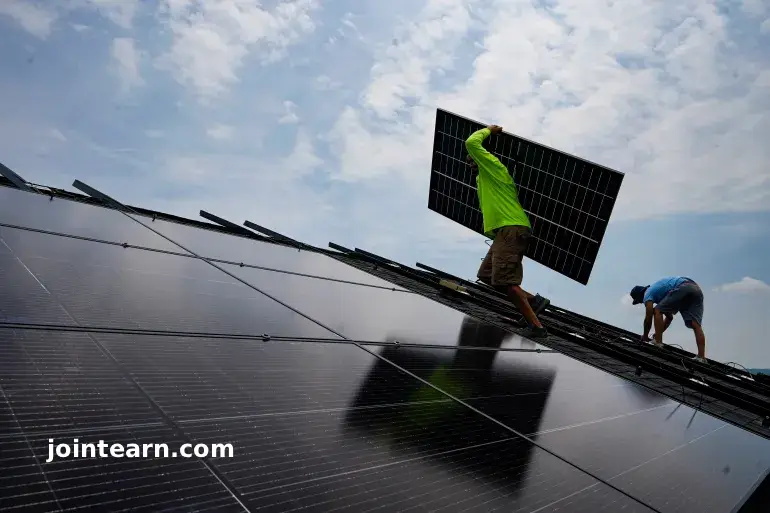
Nationwide renewable energy projects halted, leaving thousands of homes stranded amid rising power costs
Families across the United States are reeling after the federal government abruptly cancelled billions of dollars in renewable energy funding — including the $7bn Solar For All program, which was set to help tens of thousands of low- and middle-income households install rooftop solar systems. The cuts have left many communities shocked, projects half-finished, and installers scrambling as electricity prices continue to climb across the country.
For Brandon Praileau, a pastor from Norfolk, Virginia, the news was devastating. Just weeks earlier, he had been helping families enroll in a federally supported solar initiative designed to lower installation costs and reduce electricity bills. Now the program has been scrapped completely, dissolving the $156m awarded to Virginia’s Solar United Neighbors chapter.
“I was mind blown,” said Praileau, the Virginia program director. “Families were counting on this. Everything was ready.”
Solar Programs Cancelled Mid-Installation
Across the country, solar projects were not just planned — many were already underway. A majority of the rooftop systems that lost funding were mid-installation, leaving homeowners and installers stuck with incomplete projects and uncertainty over who will cover the losses.
The cancellation coincides with the federal government’s decision to end the 30 percent tax credit for residential solar installations in December. Commercial credits will only remain available for businesses that begin construction on qualifying facilities by June 2026.
The Department of Energy (DOE) also terminated an additional $13bn in funding earmarked for modernizing power grids, supporting battery storage, enabling carbon-neutral cement production, and developing wind energy technology.
The Trump administration defended the cuts, claiming the renewable energy initiatives were part of what it called the “wasteful Green New Scam agenda.”
Rising Power Costs Intensify Pressure on Families
The funding cuts come at a time when many Americans already face steep electricity bills. In Florida, where 10,000 households were set to receive rooftop solar subsidies before the program was cancelled in August, the impact has been severe.
One Miami-Dade resident told volunteers she was “scared to use power — scared to put on air conditioning” as electricity costs surged. Florida households have seen power rates increase by as much as 60 percent since 2019, according to Solar United Neighbors.
In many states, costs have increased due to:
- Hurricanes and extreme weather
- Aging electric grids
- Supply shocks from the war in Ukraine driving up natural gas prices
Florida Power & Light is currently seeking further rate hikes to collect nearly $10bn over the next four years, according to the state’s Office of Public Counsel.
Experts warn that without solar incentives, consumers remain “at the mercy of utilities”, who continue to raise rates.
Wind and Solar Industries Brace for 2026 Downturn
Solar installers in states such as California say demand has surged as families rush to install rooftop systems before tax credits expire — but the industry expects a steep collapse in 2026.
Bernadette Del Chiaro of the Environmental Working Group predicts a “rain shadow impact” next year, with businesses and jobs disappearing after the rush ends.
Barry Cinnamon, CEO of Cinnamon Energy Systems, called the shift a “big plunge on the solar coaster.”
Ed Murray of the California Solar and Storage Association warned that ending federal tax credits will double the payback period for solar installations, potentially stretching it to 12 years. The economic blow could also threaten thousands of jobs and jeopardize California’s climate goals.
DOE Defends Cuts as Critics Warn of Long-Term Damage
In its announcement, the DOE argued that returning unspent funds to taxpayers reflects the administration’s commitment to “affordable, reliable, secure American energy.”
However, climate advocates say the cuts undermine long-term affordability and resilience. Many of the canceled projects were aimed at replacing old grid infrastructure, improving energy security, and lowering emissions — benefits that may reduce costs over decades.
A study by the Lawrence Berkeley National Laboratory found electricity price increases outpaced inflation in 26 states, driven by extreme weather and deteriorating infrastructure.
California, for example, has seen power prices rise more than 34 percent since 2019, in part due to catastrophic wildfires that forced utilities to rebuild transmission lines.
Among the canceled California projects was $630m in federal funding intended to strengthen power grids statewide.
Communities and Faith Institutions Hit Hard
In California, more than 20 percent of cars sold in the past two years were electric vehicles — a shift made possible by federal incentives that expired on September 30. Middle-income households, in particular, now face financial barriers to purchasing EVs.
Susan Stephenson of California Power and Light said places of worship that had planned to adopt solar or add EV charging stations are now struggling to find installers or afford rising costs.
“These cuts hit the people who needed the help most,” she said.
Power Costs Fuel Political Backlash
In Virginia, rising electricity prices became a major issue in the November 4 governor’s race. Democrat Abigail Spanberger, who won the election, vowed to reduce utility costs by increasing energy production and requiring data centers — some of the state’s largest power consumers — to take on a greater share of expenses.
Praileau hopes the new administration can revive the solar programs now tied up in litigation.
Florida is also pursuing legal action against the federal cuts, and analysts expect more lawsuits nationwide as states and organizations fight to restore lost funding.
Steve Larson, former executive director of the California Public Utilities Commission, predicts the landscape will be shaped by creative legal efforts and “techniques of delay” aimed at keeping renewable projects alive until political conditions shift.


Leave a Reply