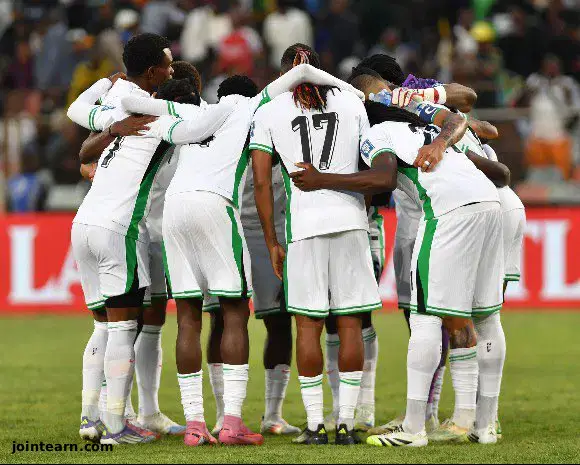
Nigeria’s Super Eagles failed to qualify for the 2026 FIFA World Cup, culminating in a 5-4 penalty shootout loss to DR Congo in Morocco on November 16, 2025. The team had started the campaign poorly with a 1-1 draw against Lesotho in Uyo in 2023. Analysts, former players, and sports officials have attributed the failure to mismanagement, indiscipline, and structural deficiencies in Nigerian football.
Key Issues Highlighted:
- Indiscipline and Off-the-Pitch Problems:
- Players went on strike during the Morocco playoffs over unpaid dues.
- Disputes between players and officials were left unresolved until the team reached Morocco.
- Former NFF Secretary-General Mallam Sanni Toro cited frequent changes in the technical crew and lack of strategic planning.
- Structural Weaknesses:
- Lack of a vibrant technical committee and proper domestic league infrastructure.
- Poor facilities and inadequate player preparation at all levels.
- Former players Kojo Williams and Adokiye Amiesimaka emphasized revamping school sports and domestic leagues as foundational solutions.
- Calls for Presidential Intervention:
- Toro urged President Bola Tinubu to personally investigate the NFF’s management and the football ecosystem.
- Concerns about transparency in NFF sponsorship deals and the overall direction of Nigerian football were highlighted.
- Insights from Former Stars:
- Jay-Jay Okocha: Stressed the need for patience and proper football structures; blamed off-field issues for inconsistency.
- Aiyegbeni Yakubu: Highlighted the long-standing tradition of owing players bonuses as a systemic problem.
- Dr. Lary Izamoje: Criticized preparation, planning, and team cohesion, noting that Nigeria’s failure has damaged the country’s football image and economic opportunities.
- General Consensus:
- There are no quick fixes; success requires rebuilding the foundation of football development from grassroots to professional levels.
- Domestic league enrichment, youth training, and accountability at the NFF are essential for future competitiveness.
Conclusion:
Experts argue that Nigeria’s football crisis is systemic, requiring urgent, hands-on intervention by President Tinubu and structural reforms to prevent further national and international embarrassment.


Leave a Reply