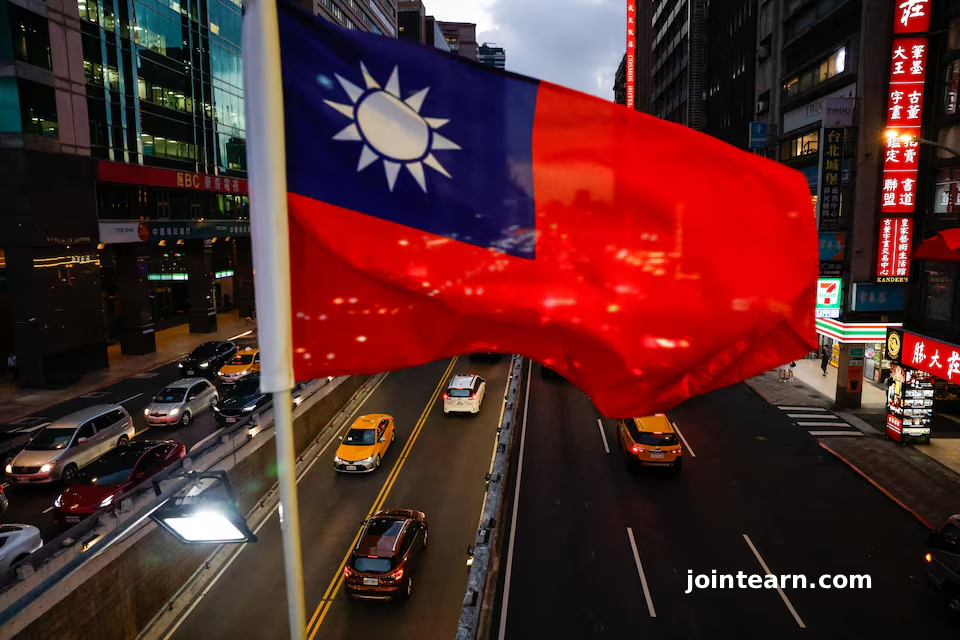
Taiwan’s Premier Cho Jung-tai has firmly stated that a “return” to China is not an option for the island’s 23 million people, following Chinese President Xi Jinping’s recent call with U.S. President Donald Trump, in which Xi emphasized Taiwan’s “return to China” as part of Beijing’s vision for global order. Taiwan’s democratically elected government has strongly rejected this claim, underscoring its stance as a fully sovereign and independent country.
Taiwan’s Official Response
Speaking outside parliament, Premier Cho declared:
“We must once again emphasize that the Republic of China, Taiwan, is a fully sovereign and independent country. For the 23 million people of our nation, ‘return’ is not an option — this is very clear.”
In Taiwan’s government structure, the Premier manages day-to-day operations, while matters of defense and foreign relations are generally overseen by the President.
Taiwan has rejected China’s ‘one country, two systems’ proposal, which enjoys no support among mainstream political parties and has been firmly opposed by President Lai Ching-te.
Regional Tensions and Military Pressure
Relations in the region remain tense. Recently, Japanese Prime Minister Sanae Takaichi warned that a hypothetical Chinese attack on Taiwan could trigger a Japanese military response, heightening regional security concerns.
Taiwan’s Foreign Ministry spokesperson, Hsiao Kuang-wei, said:
“China has repeatedly attempted to intimidate and pressure neighboring countries such as Taiwan and Japan with its authoritarian expansionist policies.”
Meanwhile, China maintains that Taiwan is a core sovereignty issue, asserting its claim as the successor government to the Republic of China since 1949. Beijing has never renounced the use of force to assert control over Taiwan and continues to exert military pressure, including routine surveillance flights over the Taiwan Strait.
Taiwan’s defense ministry reported spotting a balloon from China over the Strait, part of a recurring pattern of harassment. Beijing dismissed these incidents as meteorological operations.
Historical Context
Taipei has repeatedly denounced Beijing’s attempts to distort World War Two history, especially regarding Taiwan’s handover to the Republic of China at the end of the conflict. The People’s Republic of China was established in 1949 after Mao Zedong’s forces defeated the Republic of China, which then retreated to Taiwan.
The Taiwanese government emphasizes that any future of the island must be determined by its people, rejecting external pressure or coercion from Beijing.
Conclusion
Taiwan’s unequivocal rejection of a “return to China” highlights the ongoing cross-strait tensions and the island’s commitment to sovereignty and democratic self-determination. With escalating military pressure from China and rising geopolitical stakes in East Asia, Taiwan’s position reinforces the complexity of regional security, U.S.-China relations, and the enduring debate over Taiwan’s future.


Leave a Reply