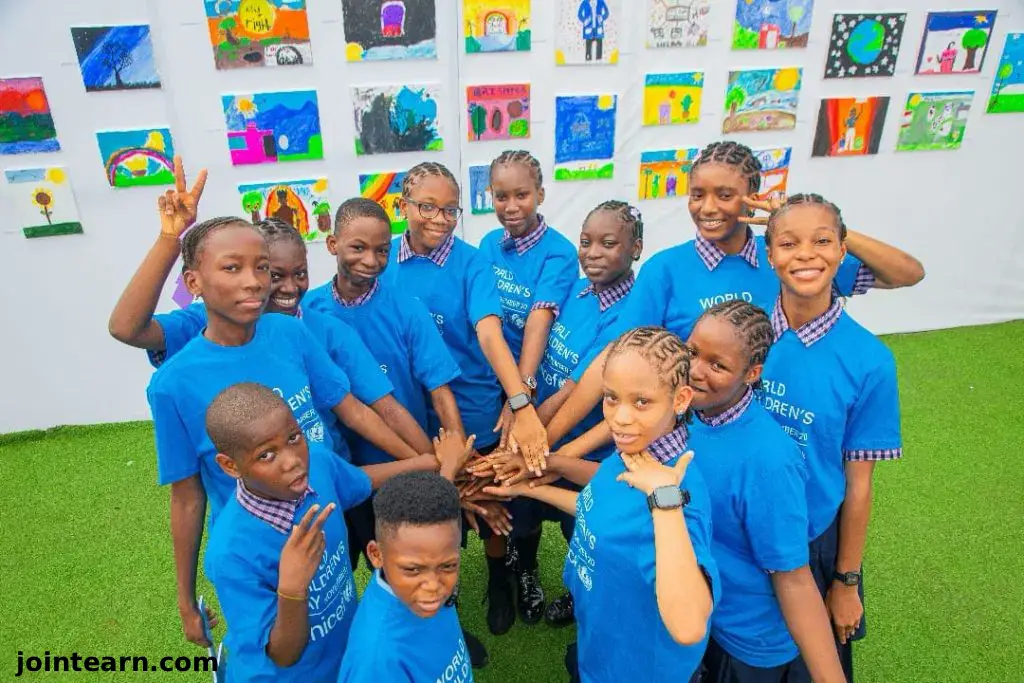
As Nigeria joined the world to mark World Children’s Day, themed “My Day, My Rights”, questions linger over how well the country protects its children.
From bustling cities like Lagos to remote areas of Maiduguri, many Nigerian children are denied a normal childhood. Some hawk goods on dusty roads instead of attending school; others work as domestic servants or engage in street vending and petty theft to support their families. For millions, education remains out of reach, and childhood is stolen.
Under the Child Rights Act of 2003 and the Convention on the Rights of the Child (1989), a child is anyone under 18. Yet, poverty, insecurity, and weak social services leave children highly vulnerable, often with lasting consequences for their development.
Scale of the Crisis
UNICEF reports that 10.2 million primary-school children and 8.1 million junior secondary children in Nigeria are out of school. In some states, as many as 26% of primary-age children are not enrolled, with secondary-level exclusions higher. The northeast faces the most severe challenges, with conflict and displacement contributing to mass school closures. UNICEF recently launched a program to reintegrate 2 million out-of-school children in Borno, Adamawa, and Yobe states.
Child Labour
Many children who attend school still work, often in hazardous conditions. The 2022 ILO/NBS Child Labour Survey found:
- Ages 5–14: 11.2% work only, 45.3% work and attend school.
- Ages 15–17: 21.9% work without attending school.
Overall, half of Nigerian children aged 5–17 engage in economic activities, with 39.2% in child labour and 22.9% in hazardous work.
Hidden Toll
Child Rights Advocate Jide Johnson warns that poverty, insecurity, and weak enforcement perpetuate the cycle. Children face early marriage, trafficking, sexual exploitation, and hazardous labour. Conflict, disability, and displacement worsen the situation. Johnson stresses, “Our laws are not the problem; enforcement is. Consistent public reporting of violations can drive change.”
Children excluded from education face long-term consequences, including poverty, marginalization, and perpetuated cycles of instability. Malnutrition, disease, lack of vaccinations, poor sanitation, and exposure to violence compound the risks.
Call to Action
UNICEF and partners are advocating for:
- Expanded non-formal and accelerated learning programs in conflict zones.
- Strengthened social protection through cash transfers and food support.
- Enforcement of child labour laws.
- Improved data collection to identify and support vulnerable children.
- Public awareness campaigns targeting parents, guardians, and community leaders.
Advocates emphasize that journalists and media play a crucial role in protecting children by reporting violations and raising awareness.
Glimmers of Hope
Despite the crisis, programs to reintegrate children into schools are expanding, offering hope for reclaiming childhood.
“Childhood should not be a privilege for the lucky few,” said UNICEF Communication Consultant Dr. Geoffrey Njoku. With sustained commitment, Nigeria can reverse these trends and restore children’s rights, education, and safety.


Leave a Reply