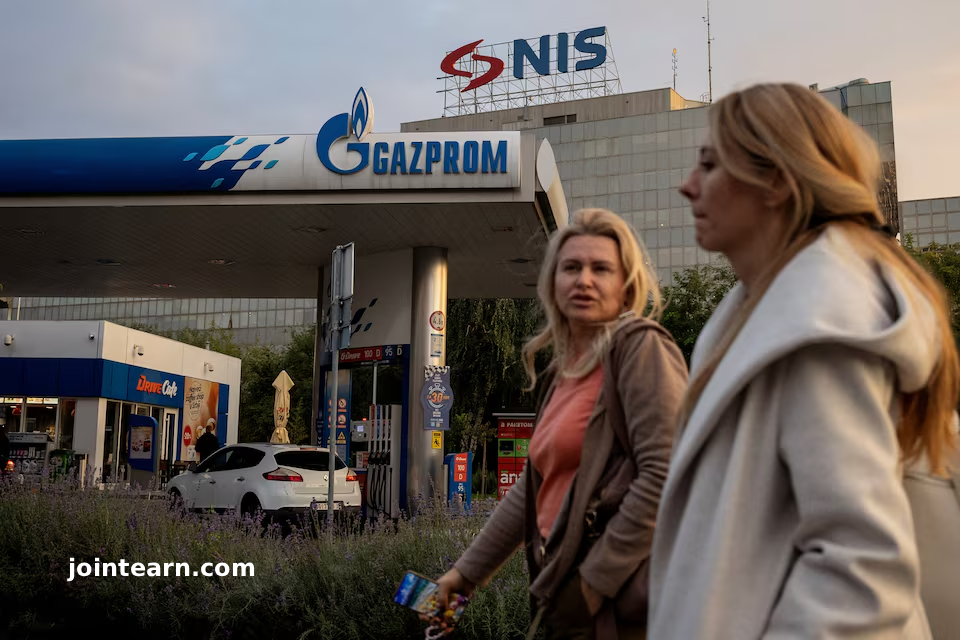
Serbia’s Russian-owned oil company, NIS (Naftna Industrija Srbije), has temporarily halted operations at its refinery due to a shortage of crude oil supplies, raising concerns over the country’s fuel security during the winter months. The development comes after U.S. sanctions on Russia’s oil sector fully came into effect, impacting NIS’s ability to continue normal operations.
Background: U.S. Sanctions on NIS and Gazprom
The U.S. Treasury Department’s Office of Foreign Assets Control (OFAC) first imposed sanctions on Russia’s oil sector in January 2025, targeting companies including NIS, which is majority-owned by Gazprom Neft (44.9%) and Gazprom (11.3%). Serbia itself holds a 29.9% stake in the company, with the remainder owned by smaller shareholders.
Prior to the sanctions taking full effect in October, the U.S. had repeatedly issued waivers allowing NIS to continue operations. With the expiration of these waivers, banks ceased processing NIS payments, and regional infrastructure such as Croatia’s JANAF pipeline halted crude deliveries to the refinery.
Immediate Impact on Serbia’s Fuel Production
The halt in refinery operations means that NIS can no longer produce key petroleum products, including:
- Gasoline
- Diesel
- Jet fuel
According to NOVA.RS TV and a refinery source, NIS still maintains fuel in storage, allowing Serbia to meet short-term demand. Energy Minister Dugravka Djedovic Handanovic confirmed that NIS’s operational reserves include 89,825 metric tons of diesel and 53,648 metric tons of gasoline. Additionally, the Serbian government recently approved the import of 38,000 tons of petrol and 66,000 tons of diesel to bolster state reserves.
Despite these reserves, the ongoing crude oil shortage underscores the vulnerability of Serbia’s domestic fuel supply, especially with winter demand increasing.
Geopolitical and Economic Implications
The sanctions and operational halt at NIS highlight several broader issues:
- Dependence on Russian Energy: NIS’s majority ownership by Russian companies exposes Serbia to geopolitical risks.
- Pressure for Russian Divestment: Washington is pushing for complete Russian divestment from NIS, requiring the owners to find buyers for their stakes within three months.
- Regional Energy Security: Neighboring countries and regional pipelines, such as JANAF in Croatia, play a critical role in crude deliveries. Any disruption has ripple effects on the Balkan fuel market.
Analysts warn that prolonged disruptions could lead to higher fuel prices and strain Serbia’s winter energy planning.
Serbia’s Government Response
The Serbian government has emphasized that fuel reserves are currently sufficient to meet domestic demand. Officials are actively securing alternative fuel imports to mitigate potential shortages. The government’s proactive approach includes:
- Importing additional petroleum products for state reserves
- Monitoring storage levels and refinery output
- Coordinating with regional partners for energy logistics
While these measures provide short-term relief, the long-term stability of Serbia’s fuel supply remains uncertain until the sanctions issue and Russian ownership divestment are resolved.
Conclusion
The suspension of operations at Serbia’s NIS refinery highlights the intersection of geopolitics, sanctions, and energy security. As the U.S. sanctions bite and Russian divestment pressure mounts, Serbia faces challenges in maintaining a steady supply of fuel during the critical winter period. The coming months will be crucial in determining whether alternative imports and reserves can offset the disruption caused by sanctions and supply chain interruptions.


Leave a Reply