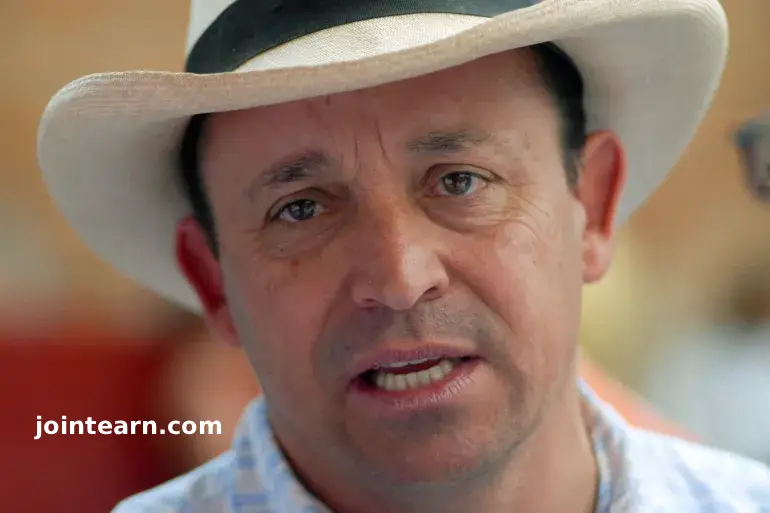
Bogotá, Colombia – Santiago Uribe, brother of former Colombian President Alvaro Uribe, has been sentenced to 28 years and three months in prison for aggravated homicide and criminal conspiracy linked to his leadership of a paramilitary group in the 1990s. The ruling comes from a three-judge panel in Antioquia, Colombia, and overturns a lower court acquittal issued last year.
Santiago Uribe Found Guilty of Leading Paramilitary Group
According to the court, Santiago Uribe formed and led an illegal armed group in the early 1990s, which carried out systematic murders and targeted people deemed “undesirable.” The paramilitary group, known as The 12 Apostles, operated primarily on the Uribe family’s La Carolina cattle ranch and was described as a death squad responsible for killing suspected rebels, sex workers, drug users, people with mental illnesses, and political opponents.
The court detailed that the paramilitaries also received collusion from state security forces, noting cooperation “through action and inaction” by agents of the state.
Key Victims and Crimes
The ruling identifies Santiago Uribe as responsible for the murder of Camilo Barrientos, a bus driver shot near La Carolina in 1994 under suspicion of collaborating with leftist rebels. Judges highlighted that the group’s actions, including weapons distribution and training, constituted crimes against humanity.
Uribe has consistently denied any involvement with paramilitary groups, and his defense team has confirmed plans to appeal the conviction. The case will now move to the Colombian Supreme Court for a final verdict.
Historical Context of the Case
Investigations into Santiago Uribe began in the late 1990s, but the case was initially dropped in 1999 due to insufficient evidence. Authorities reopened the probe in 2010, leading to his detention in 2016. The trial concluded in 2020, but the lower court delayed its verdict until November 2024, acquitting Uribe at that time.
Tuesday’s decision represents a reversal of that acquittal and is seen by human rights advocates as a major step toward accountability for Colombia’s paramilitary-linked violence.
Reactions and Significance
Human rights experts praised the ruling as a critical milestone in addressing the influence of paramilitary groups in Colombian society. Laura Bonilla, deputy director of the Colombia Peace and Reconciliation Foundation (Pares), called the sentence “extremely important,” highlighting the deep penetration of paramilitarism in social and political structures.
Gerson Arias, a conflict and security researcher at the Ideas for Peace Foundation, noted the complexity of the case: “Paramilitarism was deeply rooted in the upper echelons of society, and clarifying what happened takes years. Many aspects of these crimes remain unresolved.”
Alvaro Uribe’s Political Influence
Santiago’s brother, former President Alvaro Uribe, led Colombia from 2002 to 2010 and remains a prominent figure in right-wing politics. Earlier this year, he was found guilty of bribing paramilitary members to avoid testifying about his own ties but had the conviction overturned due to unlawful wiretap evidence.
Alvaro Uribe reacted to his brother’s sentencing on social media, stating: “I feel deep pain over the sentence against my brother. May God help him.” He has also pledged to form a coalition to oppose a left-wing government in the upcoming 2026 elections.
The case underscores ongoing efforts in Colombia to hold powerful figures accountable for paramilitary violence and crimes committed during decades of internal conflict.


Leave a Reply