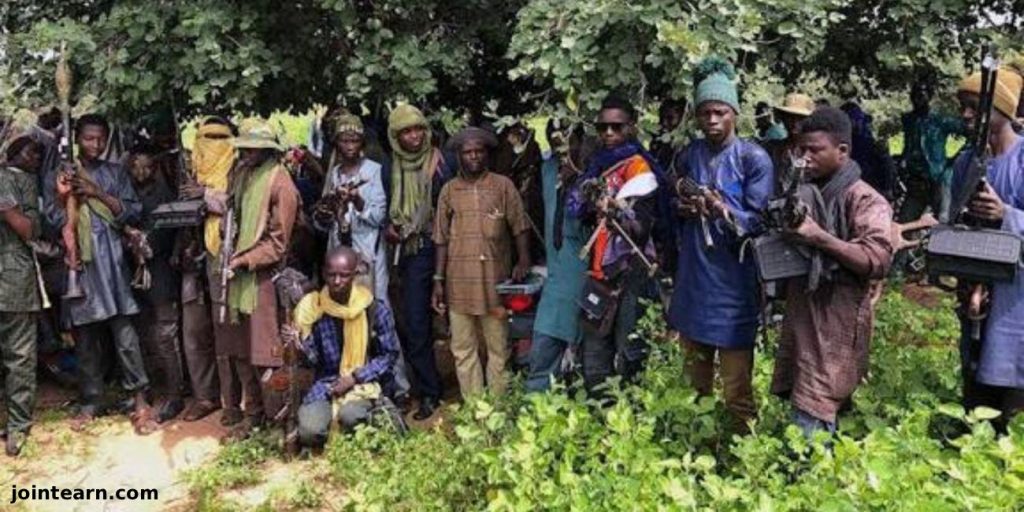
The Coalition of Northern Groups (CNG) has accused foreign interests, local collaborators, and political actors of orchestrating a coordinated agenda aimed at deepening insecurity in Northern Nigeria. The group claims the recent surge in attacks across the region goes far beyond ordinary banditry and is part of a politically and financially motivated campaign.
In a statement on Wednesday signed by National Coordinator Comrade Jamilu Aliyu Charanchi, CNG said the wave of violence carries “the fingerprints of a well-funded, well-timed, and politically orchestrated agenda.”
Foreign Influence and ‘Misinformation Campaigns’
CNG accused the United States of being misled by what it described as exaggerated genocide claims targeting Plateau and Benue states, while ignoring higher casualty figures in Katsina, Zamfara, Kaduna, Kebbi, Borno, and other northern states.
Charanchi expressed concern that former U.S. President Donald Trump appeared to have acted on misinformation “not supported by the CIA, FBI, or even the U.S. Embassy in Nigeria,” citing the dismissal of these genocide claims by Trump’s special envoy on Arab and African affairs, Massad Boulos.
“The recent escalation of attacks appears timed to validate these fictitious genocide claims and to prepare the international stage for hostile actions against Nigeria,” the statement said. “These attacks are not random; they are deliberate attempts to give false narratives the appearance of truth.”
Pattern of Violence Highlights Coordinated Agenda
The coalition linked recent kidnappings and attacks—including the abduction of worshippers in Kwara, schoolgirls in Kebbi, 315 students and teachers in Niger State, the murder of a Brigadier-General, and the kidnapping of 64 residents in Tsafe, Zamfara—to a broader political plot.
CNG argued these incidents are reminiscent of past mass kidnappings, such as the Kuriga attack of March 2024, suggesting a systematic and sophisticated assault on the region.
The group also condemned viral social media videos purporting to show IPOB operatives disguising themselves as Hausa/Fulani attackers, describing it as a deliberate attempt to inflame ethnic tension and fracture national unity.
Impact on Education and Civil Life
CNG highlighted the closure of 47 Unity Schools and other educational institutions across Katsina, Niger, and Kwara, warning that the region is sliding backward amid the highest number of out-of-school children in Nigeria.
“Authorities have resorted to closing schools in a region already burdened with the largest population of out-of-school children. This failure is too glaring to ignore,” Charanchi said.
Demands from the Federal Government
The coalition issued a comprehensive set of demands:
- Expose, arrest, and prosecute all local and foreign sponsors of terrorism, including politicians, businessmen, clerics, and compromised security officials.
- Leverage intelligence capabilities to track and dismantle international conspirators and financiers behind mass abductions.
- Ensure that President Bola Ahmed Tinubu deploys Service Chiefs to affected areas until terrorist networks are fully neutralized.
- Establish a high-powered monitoring and briefing committee for transparent and regular security updates.
- Harmonize efforts among the Federal Government, state authorities, and traditional rulers to present a united front against escalating insecurity.
- Immediately secure Nigeria’s porous borders to prevent the influx of criminal elements and weapons.
“The North will not allow its tragedies to be weaponised for separatist, political, or foreign objectives,” Charanchi warned.
CNG’s statement underscores rising fears that the security challenges in Northern Nigeria are part of a coordinated, politically driven campaign with both internal and external backing, calling for urgent and decisive government action.


Leave a Reply