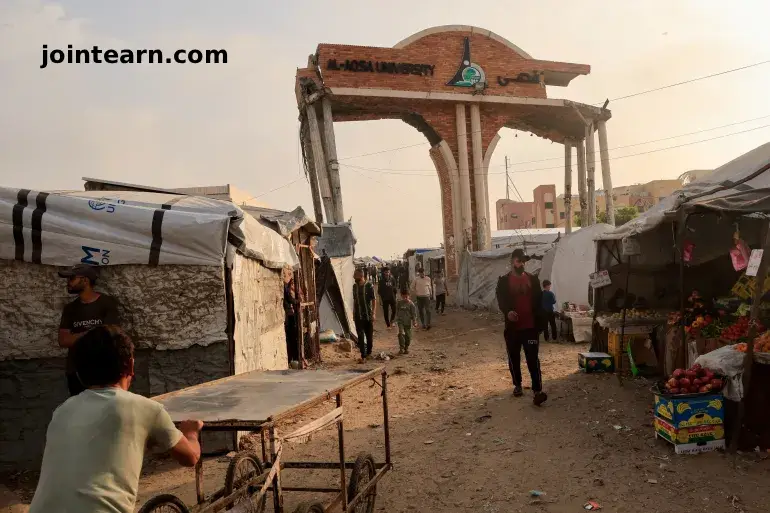
Amnesty International has issued a stark warning that the situation in Gaza remains dire, asserting that Israeli authorities continue to commit acts amounting to genocide. Despite the ceasefire agreement meant to halt hostilities, new airstrikes and strict restrictions on humanitarian aid continue to imperil civilian lives across the besieged region.
Escalating Violence Despite Ceasefire
Since the ceasefire went into effect on October 10, 2025, Israel has reportedly violated the agreement over 500 times in seven weeks. These repeated violations have resulted in the deaths of at least 347 Palestinians and injuries to 889 others. Over the course of the conflict, which has spanned more than two years, nearly 70,000 Palestinians have lost their lives.
According to Amnesty International, these actions demonstrate no change in Israel’s genocidal intent. Secretary-General Agnes Callamard emphasized, “So far, there is no indication that Israel is taking serious measures to reverse the deadly impact of its crimes, and no evidence that its intent has changed.”
Callamard further warned that Israel continues to impose deliberate restrictions on humanitarian aid and essential services, which exacerbate the humanitarian crisis in Gaza.
Targeted Strikes in Gaza
Recent Israeli airstrikes have targeted southern and central Gaza, hitting areas beyond the designated zones outlined in the ceasefire agreement. Among the affected regions are Bureij camp in central Gaza and eastern Khan Younis, where civilians continue to face severe risks. Local civil defense authorities have described these attacks as blatant violations of the fragile truce.
Simultaneously, Israeli forces have conducted raids and arrests across the occupied West Bank, including Qalqilya, Tubas, Hebron, Tulkarem, and Nablus. In Tubas alone, at least 25 Palestinians were assaulted and required medical treatment, according to the Palestinian Red Crescent and Wafa news agency.
Progress in Prisoner Exchanges
Despite ongoing violence, some progress has been made in prisoner exchanges. Israel has transferred the bodies of 15 Palestinian prisoners to Gaza authorities, following the handover of an Israeli captive by Hamas and Palestinian Islamic Jihad.
Hamas spokesperson Hazem Qassem noted that the handovers reflect the group’s commitment to completing the exchange process, despite ongoing challenges. Israel has released nearly 2,000 Palestinian prisoners and returned the bodies of 345 individuals, many showing signs of torture, mutilation, or execution.
Ceasefire Challenges and Hamas Fighters
The ceasefire remains fragile, particularly because dozens of Hamas fighters remain trapped in tunnels on the Israeli-occupied side of the yellow line in southern Gaza. Israel claims to have killed 20 of these fighters in the past week. Hamas has called on mediators to pressure Israel to allow safe passage for the fighters, accusing Israel of violating the truce.
Muhammad Shehada, visiting fellow at the European Council on Foreign Relations, warned that Gaza faces two possible futures: it could remain a permanent, uninhabitable refugee camp, or renewed conflict could erupt if Hamas retaliates against continued Israeli aggression.
International Pressure and Next Steps
The second phase of the ceasefire, which remains under discussion, proposes deploying an armed international stabilization force and establishing a temporary governance structure in Gaza to oversee reconstruction and demilitarization. Talks involving Turkish, Qatari, and Egyptian mediators continue in Cairo, but the future of these plans remains uncertain.
Amnesty International urges the international community to maintain pressure on Israel, ensuring compliance with international law. Callamard stressed, “The international community cannot afford to be complacent: states must keep up pressure on Israel to allow unfettered access to humanitarian aid, lift its unlawful blockade, and end ongoing genocide.”
Conclusion
The ongoing violence in Gaza underscores the fragility of peace efforts and the urgent need for humanitarian intervention. As Israel continues strikes and restrictions, the people of Gaza face immense challenges, and the world is being called upon to act decisively to prevent further human suffering.


Leave a Reply