The United States has reportedly given backing to a controversial plan that could effectively divide the Gaza Strip into two distinct zones, a move that critics warn risks permanently fracturing the Palestinian enclave. Known as the “Alternative Safe Communities” (ASC) initiative, the US-Israeli plan seeks to relocate Palestinians into secure zones controlled by Israel, leaving other areas under Hamas oversight.
A spokesperson for the US State Department told Al Jazeera that the ASC plan is “seen as the most effective way to move people into safe accommodations as quickly as possible”, emphasizing the need to address urgent housing shortages in Gaza following years of conflict.
How the Plan Could Reshape Gaza
Under the proposed framework, Gaza would be split into a “green zone” controlled by Israel and a “red zone” governed by Hamas. While the plan’s details remain fluid, reports from The New York Times suggest that reconstruction and development efforts would focus primarily on areas under Israeli control.
This approach would leave many of Gaza’s roughly 2.2 million residents, including those in Gaza City and central regions such as Deir el-Balah, without access to rebuilding efforts despite widespread destruction and the severe humanitarian crisis.
The initial ASC compounds are planned to house 20,000 to 25,000 people in container-style units, similar to temporary disaster relief accommodations. However, questions remain about how the scheme could scale to meet the needs of Gaza’s vast displaced population.
Hussein, a resident of Gaza City, expressed skepticism: “What are they going to establish, with what infrastructure? It would need water, electricity. It would take years.”
Humanitarian Concerns and Ongoing Displacement
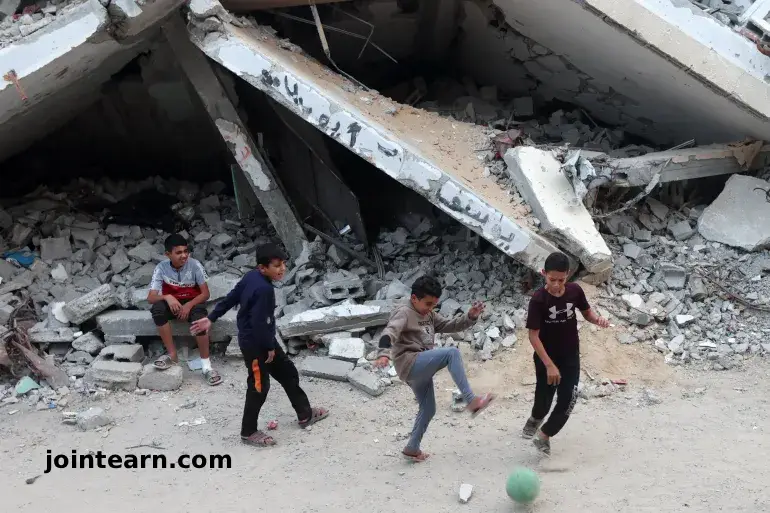
The devastation in Gaza has been catastrophic. Israeli airstrikes and shelling, compounded by deliberate demolitions, have destroyed or severely damaged 92% of the territory’s housing stock. At least 1.9 million people remain displaced, many of whom have been forced to flee multiple times, now living in tents and temporary shelters as winter approaches.
Even after a ceasefire began on October 10, 2025, periodic Israeli attacks have continued, killing at least 347 people and worsening the already desperate situation for civilians.
Funding and Logistical Uncertainty
The construction of ASC compounds is expected to cost tens of millions of dollars for just the first site, with overall reconstruction estimates exceeding $70 billion and requiring decades to complete. The question of who will fund these efforts remains unresolved. Reports indicate that the US administration has ruled out direct funding, while Israeli officials have not confirmed their final position.
Access to these zones is likely to be heavily controlled. Palestinians entering the Israeli-controlled green zone could face background checks, giving Israel a veto over who is allowed to relocate. European diplomats have raised concerns that this could exclude civil servants, healthcare workers, and their families, further complicating the humanitarian response.
Tamara Alrifai, Director of External Relations for UNRWA, criticized the plan, stating: “We deliver aid where people are. We don’t provide services where we’d like people to be. That goes against the entire philosophy of aid and development.”
Risks of Permanent Partition
Experts and aid organizations warn that the division of Gaza into red and green zones could effectively create permanent segregation. Comparisons have been drawn to green zones in Baghdad and Kabul, which became exclusive Western-controlled enclaves during conflict.
Historically, Israeli leaders have signaled intentions to partition Gaza. In April, Prime Minister Benjamin Netanyahu discussed building a security corridor between Rafah and Khan Younis, while far-right Finance Minister Bezalel Smotrich described Gaza as a “real estate bonanza”, suggesting the enclave could be divided to allow for illegal settlements and the displacement of Palestinians.
Yossi Mekelberg of Chatham House highlighted the challenges of such a plan: “You can’t squeeze 2 million people into a space even smaller than that which they’re already in. Imposing an Israeli or American solution onto Gaza just isn’t going to work. Palestinians need to be part of any settlement, or it’s never going to be stable.”
The Perspective of Gaza’s Residents
For many Palestinians, the ASC plan has done little to inspire confidence. Life after two years of conflict has already displaced millions, leaving residents wary of proposed relocations. Hussein, from Gaza City, asked: “What about people’s homes and land? Do they just give them up to go and live in a container?”
The uncertainty surrounding Gaza’s future, combined with ongoing humanitarian challenges, underscores the critical need for inclusive planning, local consultation, and transparent funding. Experts emphasize that any sustainable solution must prioritize the rights, safety, and needs of the Palestinian population rather than imposing external solutions.


Leave a Reply