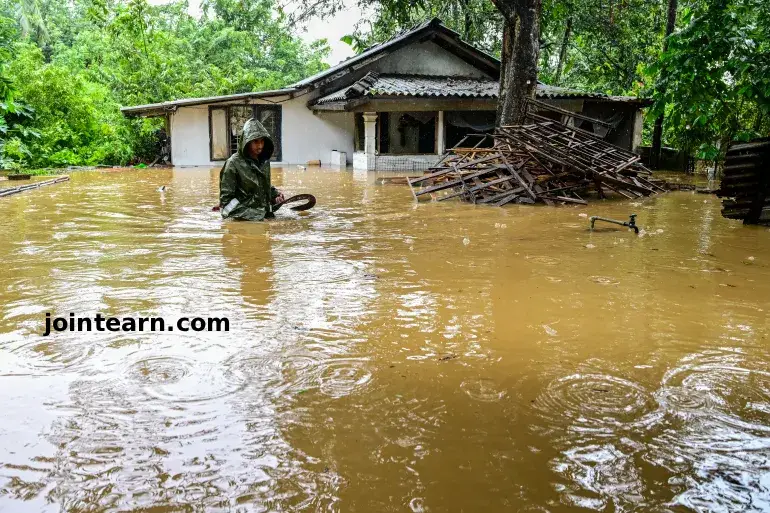
Sri Lanka has called for urgent international assistance as the death toll from Cyclone Ditwah continues to rise. As of Saturday, authorities confirmed 123 deaths and about 130 people reported missing following days of intense rainfall, widespread flooding, and destructive landslides across the island nation.
The Disaster Management Centre (DMC) said the powerful cyclone and associated monsoon rains have destroyed nearly 15,000 homes, forcing almost 44,000 residents into state-run temporary shelters. Authorities warn that the full scale of destruction may take days to assess as floodwaters persist in many regions.
Flooding and Landslides Spread Across Multiple Districts
Although Cyclone Ditwah has begun moving north toward India, heavy rainfall continues in parts of Sri Lanka—particularly in the central district of Kandy, where new landslides were reported over the weekend. Large sections of the main access road remain underwater, slowing rescue efforts.
DMC Director-General Sampath Kotuwegoda said the government has intensified its response, deploying thousands of personnel from the army, navy, and air force to support evacuations and relief efforts.
“Relief operations with the help of the armed forces are under way,” he told reporters in Colombo as he updated the casualty numbers.
Thousands Stranded as Rescue Teams Face Difficult Terrain
According to the Sri Lanka Red Cross Society, rescue teams are struggling to reach several isolated communities where residents remain stranded due to high waters and damaged infrastructure.
Mahesh Gunasekara, the group’s secretary-general, said relief needs have steadily grown as many areas remain submerged.
“After two days, water levels are still rising,” Gunasekara said, cautioning that the danger has not passed despite the cyclone’s movement away from the country.
Kelani River Evacuations and Rising Water Levels
The Kelani River, which flows from central Sri Lanka into the Indian Ocean near Colombo, overflowed its banks late on Friday. Authorities issued evacuation orders for residents living along the river basin, sending hundreds more people into temporary shelters.
Disaster officials warned that water levels could surpass those recorded during the devastating 2016 floods, when 71 people were killed nationwide.
Government Requests International Support
With nearly half a million people affected, Sri Lanka’s government has issued a formal request for international aid and appealed to Sri Lankans overseas to contribute financially to ongoing relief efforts.
Prime Minister Harini Amarasuriya met with diplomats in Colombo to brief them on the situation and request support from their respective governments.
India Sends Relief as Other Nations Prepare Assistance
India was the first country to respond, dispatching two aircraft loaded with emergency supplies, including medical kits, essential food items, and water purification equipment.
An Indian naval vessel currently docked in Colombo for a pre-planned goodwill visit also donated its onboard rations to assist affected families.
Indian Prime Minister Narendra Modi expressed condolences to Sri Lanka and posted on social media that New Delhi stands “ready to provide more aid and assistance as the situation evolves.”
Rainfall Eases but Concerns Remain
While weather conditions improved in much of Sri Lanka on Saturday—including the capital Colombo—rainfall persisted in the island’s northern regions due to the cyclone’s residual effects.
This week’s disaster marks the highest weather-related death toll since June of the previous year, when 26 people were killed in flooding. Additional deadly floods and landslides also struck the country last December, claiming 17 lives.
With floodwaters still rising in parts of the island and thousands awaiting rescue or relief, authorities caution that the situation remains fluid and dangerous.


Leave a Reply