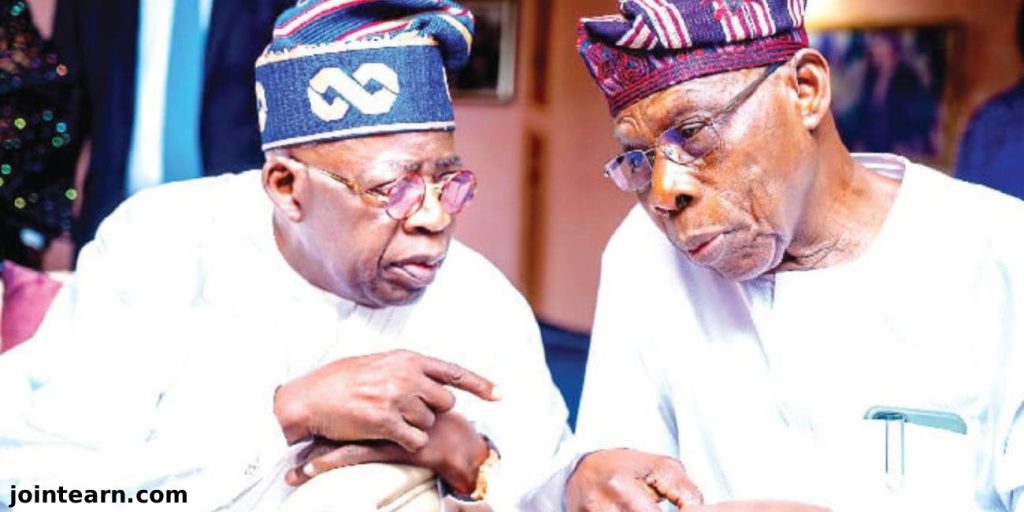
Sunday Dare, the Special Adviser on Media and Public Communication to President Bola Tinubu, has fired back at former President Olusegun Obasanjo, urging him to acknowledge historical lapses that contributed to the rise of terrorism in Nigeria rather than criticize the current administration.
Dare emphasized that constructive engagement and support for ongoing security initiatives are far more beneficial than public statements that could misrepresent the realities on the ground and erode public confidence in the government’s fight against terrorism.
Obasanjo’s Criticism Sparks Controversy
Former President Obasanjo recently spoke at a Christmas Carol event in Jos, Plateau State, where he sharply criticized the Tinubu administration. Obasanjo accused the government of failing to protect Nigerian citizens from terrorist attacks and suggested that Nigerians have the right to appeal to the international community for intervention.
He reportedly stated:
“We Nigerians are being killed, and our government seems to be incapable of protecting us.”
Obasanjo also condemned the government’s approach of negotiating with terrorist groups, asserting that if Nigeria cannot address the threat, the international community should step in.
Dare Points to Historical Lapses During Obasanjo’s Tenure
In response, Dare argued that Obasanjo’s comments overlook critical historical context. He highlighted that extremist groups, including Boko Haram, first gained a foothold during Obasanjo’s civilian presidency, and this early incubation period set the stage for the insurgency that continues to plague Nigeria and the wider Sahel region.
“It is historical fact that the ideological foundations and early cells of Boko Haram were incubated during Obasanjo’s civilian presidency. While they recruited, indoctrinated, built camps, and flaunted authority, the state failed to act decisively,” Dare noted.
He stressed that what began as a preventable extremist sect eventually evolved into a violent insurgency and regional terrorist franchise aligned with global jihadist networks. Dare described it as “ironic and reckless” for the leader under whose tenure these groups first emerged to issue public lectures on national security today.
Nigeria Faces a Complex Terrorist Ecosystem
Dare outlined the multifaceted nature of terrorism in Nigeria, emphasizing that Boko Haram is only one element of a broader security challenge. He identified several layers of threats, including:
- Internationally designated terrorist organizations
- ISIS- and al-Qaeda-linked networks operating across the Sahel
- Violent extremists masquerading as bandits
- Cross-border cells exploiting porous frontiers
- Ideologically driven insurgents entrenched in ungoverned regions
“Let’s call them what they all are: terrorists,” Dare said, underlining the importance of accurately identifying security threats without political distortion.
Tinubu Administration’s Counterterrorism Efforts
Dare highlighted that President Tinubu’s administration is actively confronting terrorism through a range of measures, including:
- Modernized military operations
- Intelligence-driven missions
- Territorial recovery and restoration of governance
- Community engagement programs
- Counter-radicalization initiatives
He also stressed that Nigeria continues to collaborate with international allies, including the United States, while maintaining its sovereignty and refusing to outsource internal security responsibilities.
“President Tinubu is committed to protecting Nigerians and tackling terrorism decisively without compromising the nation’s independence or security integrity,” Dare said.
Call for Constructive Support from Former Leaders
Dare concluded by warning that public criticism from former leaders can undermine national morale and inadvertently embolden terrorist groups. He urged Obasanjo to leverage his influence and networks to contribute positively to Nigeria’s counterterrorism efforts rather than issuing statements that weaken ongoing initiatives.
“The focus should be on constructive engagement, support, and collaboration to defeat terrorism, not rhetoric that risks misrepresenting the realities and discouraging citizens and security personnel,” Dare added.


Leave a Reply