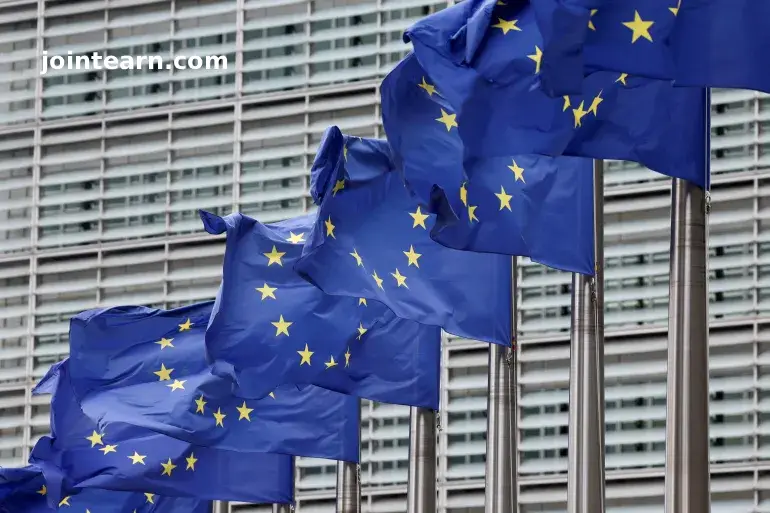
The European Union has finalized a major political agreement that will phase out all remaining Russian gas purchases by November 2027, marking one of the bloc’s most significant steps yet toward energy independence and reducing the financial channels supporting Russia’s war in Ukraine.
EU institutions announced the provisional agreement on Wednesday, confirming a joint decision by the European Council and the European Parliament to establish a clear, legally binding cutoff for Russian energy imports.
A Long-Delayed but Historic Cutoff Timeline
While the final deadline is later than what the European Parliament originally pushed for, the deal represents a crucial advancement in the EU’s broader strategy to dismantle Moscow’s influence over European energy markets.
Under the new timeline:
- Russian LNG imports must end by December 2026
- Pipeline gas imports will stop no later than November 2027
The agreement follows years of difficulty as EU member states—especially those heavily dependent on Russian supplies—grappled with replacing Moscow’s gas with alternative sources. Before Russia’s full-scale invasion of Ukraine in 2022, nearly half of the EU’s gas supply came from Russian pipelines.
A European Council statement emphasized that the priority is to end the EU’s reliance on Russian energy “following Russia’s weaponisation of gas supplies,” which destabilized energy markets and triggered record-high prices.
European Commission President Ursula von der Leyen welcomed the deal, declaring:
“Europe is closing the tap on Russian fossil fuels once and for all. Energy independence starts now.”
Energy Security and Political Significance
The agreement was celebrated by EU officials who viewed it as a long-awaited assertion of the bloc’s autonomy.
Energy Commissioner Dan Jorgensen remarked:
“We’ve chosen energy security and independence for Europe. No more blackmail. No more manipulation by Putin.”
The deal also establishes strict cutoffs for new contracts:
Pipeline Gas Contracts
- Long-term contracts banned starting September 30, 2027, pending storage levels
- Absolute final cutoff by November 1, 2027
- Short-term contracts banned from June 17, 2026
Liquefied Natural Gas (LNG)
- Long-term LNG contracts banned from January 1, 2027
- Short-term LNG deals phased out starting April 25, 2026
EU companies will be legally protected if they terminate Russian energy contracts early, with the right to cite “force majeure” due to the EU’s official import ban.
The agreement will still need final approval from both the European Parliament and the European Council, but political leaders expect it to move forward.
Current Dependence Still Significant
Despite major progress, the EU continues to rely on Russian gas more than many realised:
- Russian gas still accounted for 19% of EU imports in 2024, down from 45% in 2021
- Russia was responsible for 20% of LNG imports last year—making it the second-largest supplier after the United States
Replacing Russian pipeline infrastructure has proven more complex than shifting away from Russian crude oil, which most EU states phased out more quickly.
Political Hurdles Within the EU
Two countries—Hungary and Slovakia—have consistently resisted energy sanctions against Russia. Both nations remain heavily dependent on Russian gas and maintain warmer relations with Moscow than most EU members.
The new deal also requests the European Commission to design a plan for closing loopholes that allow these two countries to continue importing Russian oil.
Hungarian Prime Minister Viktor Orbán has openly defied EU leadership, most recently during a meeting with President Vladimir Putin, where he pledged to maintain Hungary’s energy ties with Russia.
A Final Step Toward Ending Russian Energy Influence
Once enacted, the EU’s 2027 cutoff will eliminate nearly all remaining Russian energy revenue from the bloc, an important component of Moscow’s wartime financing.
The deal marks a major shift in European energy policy and accelerates the EU’s transition toward diversified suppliers, renewable energy, and long-term security strategies designed to prevent future energy blackmail.


Leave a Reply