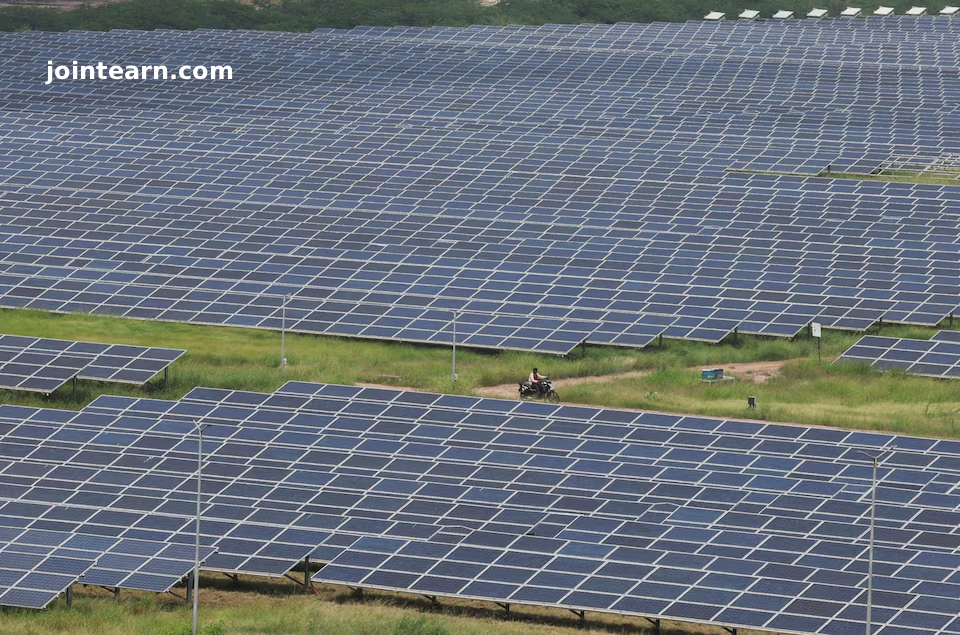
India Supports State-Led Clean Energy Initiatives
New Delhi, December 4, 2025 – India’s federal government has confirmed that states will continue to lead the expansion of clean energy projects, even as federal agencies struggle with nearly 50 gigawatts (GW) of unsold renewable power.
At a recent Confederation of Indian Industry (CII) event, Santosh Kumar Sarangi, Secretary of the Ministry of New and Renewable Energy (MNRE), emphasized that clean energy development is no longer solely dependent on federal projects. He stated, “Clean energy induction in the country is not necessarily going to happen only through federal agencies,” signaling a shift toward a more state-led model.
Federal Power Surplus and Transmission Challenges
Federal renewable energy projects have accumulated unsold inventory due to:
- Incomplete transmission lines connecting renewable-rich states to demand centers
- Regulatory and legal delays slowing project implementation
- Reluctance of state utilities to sign purchase agreements due to higher landed costs
States like Rajasthan and Gujarat, which have abundant solar and wind resources, have been cautious about purchasing federal power because of delivery uncertainties and transmission bottlenecks.
State Tenders to Become Primary Instruments
Industry representatives had suggested that the federal government pause new state tenders and utilize the existing unsold power from federal projects. However, Sarangi stressed that state-specific tenders will become the main mechanism for renewable energy deployment moving forward.
“State tenders are tailor-made as per their requirements,” he said, reflecting a decentralized approach to clean energy adoption that allows each state to manage its own capacity and demand.
India’s Clean Energy Growth Outlook
Despite the current backlog, India’s long-term economic growth is expected to drive a sharp increase in electricity demand, with clean energy playing a central role. Sarangi highlighted the growing electricity needs of emerging sectors, such as data centers, which rely heavily on reliable renewable power.
India added a record 31.5 GW of clean energy capacity this year as of October 2025. The country aims to double its non-fossil-fuel-based power output to 500 GW by 2030, including solar, wind, and other renewable technologies.
Challenges and Opportunities
While federal projects face hurdles, the state-led approach offers several advantages:
- Customized solutions to local energy needs
- Faster decision-making for renewable tenders
- Greater participation from private investors
- Enhanced integration with local grids, reducing reliance on long-distance transmission
The decentralization of clean energy deployment could also spur innovation in project design, financing, and technology adoption across India’s renewable sector.
Conclusion
India’s clean energy transition is increasingly driven by state-level initiatives, reflecting a strategic shift away from centralized federal project reliance. While transmission bottlenecks and unsold federal capacity remain challenges, the robust growth of solar and wind projects, along with rising electricity demand from sectors like data centers, positions India to meet its ambitious 500 GW clean energy target by 2030.


Leave a Reply