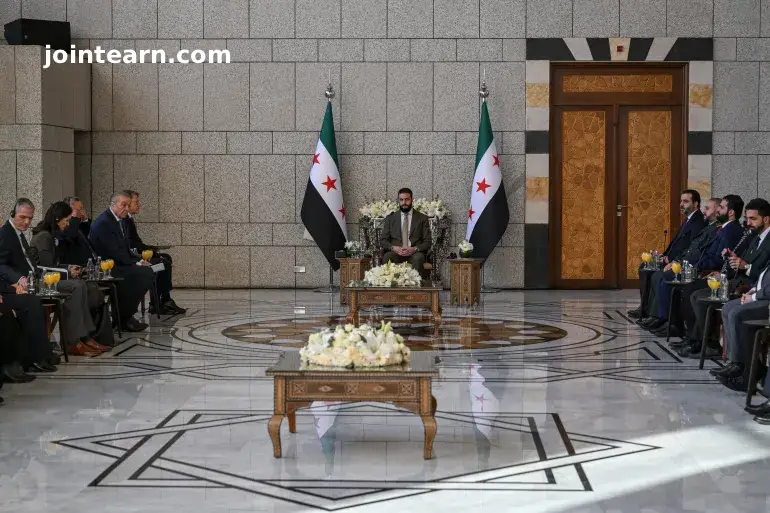
For the first time in history, a United Nations Security Council (UNSC) delegation has visited Syria, arriving via the Jdeidet Yabous border crossing from Lebanon. The visit comes nearly a year after the fall of longtime Syrian ruler Bashar al-Assad and marks a significant step in Syria’s efforts to reestablish international relations amid ongoing post-war reconstruction.
Meetings with Syrian Authorities and Civil Society
The UNSC delegation is scheduled to meet President Ahmed al-Sharaa, other Syrian officials, and members of civil society. The group also toured Damascus’s heavily damaged Jobar suburb and historical sites, offering insight into both the humanitarian and cultural impact of the 14-year civil war.
According to reporters on the ground, the visit has been “very well received” in Syria, sending a message that the country seeks to reengage with the international community and strengthen ties with the UN.
Focus on Reconstruction and Humanitarian Aid
The delegation’s agenda includes discussions on Syria’s humanitarian situation, as millions remain internally displaced and infrastructure continues to suffer from war damage. The UN is also expected to provide guidance on reconstruction efforts and rebuilding political institutions to ensure a multiethnic, inclusive government under al-Sharaa’s leadership.
Recently, the UN lifted sanctions on al-Sharaa, a former rebel fighter whose forces led the swift offensive that ousted al-Assad last December. This move signals increasing international recognition of Syria’s new authorities.
Security Challenges and Regional Tensions
Despite progress, Syria continues to face security challenges. The country has dealt with violent Israeli incursions, including a recent raid in Beit Jinn that killed 13 people. Israel’s expanded occupation of southern Syria, including the strategic Jabal al-Sheikh, complicates security talks and the region’s stability.
Domestically, incidents such as the killing of a Bedouin couple near Homs have tested Syria’s ability to prevent sectarian violence. Coordination between security forces and tribal leaders has helped mitigate tensions so far.
UN Goals and Regional Implications
Slovenian UNSC President Samuel Zbogar emphasized the importance of the visit, stating it comes “at a crucial time for the region.” The delegation aims to express support and solidarity with Syria and Lebanon, understand the challenges of post-war governance, and encourage steps toward an inclusive political transition.
UN Secretary-General Antonio Guterres’ spokesman, Stephane Dujarric, noted that the visit is expected to strengthen dialogue between Syria and the United Nations, laying the groundwork for ongoing collaboration on humanitarian aid, reconstruction, and regional stability.
A Historic Milestone
This trip marks the first official visit of the UNSC to the Middle East in six years and the first-ever visit to Syria, highlighting the country’s gradual reentry onto the international stage. For Syria, the delegation’s visit represents both a symbolic and practical step toward post-civil war recovery and diplomatic engagement.


Leave a Reply