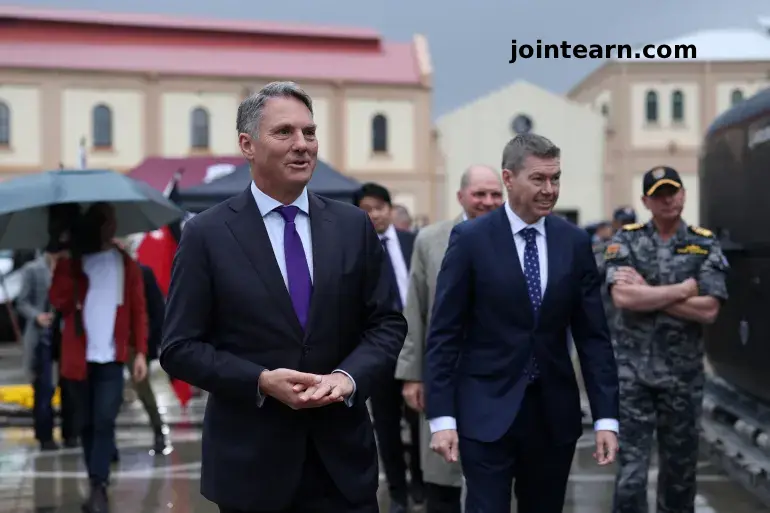
Australia is moving swiftly to deepen its defence partnership with Japan, as Australian Defence Minister Richard Marles prepares for an official visit to Tokyo. The trip highlights Canberra’s commitment to regional security and underscores a shared strategic vision between the two nations amid growing tensions in the Asia-Pacific.
Australia’s Early Engagement with Takaichi Administration
An official statement from the Australian government emphasized the importance of early diplomatic and defence engagement with the newly elected administration of Japanese Prime Minister Sanae Takaichi. Canberra described the relationship as based on a “shared vision for our region”, noting the increasing complexity of global security challenges.
“Our relationship with Japan continues to grow from strength to strength – underpinned by close strategic alignment, mutual ambition, and enormous potential,” Marles said.
“I look forward to meeting with Minister Koizumi to progress our already strong defence relationship even further.”
During a media briefing, Japanese Defence Minister Shinjiro Koizumi echoed Marles’ sentiments, stating:
“We plan to share understanding of the regional situation and hold concrete discussions for further progress in Japan-Australia defence cooperation.”
Major Defence Procurement: Mogami-Class Frigates
The visit comes after a landmark deal in August, when Australia contracted Mitsubishi Heavy Industries to construct 11 Mogami-class frigates for the Royal Australian Navy. Valued at approximately $10 billion AUD ($6.5 billion USD), the acquisition represents the largest Japanese defence export since the country lifted its military export ban in 2014.
Key details about the Mogami-class frigates include:
- Advanced stealth technology and longer operational range than current Anzac-class frigates.
- Capable of launching long-range missiles and operating up to 10,000 nautical miles (18,520 km).
- First three vessels to be built in Japan, with delivery expected in 2029 and operational status by 2030. Remaining frigates will be constructed in Western Australia.
The frigates will strengthen Australia’s ability to secure maritime trade routes and protect northern defence interests across the Indian and Pacific Oceans, regions where China’s military presence continues to grow.
Marles is also scheduled to tour the Mitsubishi shipyard in Nagasaki, gaining firsthand insight into the construction and capabilities of the new fleet.
Geopolitical Context: China’s Influence in the Region
Relations between Australia and China have been tense over the past decade, with disputes over national security, trade, and territorial interests in the Pacific. While Chinese President Xi Jinping suggested in July that bilateral ties had “turned around” following a meeting with Prime Minister Anthony Albanese, disagreements persist, particularly in the South China Sea.
Australia’s Foreign Minister Penny Wong has accused China of projecting military power into the Asia-Pacific without sufficient transparency, stressing concerns over regional security. In contrast, China maintains that its activities in the region are peaceful and non-strategic, according to statements from Ambassador Xiao Qian.
The Japan-China relationship has also worsened recently after PM Takaichi indicated in parliament that a potential Chinese attack on Taiwan could trigger a military response from Tokyo. Beijing considers Taiwan a breakaway province and has strongly condemned the remarks.
Multilateral Cooperation: AUKUS and Beyond
In addition to his Japan visit, Marles is scheduled to travel to Washington, D.C., to meet with the US and UK defence secretaries regarding the AUKUS nuclear-powered submarine program. A Pentagon review recently confirmed areas to strengthen Australia’s nuclear submarine initiative, signaling an ongoing commitment to allied security collaboration in the region.


Leave a Reply